NYPD Skydio Drone Crashes and Catches Fire Near FIFA World Cup Fan Zone in Brooklyn — Second Incident in 13 Months
On the evening of June 23, 2026, an NYPD Skydio drone crashed and caught fire near the entrance to the FIFA World Cup fan zone at Brooklyn Bridge Park's DUMBO area. The lithium-ion battery ignited on impact; firefighters extinguished the blaze with no injuries reported. This marks the second time in 13 months that an NYPD Skydio drone has caught fire in Brooklyn, raising serious safety concerns about flying drones over crowds.

Highlights
- On June 23, 2026, an NYPD Skydio X10 drone crashed and caught fire near the FIFA World Cup fan zone entrance at Brooklyn Bridge Park, with thousands of fans still present at 9:40 p.m.
- This is the second NYPD Skydio drone fire in Brooklyn in 13 months; the first occurred in May 2025 at the 71st Precinct rooftop in Crown Heights and was later attributed to battery connector wear.
- Skydio reviewed flight logs and found no evidence of a malfunction, contradicting NYPD's statement that the drone 'malfunctioned and fell'; the root cause remains unconfirmed.
- NYPD flew up to nine Skydio X10 drones — each weighing 4.65 lbs (2.11 kg) — at 200 feet directly above crowds with no parachute recovery systems during the October 2025 'No Kings' protest march.
- NYPD spent $6.5 million on a counter-drone unit for World Cup security, yet the only drone that crashed near fans during the tournament was operated by NYPD itself.
NYPD Drone Crashes and Catches Fire Feet Away from World Cup Fan Crowds
On Tuesday evening, June 23, 2026, an NYPD drone lost control, crashed, and caught fire in Brooklyn's DUMBO neighborhood, coming down near 1 Water Street — close to the FIFA World Cup fan zone entrance at Brooklyn Bridge Park. The lithium-ion battery ignited on impact; firefighters arrived and extinguished the blaze. No injuries were reported. The aircraft went down at one of the most densely crowded locations in New York City on a match night, and it marks the second NYPD Skydio drone to catch fire in Brooklyn in 13 months.
The Panama vs. Croatia match had ended at approximately 8:30 p.m. that evening, with the fan zone remaining open until 10 p.m. as usual. The drone came down just south of the fan zone's main entrance after 9:40 p.m., while thousands of people were still gathered in the area. DroneXL journalist Haye Kesteloo had personally witnessed NYPD Skydio X10 drones hovering above crowds in Manhattan — and the margin between "normal flight" and "heavy object falling into a crowded plaza" is far thinner than the department is willing to acknowledge.
According to the NYPD's public affairs office, officers were operating the drone above the park when it "malfunctioned and fell from a height," causing the battery to ignite. The cause remains unconfirmed.
The Crash Occurred Inside a No-Drone Zone on a Match Night
The FDNY logged the incident at just after 9:40 p.m. Tuesday, at 1 Water Street near Emily Warren Roebling Plaza. One engine, one ladder truck, and one hazmat unit were dispatched to respond to a report of a smoking drone battery. The fire did not spread; no one was hurt. FDNY cleared the scene at 10:26 p.m. Afterward, members of NYPD's Technical Assistance Response Unit (TARU) — the same team that manages the department's fleet of approximately 100 drones — were observed loading the wreckage into the back of an SUV.
One critical detail should not be overlooked: all FIFA 2026 World Cup venues and associated fan activity areas, including fan festivals, are located within FAA-designated No Drone Zones with active Temporary Flight Restrictions (TFRs). Had a private civilian flown a drone into that airspace and crashed it near a crowd, they would face civil penalties of up to $75,000 per violation, criminal fines of up to $100,000, equipment seizure, and potential federal prosecution. The aircraft that actually burned to scrap next to the crowd was operated by the police themselves.
Skydio: Flight Logs Show No Evidence of Malfunction
A Skydio spokesperson told the Brooklyn Eagle that the company is aware of the incident and is working with the NYPD to determine the cause. After reviewing available flight logs, Skydio said it found "no evidence of a safety malfunction that could have caused the crash," adding that safety is its top priority and that its drones are equipped with multiple safety and reliability features designed for urban flight operations.
That statement stands in direct tension with the NYPD's own description of an aircraft that "malfunctioned and fell." Both accounts could be technically accurate: the logs appear clean, yet a physical component could have failed in a way that telemetry never captured. This mirrors almost exactly what happened the last time an NYPD Skydio caught fire — and Skydio's own CEO later explained why.
Second Skydio Fire in Brooklyn in 13 Months
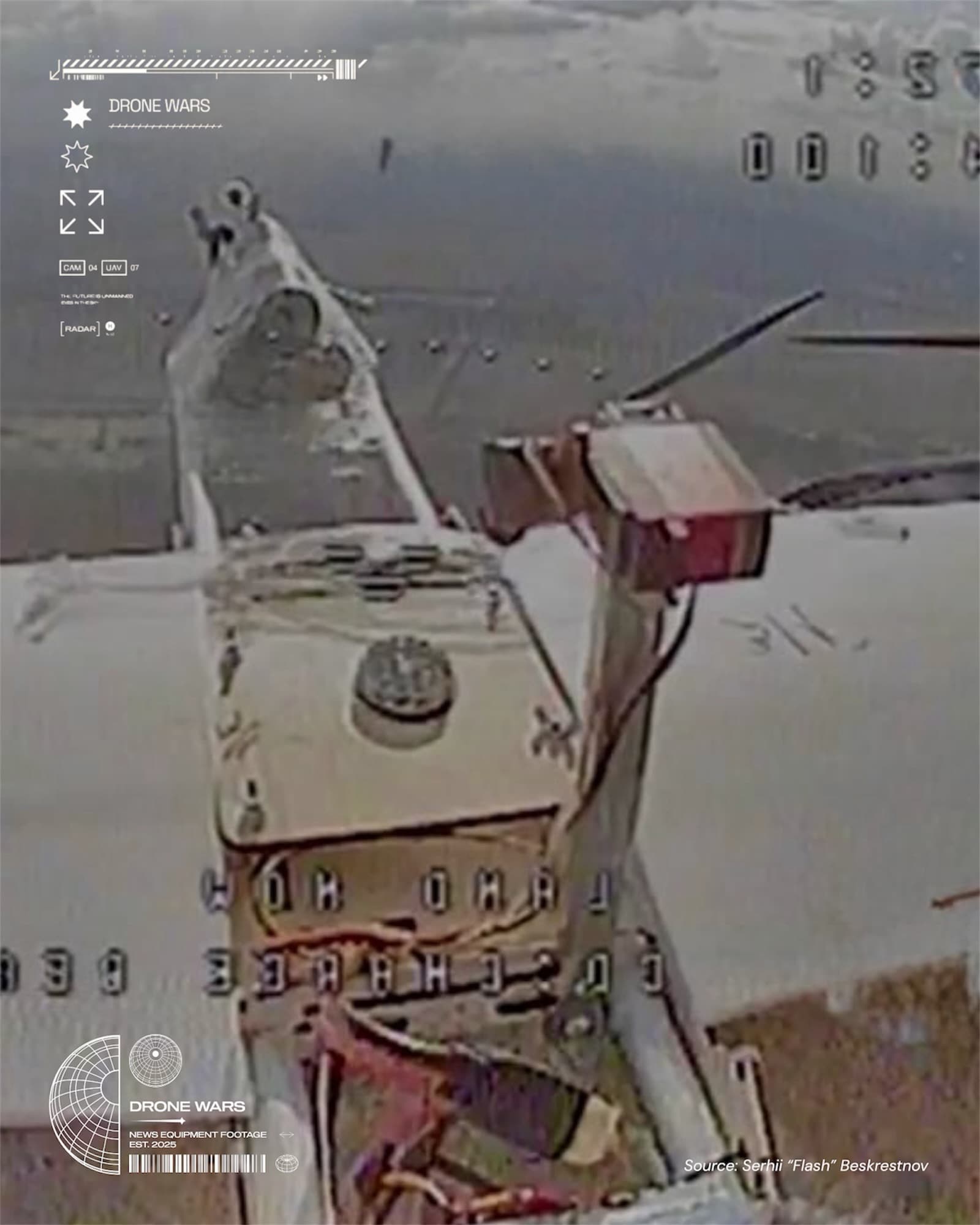
On May 12, 2025, a Skydio X10 operated by NYPD's 71st Precinct caught fire after landing on the precinct rooftop in Crown Heights. Firefighters again extinguished the blaze quickly, with damage limited to the drone itself. Skydio CEO Adam Bry subsequently posted on LinkedIn stating that the root cause had been traced to battery connector wear, describing it as the first known instance of that failure mode appearing in a customer aircraft after hundreds of thousands of flights. Bry said the company had since identified a telemetry signature capable of flagging early connector wear and was monitoring X10 fleet data to contact affected customers.
In other words, the failure mode documented 13 months ago involved a physical connector degrading gradually — with no indication in the logs until the component failed entirely. Whether Tuesday's crash stems from the same failure mode is currently unknown, and the NYPD says the cause remains unconfirmed. But Skydio's assertion that flight logs show no malfunction does not rule out the category of hardware issue the company has already documented on the same platform in the same city.
NYPD Flew Directly Over Crowds — DroneXL Witnessed It Firsthand
The NYPD's Drone as First Responder (DFR) program relies heavily on the Skydio X10. In Q1 2026, NYPD logged 2,595 drone missions, with 1,246 conducted in Brooklyn — its highest-use borough. These aircraft weigh approximately 4.65 pounds (2.11 kg).
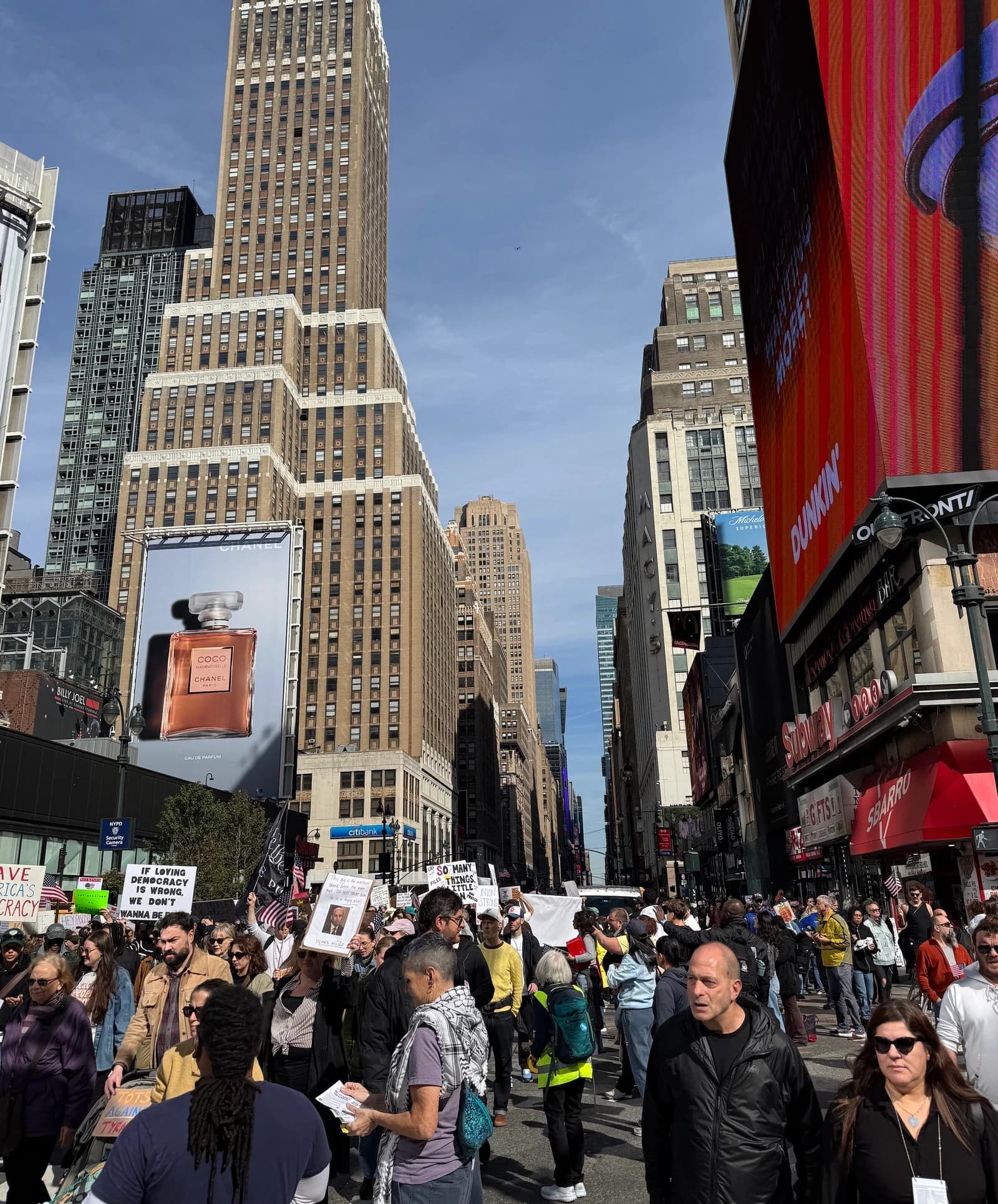
In October 2025, during the Manhattan "No Kings" protest march, DroneXL documented TARU officers flying six to nine Skydio X10 drones at 200 feet directly above crowds, holding fixed positions until batteries were depleted, then landing to swap batteries and returning to hover above the marchers. None of those drones carried parachute recovery systems, and one came dangerously close to colliding with a helium balloon.
The physics are straightforward: a 4.65-pound aircraft hovering at a fixed position directly above a crowd has no horizontal escape margin. If it fails, it falls straight down onto the people below. On Tuesday, the drone came down in the plaza rather than on a precinct rooftop — preserving a paper-thin margin of safety. That margin will not hold indefinitely.
The City Spent Millions to Counter Drone Threats — Then Its Own Drone Crashed First
The timing requires no editorial embellishment. NYPD Commissioner Jessica Tisch has publicly stated that drones are a threat that keeps her "up at night," citing the use of weaponized commercial drones in Ukraine and Iran. For World Cup security, the NYPD spent $6.5 million standing up a federally certified counter-drone unit — a force explicitly designed to shoot down hostile drones near crowds. The drone that actually came down beside a crowd of World Cup fans in Brooklyn this week was NYPD's own, with no hostile actor involved.
Editor's Note — DroneXL
Skydio drones sometimes crash and catch fire. That is not an empty criticism — it is a documented record: the Crown Heights precinct rooftop in May 2025, and the World Cup fan zone plaza in June 2026. Both fires were contained. Both times, the department got lucky. But luck is not a safety system.
I watched NYPD park these aircraft at 200 feet over crowds in Manhattan during the "No Kings" march — no parachutes, landing to swap batteries, then flying back to hover directly above the marchers. I wrote at the time that the obvious fix was to fly alongside the march rather than above it, so that in the event of a failure the aircraft falls onto scaffolding rather than onto people. The department continued flying overhead. On Tuesday, one of those aircraft fell from its hover altitude, caught fire, and came down within close proximity to a crowded match-night plaza. A different wind direction, a 30-second timing difference, and this would not be a story about a scorched battery — it would be an injury report.
There is a genuine tension here that I will not sidestep. DroneXL supports drones and supports public safety. The DFR program has saved real lives, and I have reported on those rescues and successful apprehensions. But "do not fly over crowds without a recovery system" applies with equal force to the largest police department in the country as it does to an amateur flying outside a stadium. The standard the NYPD holds civilians to — violations that can result in federal prosecution — is the same standard the department should hold itself to. Instead, it is flying a domestically mandated platform with a documented fire history, without parachutes, in airspace closed by the FAA to everyone else, directly above the densest crowds in the city, while the manufacturer's response to a burning aircraft is "the logs look fine."
The counter-drone unit protecting these World Cup crowds was built to stop other people's drones from harming people. In Brooklyn, the more immediate threat has twice now come from the city's own aircraft. The NYPD's Q3 UAS report is due in the fall. Watch whether Tuesday's crash is documented accurately — or buried in mission-count statistics — because a department that logs 2,595 flights per quarter while treating every fire as an isolated incident is telling you that the next one is a matter of when, not if.
Sources: Brooklyn Eagle, FDNY, NYPD Office of Public Affairs.
Reported by Haye Kesteloo, DroneXL. Automated tools were used to assist with research and data retrieval; all editorial content and opinions are those of the journalist.
原文來源: 查看原文
FAQ
Newsletter
Subscribe to our Low-Altitude Industry Newsletter
Daily curated news on low-altitude economy and drone industry, delivered to your inbox.