Why Are Ukraine's FPV Interceptor Drones Covered in Tape and Foil? Militarnyi Analysis Explains
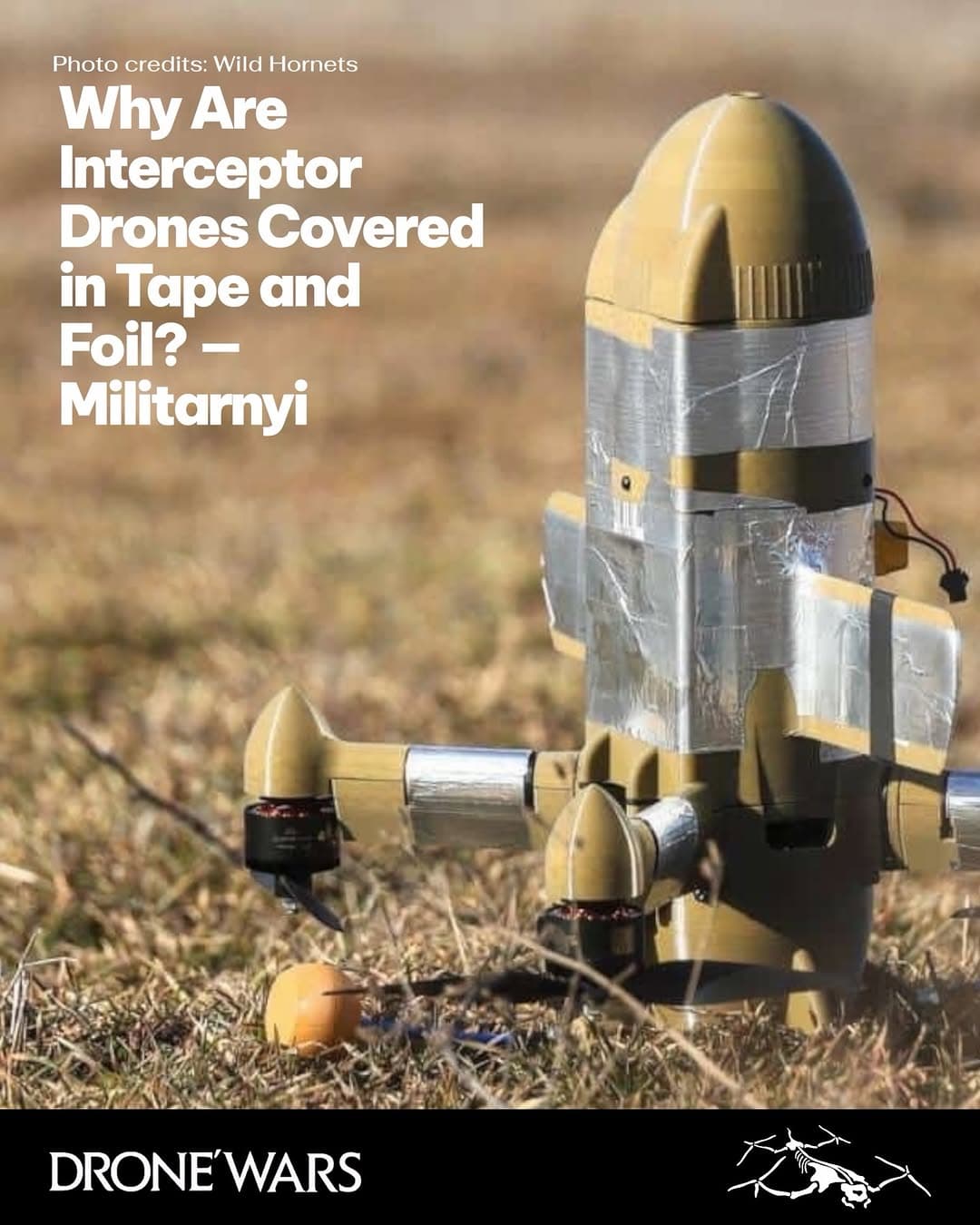
Ukrainian military outlet Militarnyi has published an in-depth analysis explaining why some Ukrainian FPV interceptor drones are fitted with reinforced tape, metal strips, or aluminum foil. The most plausible explanation is radar cross-section (RCS) enhancement, allowing friendly radar systems to more easily detect and track the drones in flight, helping ground navigators and pilots guide them more accurately toward intercept targets. The modification has been observed on both rocket-type and fixed-wing interceptor drone designs.

Highlights
- Militarnyi's analysis identifies RCS enhancement as the primary reason Ukrainian FPV interceptor drones are fitted with reinforced tape, metal strips, or aluminum foil.
- Increasing radar cross-section allows friendly radar systems to more reliably detect and track interceptor drones in flight, improving real-time guidance by navigators and pilots.
- The modification has been confirmed on both rocket-type and fixed-wing interceptor drone airframes used by Ukraine's Unmanned Systems Forces.
- Tape and foil are applied only to airframe areas free of structural, fastening, or detonation wire functions, indicating deliberate and planned placement.
- The modification exemplifies Ukraine's low-cost innovation approach, using commercially available civilian materials to address battlefield tactical coordination challenges.
Why Are Ukraine's FPV Interceptor Drones Covered in Tape and Foil? Militarnyi Analysis Explains
Ukrainian military media outlet Militarnyi has published a detailed analytical report examining why some Ukrainian FPV interceptor drones are fitted with reinforced tape, metal strips, or aluminum foil — a modification that has drawn considerable attention from observers.
Boosting Radar Cross-Section for Friendly Tracking
According to the report, the most compelling explanation is that these added materials increase the drone's Radar Cross-Section (RCS), making it easier for friendly radar systems to detect and track the drone throughout its flight. This advantage helps ground-based navigators and pilots guide the interceptor drone more precisely toward its intended engagement point.
In other words, what appear to be simple material modifications actually play a critical role in enhancing tactical coordination efficiency on the battlefield.
Observed on Both Rocket-Type and Fixed-Wing Designs
Militarnyi notes that the modification has been observed across multiple airframe types, including:
- Rocket-shaped interceptor drones
- Fixed-wing drone designs
Notably, the tape and foil are applied to areas of the airframe that do not require additional structural reinforcement, component fastening, or external detonation wire routing — indicating the modifications are deliberately planned rather than incidental.
Low-Cost Modification, High Tactical Value
This case once again highlights the ingenuity of Ukraine's drone units in operating under resource-constrained conditions — leveraging inexpensive, commercially available materials to solve real tactical coordination challenges in the field.
Source: Militarnyi
Image Credits: Wild Hornets, Unmanned Systems Forces of the Armed Forces of Ukraine
原文來源: 查看原文
FAQ
Newsletter
Subscribe to our Low-Altitude Industry Newsletter
Daily curated news on low-altitude economy and drone industry, delivered to your inbox.