U.S. Air Force Awards Autonomous Wingman Production Contracts to General Atomics and Anduril for Collaborative Combat Aircraft Program
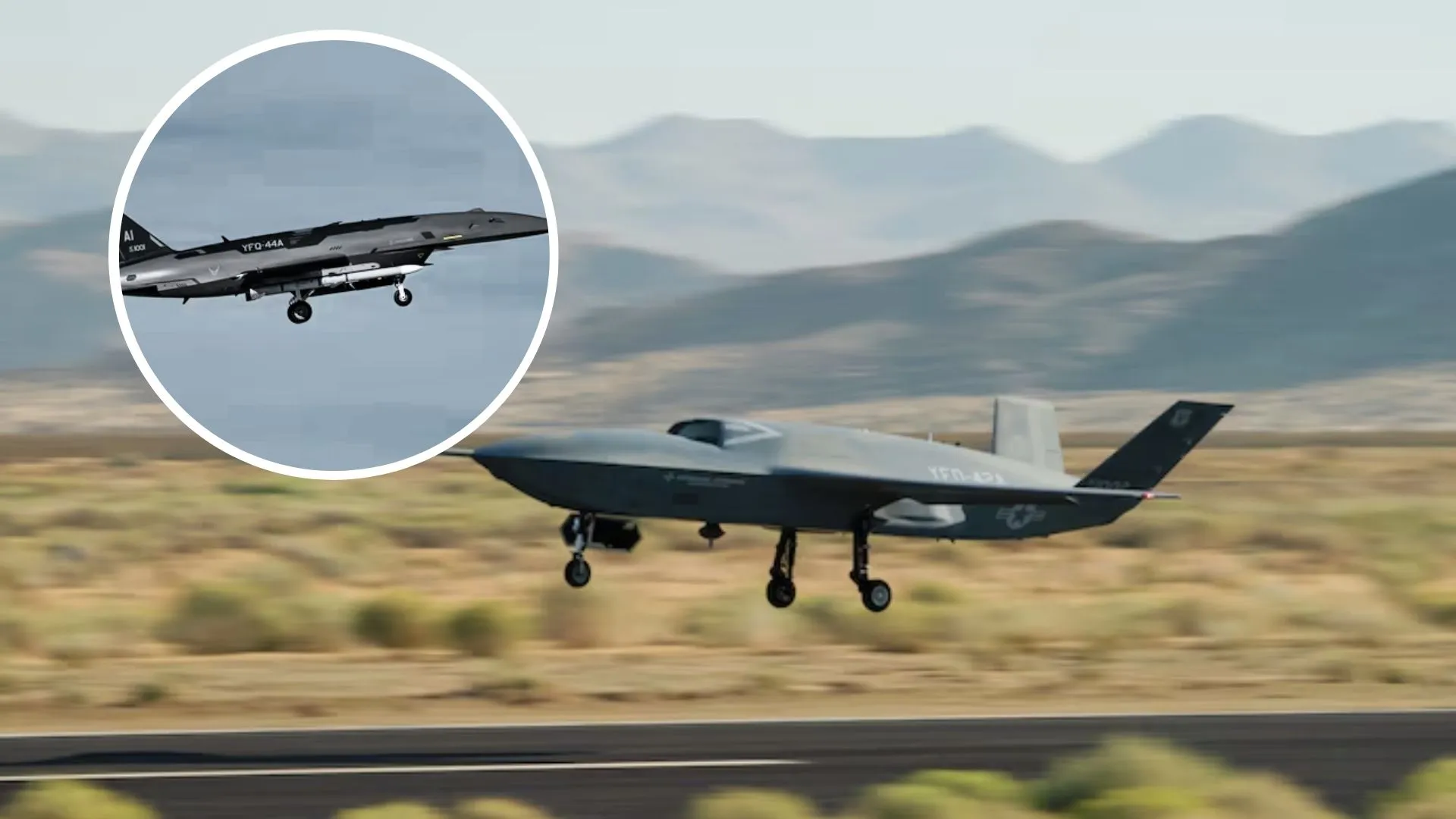
The U.S. Air Force has formally awarded engineering, manufacturing, and production contracts for the Collaborative Combat Aircraft (CCA) Increment 1 program to General Atomics (FQ-42) and Anduril (FQ-44). Delivered four months ahead of schedule, the contracts aim to procure more than 150 combat-ready semi-autonomous drone wingmen before the end of the decade. A separate pool of six vendors will compete for mission autonomy software contracts.

Highlights
- The U.S. Air Force awarded CCA Increment 1 EMD and production contracts to General Atomics (FQ-42) and Anduril (FQ-44), completing the award four months ahead of the original schedule.
- The Air Force targets procurement of more than 150 combat-capable, semi-autonomous CCA drone wingmen before the end of 2029.
- A pool of six vendors was selected to compete for CCA mission autonomy software production contracts, using a novel award fee exposure strategy tied to real-world operator performance.
- Air Force Chief of Staff Gen. Ken Wilsbach stated that CCAs fundamentally change how the U.S. projects airpower and generates scale in highly contested environments.
- Secretary of the Air Force Troy Meink emphasized that the multi-vendor software model ensures continuous access to the latest autonomy technologies while maintaining competitive pressure among suppliers.
U.S. Air Force Awards Autonomous Wingman Production Contracts to General Atomics and Anduril for Collaborative Combat Aircraft Program
The U.S. Air Force has formally awarded engineering, manufacturing, and development (EMD) and production contracts for its Collaborative Combat Aircraft (CCA) program. Under CCA Increment 1, General Atomics will develop the FQ-42 and Anduril will develop the FQ-44.
Extending Combat Reach Alongside Crewed Fighters
Building on decades of semi-autonomous flight research, the CCA program represents the next major evolution in airpower. The unmanned aircraft are designed to integrate seamlessly with crewed fighters, extending combat range, enhancing situational awareness, and improving survivability in highly contested environments. This human-machine teaming concept is intended to form a powerful deterrent force, signaling clearly to adversaries that challenging U.S. airpower is not a viable option.
A Tactical Advantage No Adversary Can Match
"Collaborative Combat Aircraft changes how we project power and generate scale in highly contested environments," said Gen. Ken Wilsbach, Air Force Chief of Staff. "Getting this capability to our warfighters faster ensures our forces maintain the tactical advantage needed to deter adversaries and, when necessary, defeat any opponent."
Notably, the contract award was completed four months ahead of schedule, reflecting that both the FQ-42 and FQ-44 have met rigorous operational requirements and are ready for full-rate production. The decision followed a competitive source-selection process that identified both systems as the most capable and cost-effective solutions for maintaining air superiority in an increasingly complex and contested global threat environment.
More Than 150 Combat-Ready CCAs Targeted Before 2030
"Moving rapidly from competitive selection to full production allows us to field highly credible, combat-ready semi-autonomous systems ahead of schedule, continuously staying ahead of the competition," said Secretary of the Air Force Troy Meink. "These contracts reaffirm our confidence in the strategic path of the CCA program — with a goal of procuring more than 150 combat-capable CCAs before the end of this decade."
Six-Vendor Pool to Compete for Mission Autonomy Software
Mission autonomy software is equally central to the CCA ecosystem. The Air Force has awarded production contracts for mission autonomy software to a pool of six vendors, establishing a competitive marketplace.
"Mission autonomy is the cornerstone of the CCA concept, and leveraging a competitive, multi-vendor environment ensures we can access the latest technology," Meink said. "This approach guarantees our airmen have the best capabilities available today, while preserving room for the breakthrough technologies needed to maintain air superiority."
The software contracts employ a first-of-its-kind award fee exposure strategy, whereby operator feedback and real-world performance determine how much the Air Force pays for mission autonomy. Full licensing fees are paid only when vendors deliver combat-relevant capabilities that meet warfighter requirements and feedback. The licensing model also allows the Air Force to purchase software licenses from any of the six vendors at any point over the next six years, ensuring the service can continuously procure the best-performing and most competitive solutions as technology evolves.
原文來源: 查看原文
FAQ
Newsletter
Subscribe to our Low-Altitude Industry Newsletter
Daily curated news on low-altitude economy and drone industry, delivered to your inbox.