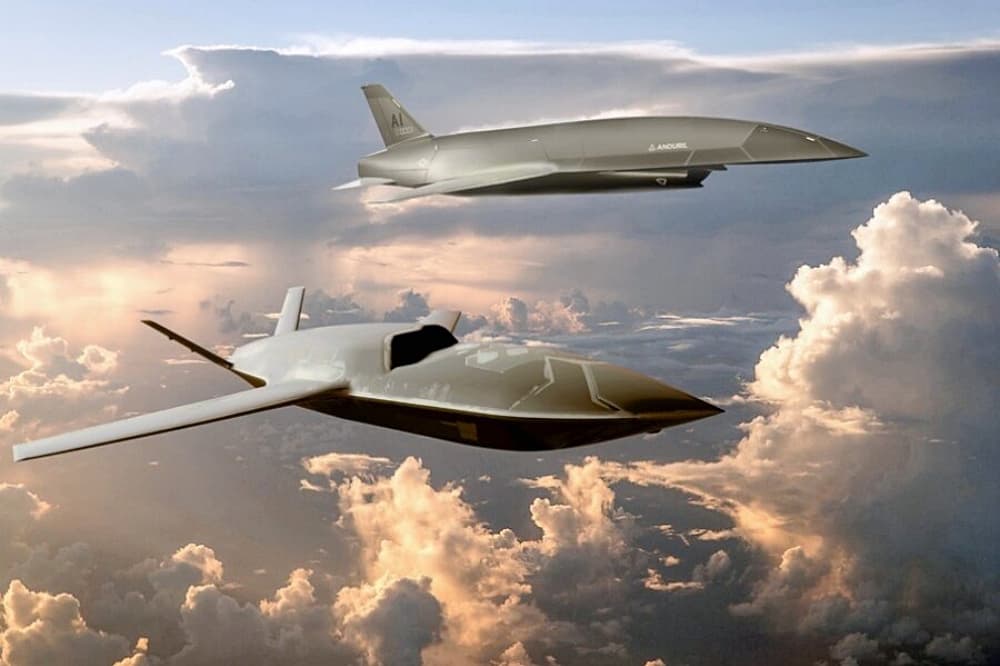
U.S. Air Force Awards CCA Contracts to Both General Atomics and Anduril for Collaborative Combat Aircraft Production
The Department of the Air Force has awarded multiple Collaborative Combat Aircraft (CCA) Increment 1 contracts to General Atomics and Anduril Industries simultaneously, covering both flight vehicle production and mission autonomy software. The dual-award strategy marks a significant shift in U.S. defense procurement, decoupling hardware and software development to accelerate capability upgrades and reduce single-vendor dependency.

Highlights
- The U.S. Department of the Air Force awarded CCA Increment 1 contracts to both General Atomics and Anduril Industries simultaneously, breaking from the traditional winner-take-all procurement model.
- The contracts are split between flight vehicle production (General Atomics) and mission autonomy software development (Anduril), implementing a hardware-software decoupled acquisition strategy.
- The CCA program is part of the Air Force's Next Generation Air Dominance (NGAD) architecture, targeting autonomous loyal wingman drones to fly alongside crewed fighters at significantly lower per-unit cost.
- The dual-award approach is intended to reduce single-vendor dependency, sustain competition, and accelerate technology refresh cycles for unmanned combat systems.
- Industry analysts view this procurement model as a potential blueprint for future U.S. military weapon system acquisitions as AI and autonomy deepen their role in defense.
U.S. Air Force Awards CCA Contracts to Both General Atomics and Anduril for Collaborative Combat Aircraft Production
The Department of the Air Force has announced the award of multiple significant contracts under the Collaborative Combat Aircraft (CCA) program, covering Increment 1 flight vehicle production and mission autonomy software development. The contracts are intended to accelerate the deployment of advanced unmanned combat systems.
A New Procurement Model: Decoupling Hardware and Software
The most notable aspect of these awards is the Air Force's adoption of a hardware-software decoupling strategy, treating the flight vehicle platform and mission autonomy software as separate procurement efforts. This approach is seen as central to preserving critical operational advantages and is expected to shape the future of U.S. unmanned combat system acquisition.
By separating mission software from the airframe, the Air Force can continuously upgrade the autonomous and combat capabilities of its drones without replacing the hardware, significantly reducing the time and cost associated with system modernization.
General Atomics and Anduril Both Selected
Defense industry stalwart General Atomics (GA-ASI) and emerging defense technology firm Anduril Industries have each received contracts, playing distinct roles within the CCA program. The dual-award outcome breaks from the traditional winner-take-all single-contractor model, reflecting the Air Force's intent to leverage competitive dynamics and a multi-vendor strategy to reduce reliance on any single supplier while sustaining technological innovation.
General Atomics brings extensive experience in unmanned aerial systems, with platforms such as the MQ-9 Reaper serving in the U.S. and allied air forces for years. Anduril, by contrast, has built its reputation on rapidly iterable, software-driven defense solutions and has risen quickly within the U.S. defense procurement landscape in recent years.
CCA Program Background
The CCA program is a core component of the Air Force's broader Next Generation Air Dominance (NGAD) architecture. Its goal is to develop autonomous loyal wingman drones capable of operating alongside crewed fighter aircraft. These unmanned wingmen are designed to conduct high-risk missions including suppression of enemy air defenses (SEAD), electronic warfare, and intelligence gathering, functioning as force multipliers in combat operations.
The Air Force anticipates that per-unit costs for CCA drones will be substantially lower than those of traditional crewed fighters, with numerical superiority combined with AI-driven autonomy creating compounded battlefield effectiveness. The contract awards mark a pivotal milestone as the CCA program transitions from concept demonstration to full production and operational deployment.
A Blueprint for Future Defense Procurement
Industry analysts note that this procurement model carries implications well beyond the CCA program, potentially serving as a template for future U.S. military weapon system acquisitions. Separating the airframe platform from autonomous software development not only accelerates technology refresh cycles, but also allows vendors with different areas of expertise to compete and contribute within their respective strengths.
As artificial intelligence and autonomous technologies continue to deepen their role in military applications, the progress of the CCA program will be closely watched by the global defense industry and armed forces worldwide.
原文來源: 查看原文
FAQ
Newsletter
Subscribe to our Low-Altitude Industry Newsletter
Daily curated news on low-altitude economy and drone industry, delivered to your inbox.