DJI Matrice 4D Gains BVLOS Compliance Without a Dock in Europe — Operators Are the Winners
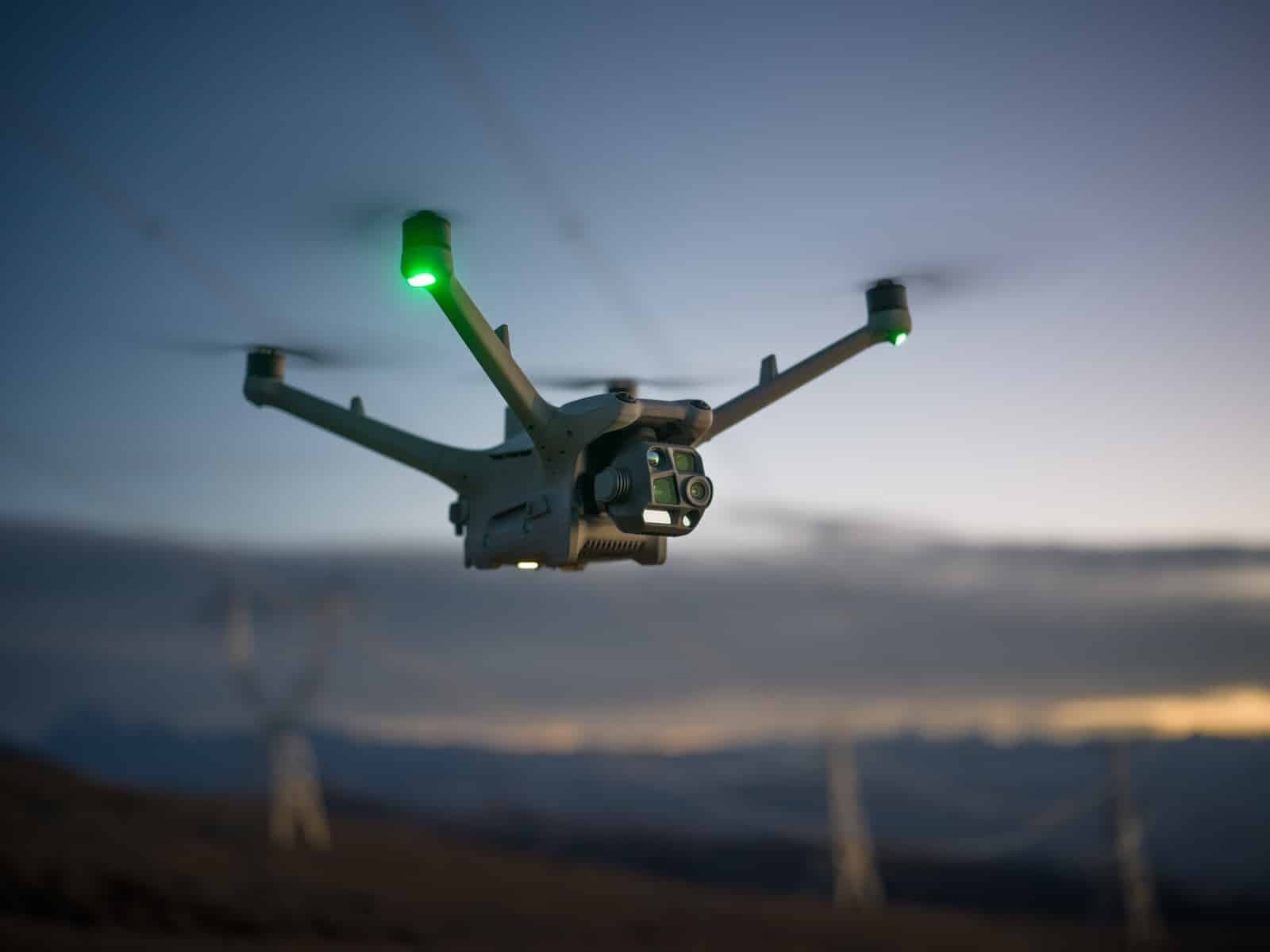
A DJI firmware update (v17.1.5) now allows the Matrice 4D series to perform compliant BVLOS operations in Europe using the DJI RC Plus 2 Enterprise controller — no fixed docking station required. The update extends the drone's C6 certification to cover handheld-controller configurations, opening more flexible deployment for search-and-rescue and infrastructure inspection teams. DJI also stresses that C6 certification does not automatically grant STS-02 operating authorization; operators must still complete the full regulatory declaration process with national authorities.

Highlights
- DJI 韌體 17.1.5 版將 Matrice 4D 和 4TD 的 C6 認證擴展至 RC Plus 2 Enterprise 控制器配置,無需 Dock 3 停機坪即可在歐洲合規執行 STS-02 BVLOS 飛行。
- C6 認證為硬體級別標誌,操作員仍須向國家主管機關提交 STS-02 申報、技能證書及操作手冊等完整文件,方可合法飛行。
- Matrice 4TD 熱成像機型具備 54 分鐘飛行時間,其 BVLOS 搜索半徑遠超 VLOS 限制,搜救及基礎設施巡檢為最直接受益場景。
- EASA 正對 Cx 框架進行中期修訂,目標於 2026 年第三季獲批,可能影響 C6 標籤所允許的操作範疇,操作員應在撰寫操作手冊前諮詢國家主管機關。
- 同款 Matrice 4D 在歐洲通過 C6 認證可合規執行基礎設施 BVLOS 巡檢,但在美國因 FCC 涵蓋清單限制遭封鎖,DJI 已告知法院 2026 年可能有 25 款產品無緣美國市場。
DJI Matrice 4D Gains BVLOS Compliance Without a Dock in Europe — Operators Are the Winners
DJI has begun publicly promoting a firmware update that allows its Matrice 4D series to conduct compliant beyond-visual-line-of-sight (BVLOS) operations in Europe using a handheld controller rather than a fixed docking station. DJI's Enterprise division published a detailed explanatory blog post on June 12, then amplified the announcement via an X (formerly Twitter) thread on July 1, walking operators through what the update covers — and, equally important, what it does not.
The technical scope of the update is precise. The C6 class-mark certification for the Matrice 4D and 4TD now covers a standalone operating configuration with the DJI RC Plus 2 Enterprise controller, provided firmware is at version 17.1.5 or later. No hardware changes were made — the airframe already met every technical requirement for the class. What changed is that the certified documentation now recognizes controller-based flight as a compliant operating pathway alongside the previously sole-approved method: deployment via the DJI Dock 3. That "drone-in-a-box" system was launched alongside the Matrice 4D and 4TD earlier in 2025.
Having tracked DJI's European certification journey since the company earned the world's first C1 label for the Mavic 3 in 2022, the pattern here is consistent: hardware ships ready, and certified configurations are expanded through firmware months later.
For search-and-rescue teams or utility inspection crews, the distinction matters enormously. A docking station is a capital investment; a controller and a carry case are not.
C6 Certifies the Aircraft, Not the Mission
C6 is the drone class mark defined under EU Delegated Regulation 2019/945, and it is the regulatory prerequisite for BVLOS operations in sparsely populated areas under the Standard Scenario STS-02. The label certifies that a drone can operate within a defined airspace envelope in a controlled manner. Aircraft carrying this mark must satisfy a maximum take-off weight below 25 kg (55 lb), a characteristic dimension under 3 metres (9.8 ft), and a maximum horizontal speed not exceeding 50 m/s (112 mph).
Beyond those figures, the class requires a suite of onboard safety systems built into the airframe and non-deactivatable:
- Flight Termination System (FTS): Independent of the flight controller; activates automatically upon permanent loss of the command-and-control link.
- C2 Link Monitoring: Presents the remote pilot with four signal-strength levels — strong, medium, low, and lost.
- Geocaging: Enforces a geographic flight boundary.
- Flight Volume Enforcement: Confines the aircraft to pre-mission-defined limits.
The final two are the core dependencies of STS-02, and the reason the Matrice 4D qualified for the class mark in the first place.
One point of transparency from DJI is worth acknowledging: a compliant aircraft is not the same as a compliant operation. DJI's own guidance states clearly that C6 certification does not, by itself, grant STS-02 flying rights. Operators must still submit an STS-02 declaration or operational authorization, a theoretical knowledge certificate, an STS-02 practical skills certificate, an operations manual, maintenance logs, and an emergency response plan to the relevant national competent authority. None of those requirements are waived because the drone carries a C6 label. Not every manufacturer draws this line in writing, but it is a critical one — conflating "C6 certified" with "authorized to fly BVLOS" would create serious regulatory exposure for any operator.
STS-01 Keeps You in Sight; STS-02 Lets the Aircraft Go Further
The value of C6 certification lies in the gap between the two standard scenarios.
STS-01 applies to C5-class drones operating in controlled urban environments within visual line of sight, with a horizontal speed cap of 5 m/s. It suits many commercial operations, but the pilot's eyeline is the operational constraint.
STS-02 is a fundamentally different category. Designed for C6-class drones in sparsely populated areas, it permits BVLOS operation during the mid-flight phase, provided the aircraft follows a pre-planned route. Visual line of sight is only mandatory during takeoff and landing.
That extended range envelope is precisely why extending the handheld controller's certification is more than a paperwork exercise. Bringing the RC Plus 2 Enterprise within the C6 approval means operators can run compliant STS-02 missions with equipment that fits in a truck, adding a docking station later only if a fixed-site need arises.
Linear Inspection and Search-and-Rescue Are the Most Direct Beneficiaries
The missions that benefit first are those that were previously impractical without a dock, or simply impossible within the STS-01 framework.
Power lines, pipelines, rail corridors, and road infrastructure naturally exceed visual range and are the classic STS-02 use case. Operators can pre-plan a route, launch the Matrice 4D under controller operation, and conduct a compliant inspection run without having to transport and install a Dock 3 at each site. DroneXL has previously reported on comparable efficiency gains: ConocoPhillips compressed an 8-hour ground inspection at a UK crude oil terminal into a 16-minute flight using a DJI drone-in-a-box BVLOS trial.
Search and rescue is an equally clear fit. Large search areas or terrain with obstructed sightlines become manageable under an STS-02 BVLOS authorization without requiring the pilot to reposition every time the aircraft moves beyond visual range. With the thermal-sensor-equipped 4TD and a 54-minute endurance, the effective search radius extends well beyond what VLOS constraints would allow.
This aligns with DJI's broader 2025 enterprise strategy. DJI has been systematically decoupling dock-dependent capabilities and returning them to controller-based operators. In October 2025, DJI opened the Obstacle Sensing Module and Manifold 3 computer to the lower-tier Matrice 4T and 4E — functions previously restricted to the dock-deployed 4D and 4TD. The handheld C6 certification applies the same logic to regulatory standing rather than hardware.
DroneXL Perspective
Read past the marketing language in DJI's announcement and the honest part stands out: DJI told operators in writing that a compliant aircraft does not equal a compliant operation. That is the right message to put on record — because the conversation around the same hardware in the United States has gone in the opposite direction. In Europe, DJI is documenting how to legally fly its drones within a strict safety framework. In the United States, the FCC Covered List blocks the same models on national-security grounds, and DJI has told a court that as many as 25 planned products may be locked out of the U.S. market by 2026 due to authorization barriers. The Matrice 4D being compliant enough to fly BVLOS over infrastructure in Europe while being treated as an unacceptable risk in Ohio cannot be simultaneously true on the engineering merits.
The technical case for DJI's European certification has only grown stronger since the first C1 label on the Mavic 3 in 2022. Hardware arrives ready; documentation follows. What this update formally confirms is that the safeguards EASA cares about — independent flight termination, geocaging, enforced flight volume — are real and certifiable on this platform. That is the same drone the United States considers an unacceptable risk. The gap between those two positions is not an engineering question. It is a political one. European public-safety operators are gaining a legal BVLOS pathway at lower cost; their U.S. counterparts are paying premium prices for less capable equipment.
One genuine caveat before anyone files a declaration: this update arrives while EASA is conducting a mid-term revision of the entire Cx framework, driven by a European Commission initiative on drone and counter-drone security measures, with a target approval date of Q3 2026. That security-driven rewrite — aimed at malicious drone threats rather than survey teams — could materially reshape what operations the C6 label permits. Whether the handheld-controller STS-02 pathway DJI has just opened survives the revision intact is an open question, and one that Matrice 4D operators should raise with their national competent authority before writing an operations manual, not after.
Source: DJI Enterprise Research and data retrieval assisted by automated tools. All reporting and editorial commentary by Haye Kesteloo.
原文來源: 查看原文
FAQ
Newsletter
Subscribe to our Low-Altitude Industry Newsletter
Daily curated news on low-altitude economy and drone industry, delivered to your inbox.