MBDA Unveils FastTrack AI Mission-Planning System, Cutting Cruise Missile Route Planning from Days to Minutes
European missile manufacturer MBDA has unveiled FastTrack, an AI-assisted mission-planning system, at the Eurosatory defence exhibition in Paris. The system compresses cruise missile flight-route planning from hours or even days down to just minutes by integrating enemy air-defence intelligence, terrain, and weather data to automatically evaluate thousands of possible flight paths and estimate mission success rates, including support for complex multi-missile coordinated strike planning.

Highlights
- MBDA unveiled the FastTrack AI mission-planning system at Eurosatory in Paris, reducing cruise missile route planning time from hours or days to just minutes.
- FastTrack automatically evaluates thousands of possible flight paths by integrating enemy air-defence intelligence, terrain, and meteorological data, then ranks the best options.
- The system's stealthness indicator showed simulated missions achieving a 75–85% radar-evasion ratio across the full flight profile.
- In a complex strike scenario against a target ~1,000 km away, adding approximately 30 Deluge expendable drones to the plan raised estimated mission success from below 50% to above 80%.
- FastTrack can complete a full strike plan before an LCM ground launcher finishes its ~15-minute deployment, enabling parallel planning and positioning.
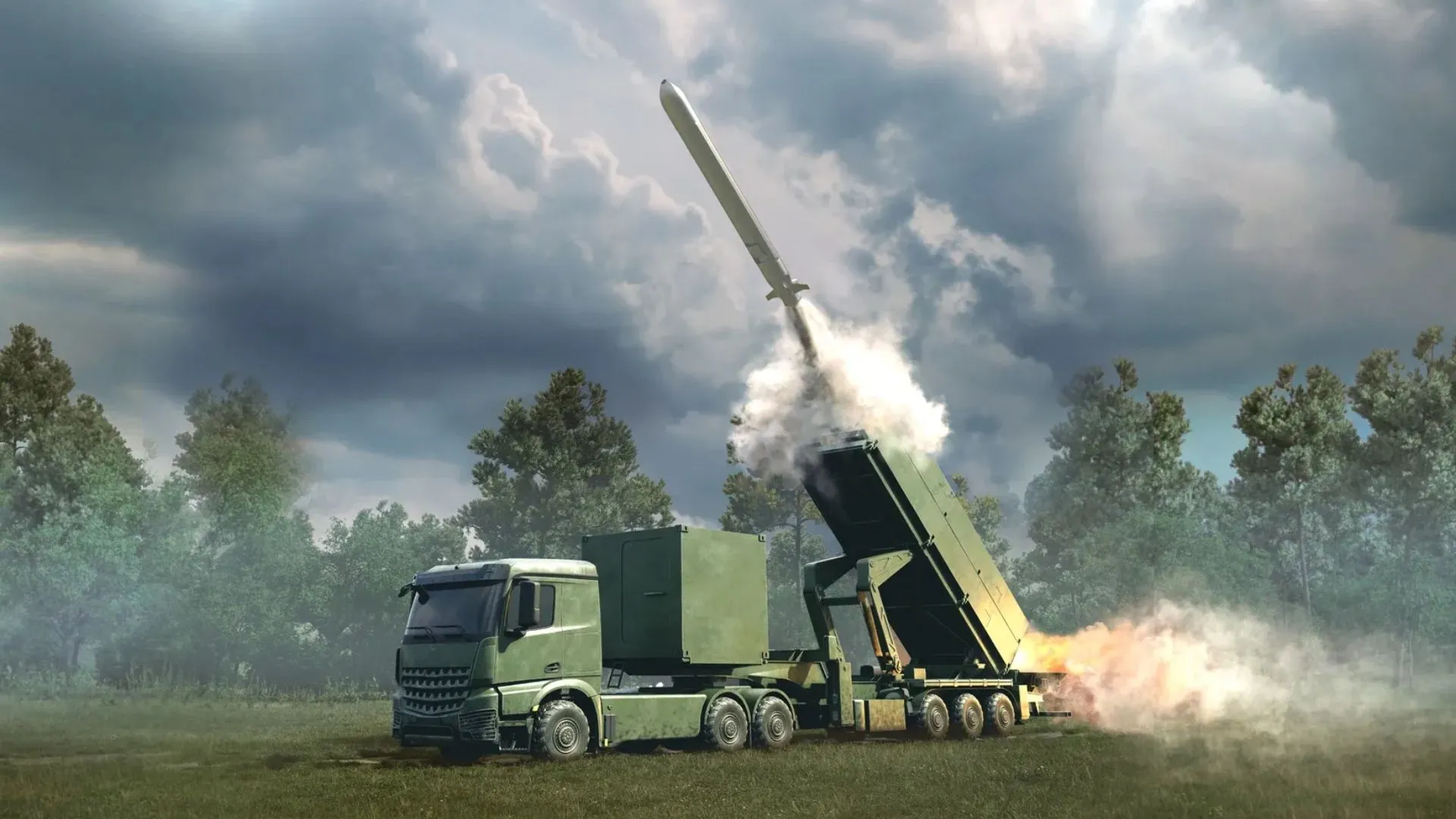
European missile manufacturer MBDA has officially unveiled FastTrack at the Eurosatory defence exhibition in Paris — an AI-assisted mission-planning system that reduces cruise missile flight-plan generation from hours or even days to just a few minutes. FastTrack is a key component of MBDA's next-generation Land Cruise Missile (LCM) programme and was demonstrated alongside the next-generation naval/land-based cruise missile (NCM-LCM) Mk2.
Why Cruise Missile Route Planning Takes So Long
According to European Defense Review (EDR), modern cruise missile mission planning is far more complex than simply entering target coordinates. Planners must simultaneously account for terrain, weather conditions, known enemy air-defence positions, radar coverage areas, target types, weapon availability, and the intended time-on-target.
Cruise missiles typically fly at extremely low altitudes, using terrain features such as mountain ranges to mask their radar signature while evading known air-defence systems. When a coordinated, multi-missile strike is involved, planners must also ensure that every missile arrives at its respective target within seconds of one another in order to maximise the chance of overwhelming enemy defences. Historically, generating such flight routes required dedicated planning centres, and particularly complex missions could take days to complete.
AI Evaluates Thousands of Possible Routes
In the Eurosatory demonstration, an operator simply entered target location and mission parameters; FastTrack then integrated enemy air-defence intelligence, terrain, and meteorological data to automatically generate multiple possible flight paths and present the best options in ranked order.
One of the system's most notable features is the stealthness indicator. Rather than measuring a missile's radar cross-section, this metric estimates the proportion of the total flight during which the missile successfully evades enemy sensors through terrain masking and low-altitude flight. According to EDR, simulated missions typically achieved a stealth ratio of 75–85%, with a complete mission plan generated within minutes.
Simulating Real-World Combat Scenarios
MBDA demonstrated FastTrack's capabilities across three distinct operational scenarios:
Scenario 1 – Time-Sensitive Target A train stationary at a railway station, requiring the system to complete mission planning within an extremely short window to demonstrate rapid-response capability.
Scenario 2 – Hardened Command Post Required the software to simultaneously optimise the attack axis and coordinate the simultaneous time-on-target arrival of multiple cruise missiles.
Scenario 3 – Complex Strike Mission As reported by Defence Express and EDR, planners simulated a strike against a target approximately 1,000 km away. Forward-deployed enemy air-defence systems blocked the missile's planned route, causing the estimated mission success rate to drop below 50%.
Rather than abandoning the mission, the system incorporated approximately 30 "Deluge" expendable drones — formerly known as One Way Effectors — into the strike plan. These drones were not necessarily tasked with directly destroying the air-defence systems, but rather with saturating them and forcing the enemy to expend interceptor missiles. Once the drones were added to the simulation, the estimated mission success rate rose to above 80%.
Compressing the Kill Chain
Modern militaries are placing increasing emphasis on shortening the sensor-to-shooter cycle — the time elapsed between detecting a target and completing the strike. According to MBDA's demonstration, mission planning can proceed in parallel with the launcher vehicle moving into position. Since the company's ground-based LCM launcher requires approximately 15 minutes to deploy, a complete strike plan can be ready before the launcher vehicle is even in position.
As long-range precision weapons play an increasingly central role in modern warfare, compressing mission planning time from hours to minutes may prove strategically significant — no less so than extending missile range or improving accuracy. FastTrack is not designed to replace human operators; rather, it is intended to give commanders near-real-time access to multiple optimised strike options, enabling them to respond more rapidly to fast-changing battlefield targets and situations.
原文來源: 查看原文
FAQ
Newsletter
Subscribe to our Low-Altitude Industry Newsletter
Daily curated news on low-altitude economy and drone industry, delivered to your inbox.