Eurofighter Damaged, MQ-9A Reaper Destroyed: How 'Neutral' Italy Lost Military Aircraft in the US-Iran War
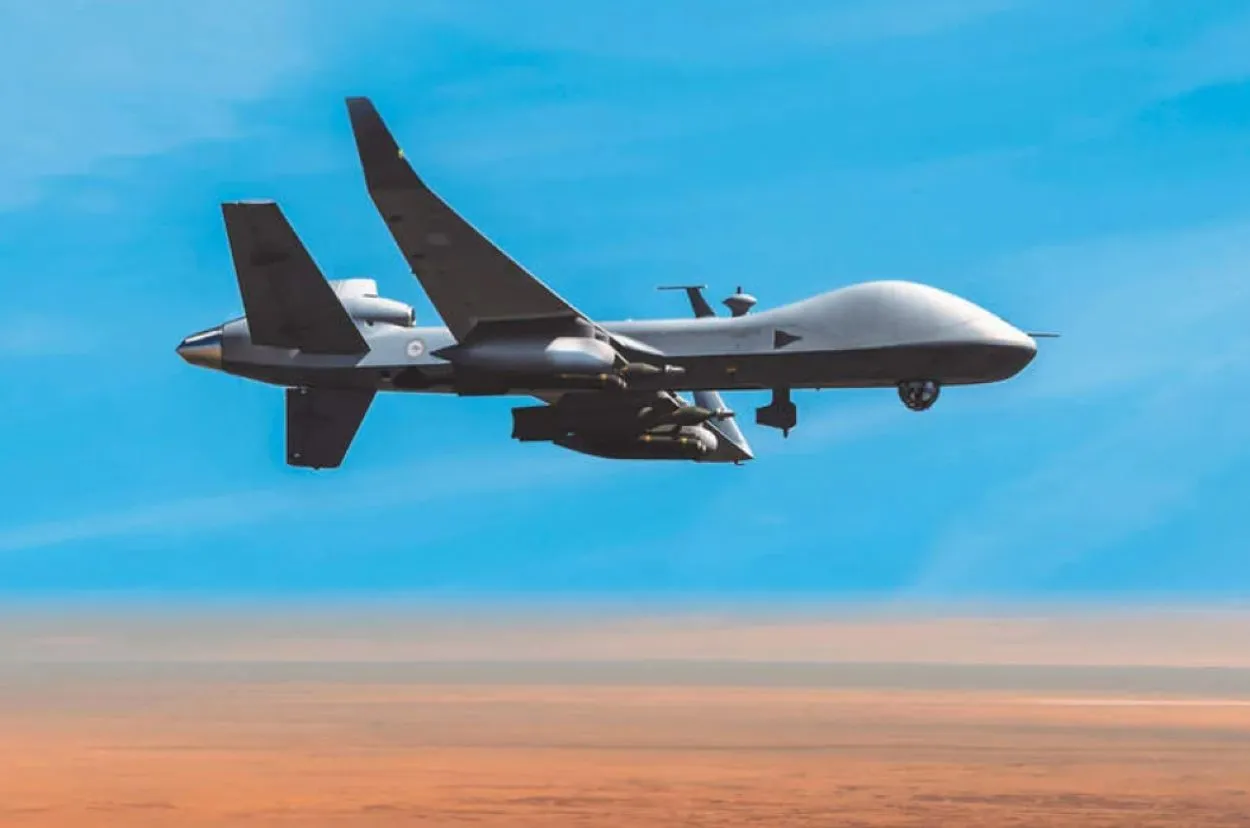
Italy refused to join US military operations against Iran, yet still paid a price. According to Italy's Corriere della Sera, on March 15, 2025, an Italian MQ-9A Reaper drone was destroyed on the ground at Ali Al Salem Air Base in Kuwait during an Iranian missile and drone attack, with losses estimated at approximately €34 million. Two Italian Eurofighter Typhoons were also reportedly damaged in the same strike.

Highlights
- On March 15, 2025, an Italian MQ-9A Reaper drone valued at approximately €34 million was destroyed on the ground at Ali Al Salem Air Base in Kuwait during an Iranian missile and drone attack.
- The drone was one of six MQ-9As deployed by Italy's 32nd Wing from Amendola Air Base for counter-ISIS ISR missions — not for offensive operations against Iran.
- Italy's Defence Ministry had considered evacuating its aircraft from Kuwait before the attack but decided against it, fearing the move would be seen as a hostile act by Iran.
- Two Italian Eurofighter Typhoons were also reportedly damaged in the same strike, according to open-source intelligence and media reports, though both were assessed as repairable.
- NATO Secretary General Mark Rutte's claim that '500 American aircraft used Italian bases' during the conflict triggered a political dispute with Prime Minister Meloni, who insists Italy did not participate in offensive operations against Iran.
Eurofighter Damaged, MQ-9A Reaper Destroyed: How 'Neutral' Italy Lost Military Aircraft in the US-Iran War
Italy declined to join the United States in its war against Iran and refused to allow US aircraft to use Italian bases for offensive strikes against Iran. Yet the risks inherent in operating near an active theater of war meant that several Italian military aircraft were reportedly caught in the crossfire.
Iran Strikes Back After Operation Epic Fury
On February 28, 2025, the United States launched Operation Epic Fury, with President Donald Trump anticipating that Iran would be neutralized within days. However, Iran's Islamic Revolutionary Guard Corps (IRGC) began its counteroffensive almost immediately after the first wave of strikes, launching attacks against Gulf states hosting US personnel and equipment.
MQ-9A Reaper Destroyed in Kuwait
According to Corriere della Sera — Italy's largest-circulation newspaper — one such attack targeted Kuwait, one of the countries in the region with the largest US military presence. On March 15, a combined missile and drone attack struck Ali Al Salem Air Base, destroying an Italian MQ-9A Reaper drone while it sat on the ground.
The aircraft was one of six MQ-9As deployed to the Middle East by the 32nd Wing from Amendola Air Base in southeastern Italy, where they were conducting intelligence, surveillance, and reconnaissance (ISR) missions in support of counter-ISIS operations.
Ali Al Salem Air Base — nicknamed "The Rock" for its elevation above the surrounding desert plain — is one of the most strategically important military installations in the Middle East. It hosts Italian Air Force Eurofighters and drones, and also serves as a US Central Command (CENTCOM) airlift and logistics hub, likely making it a priority target for Iran.
Italy Weighed Evacuation but Chose to Stand Pat
Corriere della Sera, citing "authoritative sources familiar with the matter," reported that Italy's Defense Ministry had previously assessed the risk of aircraft being attacked in Kuwait and discussed potential force-protection measures, including relocating aircraft out of the potential strike zone.
Ultimately, that option was abandoned. Officials feared that such a defensive move might itself be interpreted by Iran as a hostile act — particularly given that Iran was at the time being subjected to intensive bombardment by the United States and Israel. Rome was determined to avoid any action that could be seen as drawing Italy into the conflict.
After deliberation, the decision was made to leave the aircraft in place. The MQ-9A, valued at approximately €34 million, was parked inside a hangar at Ali Al Salem Air Base at the time of the strike.
Notably, Italian Chief of Defence Staff General Luciano Portolano publicly announced the drone's destruction the day after the attack.
"This morning, Ali Al Salem Air Base in Kuwait — which hosts US and Italian capabilities and personnel — was struck by a drone attack. A hangar housing a remotely piloted aircraft belonging to the Italian Air Force contingent was hit, and the aircraft was destroyed," he stated. "I immediately contacted Colonel Mangini to confirm the status of Italian personnel on the base. All personnel were safe and unharmed at the time of the attack. I have already reported the incident to Defence Minister Crosetto and remain in continuous contact with him, closely monitoring the situation of all our forces deployed abroad." His statement did not name the MQ-9A by type.
The statement added: "The aircraft that was struck was an asset indispensable to ongoing operations, and had remained at the base to ensure operational continuity."
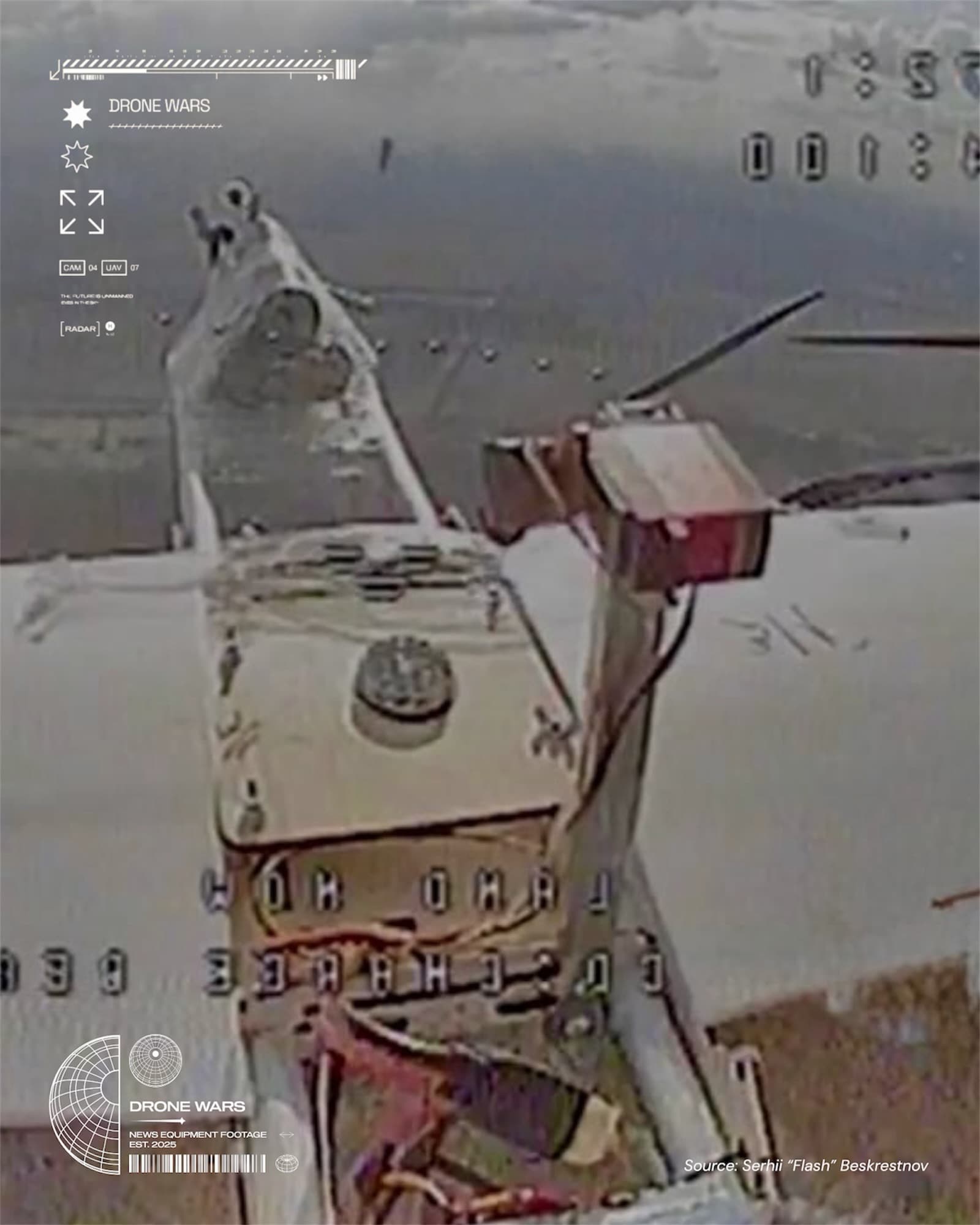
It is worth noting that reporting from late March indicated that a subsequent Iranian ballistic missile attack on the same Kuwaiti base caused serious damage to two US MQ-9 Reapers, underscoring that Italy was not the only nation to lose this type of aircraft in the conflict. The United States reportedly lost more than two dozen — over 24 — MQ-9s in total during the confrontation with Iran.
Eurofighters Also Reportedly Damaged
Beyond the MQ-9, Italy's Eurofighter Typhoons were also reportedly caught in the strike on the base. Open-source intelligence analysts and several media outlets reported that two Italian Eurofighters were damaged in the attack, though assessed as repairable.
Aviation news site The Aviationist observed in a recent report that four Italian Eurofighters were believed to have been at the base at the time of the attack, and that three had returned to Italy within days of the incident. This suggests that either only one aircraft was affected, or that one of the two damaged jets sustained only minor damage and was therefore able to return to Italy under its own power.
If both accounts are accurate, Italy would be the second NATO member state — after the United States — to have suffered confirmed military losses and damage in the US-Iran war. The US reportedly lost 42 aircraft in total during the conflict.
Italy: We Did Not Take Part in the US-Iran War
In late June, NATO Secretary General Mark Rutte, speaking to Fox News, emphasized allied support for the United States while acknowledging he understood President Trump's frustration over allied contributions. He stated that allies had provided military support to the US throughout the Iran war, claiming that "500 American aircraft used Italian bases," and that Bucharest had even cut commercial flights to allow the US military to store tanker equipment at the city's airport during Operation Epic Fury.
The remarks caused a political storm in Italy. Prime Minister Giorgia Meloni's political opponents immediately accused her of having misled the public — Meloni had consistently maintained that Italy stayed out of the conflict, and that Rome had only permitted US forces to conduct logistics and technical operations at facilities in Italy.
Meloni, in turn, accused Rutte of presenting a misleading account. Speaking to reporters on the sidelines of the Franco-Italian summit, she said: "The Secretary General, in what I might charitably call his enthusiastic account, conflated very different things and confused the nature of various authorized flights. We did not participate in the conflict against Iran. In fact, if we had participated in the Iran conflict, there would be no way to explain the kind of disappointment that the US President has repeatedly expressed."
Meloni reiterated that Italy had only authorized its bases for technical and logistical activities, saying she did not understand why Rutte had offered such an "oversimplified account." Defence Minister Guido Crosetto called Rutte's remarks "entirely misleading," stressing that Rutte "has nothing to do with Operation Epic Fury" and insisting that Italy's authorizations were based on existing agreements that did not extend to strike operations.
It bears noting that Italy and Spain were among the first NATO members to refuse US requests to use their bases for offensive strikes against Iran. Meloni had publicly opposed the war and stated in parliament that the US-Israeli military campaign was part of a dangerous and escalating trend of intervention "beyond the bounds of international law."
Corriere della Sera's report concluded that the destroyed drone stands as tangible proof that Italy did not participate in offensive operations against Iran — a finding that directly contradicts NATO Secretary General Mark Rutte's portrayal of Italy as a more active participant in the conflict.
原文來源: 查看原文
FAQ
Newsletter
Subscribe to our Low-Altitude Industry Newsletter
Daily curated news on low-altitude economy and drone industry, delivered to your inbox.