NASA X-59 Pilots Prepare for Next Phase: Generating the 'Sonic Thump'
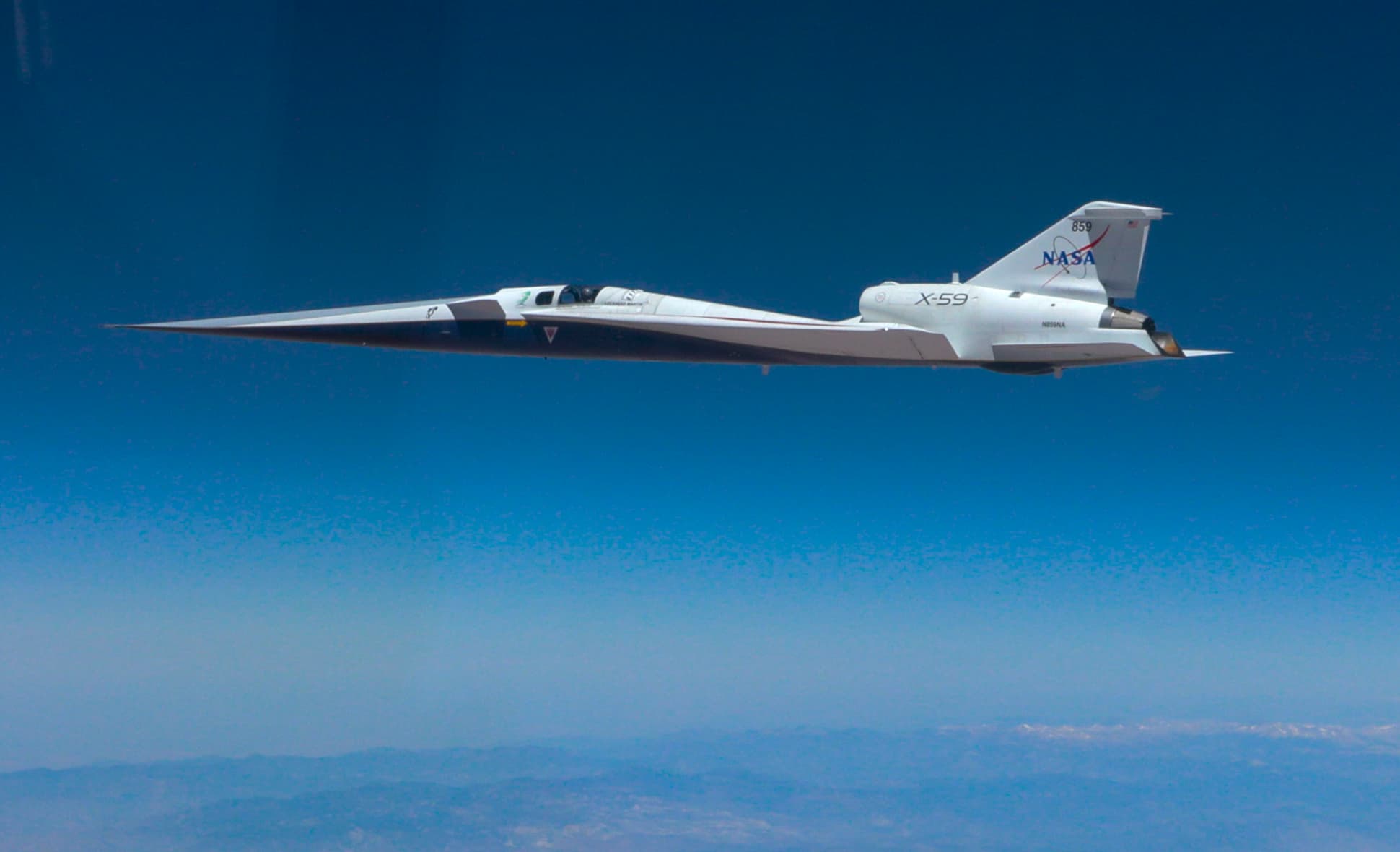
The pilot team for NASA's X-59 Quiet SuperSonic Technology (QueSST) demonstrator is gearing up for the next phase of flight testing, with the goal of producing a so-called 'sonic thump' instead of a traditional sonic boom — a key step toward validating low-noise supersonic flight and potentially reshaping overland supersonic flight regulations.

Highlights
- NASA's X-59 QueSST pilot team is preparing for flight tests specifically designed to produce a 'sonic thump' — a quiet alternative to the traditional sonic boom — during supersonic flight.
- The X-59 was co-developed by NASA and Lockheed Martin, featuring an airframe engineered to disperse shockwaves and minimize the acoustic impact on ground-level communities.
- Acoustic data gathered during X-59 test flights will be submitted to the FAA and international regulators as evidence to support potential revisions to overland supersonic flight restrictions.
- A successful X-59 demonstration could open the door to commercial supersonic passenger travel, enabling significantly faster long-haul flights without disturbing ground-level noise levels.
NASA X-59 Pilots Prepare for Next Phase: Generating the 'Sonic Thump'
The pilot team for NASA's X-59 Quiet SuperSonic Technology (QueSST) demonstrator is actively preparing for the next phase of flight testing. The central objective: achieve supersonic flight that produces what engineers call a 'sonic thump' — a low-level acoustic signature — rather than the disruptive sonic boom traditionally associated with breaking the sound barrier.
Developed through a partnership between NASA and Lockheed Martin, the X-59 features a distinctive airframe designed to disperse shockwaves generated during supersonic flight. The result, in theory, is a sound that reaches the ground as little more than a faint thud, rather than the sharp, window-rattling boom that led to overland supersonic flight bans decades ago.
The pilot team is currently undergoing intensive training in preparation for the upcoming test flights, which must be executed with precision to safely achieve supersonic speeds and capture critical acoustic data. That data will be submitted to the Federal Aviation Administration (FAA) and international regulatory bodies as key evidence to inform potential revisions to overland supersonic flight rules.
NASA hopes the results from the X-59 program will open new possibilities for commercial supersonic aviation — enabling passengers to complete long-haul journeys in significantly less time, without exposing communities on the ground to disruptive noise levels.
原文來源: 查看原文
FAQ
Newsletter
Subscribe to our Low-Altitude Industry Newsletter
Daily curated news on low-altitude economy and drone industry, delivered to your inbox.