Croatia's Orqa Signs CAD $150 Million Production Deal with Canada
Croatian FPV drone maker Orqa and Canadian defence firm Remote Robotic Systems signed a five-year, CAD $150 million agreement in Toronto on June 25, 2026, to manufacture drones, AI systems, and counter-drone solutions in Canada. Both countries' prime ministers witnessed the signing, and Canada was named the first non-European member of the EU's SAFE security initiative.

Highlights
- Croatian FPV drone maker Orqa and Canada's Remote Robotic Systems signed a CAD $150 million, five-year production agreement in Toronto on June 25, 2026, witnessed by both countries' prime ministers.
- The deal targets monthly output of 1,000 drone systems by mid-2027, scaling to 10,000 units per month by 2029, with 100 Canadian jobs created before end of Q4 2027.
- Canada was designated the first non-European member of the EU's SAFE (Security Action For Europe) initiative, a framework for strengthening allied sovereign defence capabilities.
- RRS will be licensed across Orqa's full product catalogue, including the Wingman Co-Pilot AI assistant and Arctic Falcon platform, with an initial CAD $20 million investment.
- Within the same month, Orqa also launched Orqa U.S. LLC to produce Blue UAS-compliant drones in the United States, establishing sovereign production footholds on both sides of the North American border simultaneously.
Croatia's Orqa Signs CAD $150 Million Production Deal with Canada
Croatian FPV drone manufacturer Orqa and Canadian defence company Remote Robotic Systems (RRS) formally signed a five-year cooperation agreement worth CAD $150 million in Toronto on June 25, 2026. The deal targets the domestic production of drones, artificial intelligence systems, and counter-drone systems within Canada.
Canadian Prime Minister Mark Carney and Croatian Prime Minister Andrej Plenkovic attended the signing ceremony in person, with Orqa co-founder Ivan Jelusic and RRS CEO Kevin Toderel completing the agreement on the spot. The presence of both heads of government represents the highest-level diplomatic endorsement possible for a commercial defence partnership.
The production targets are equally ambitious: the parties plan to reach a monthly output of 1,000 systems by mid-2027, scaling further to 10,000 units per month by 2029, while creating 100 jobs in Canada before the end of Q4 2027. This is not a statement of intent — it is a concrete production roadmap backed by sovereign credibility on both sides.
Orqa Active in Over 50 Markets, Ranked on FT1000
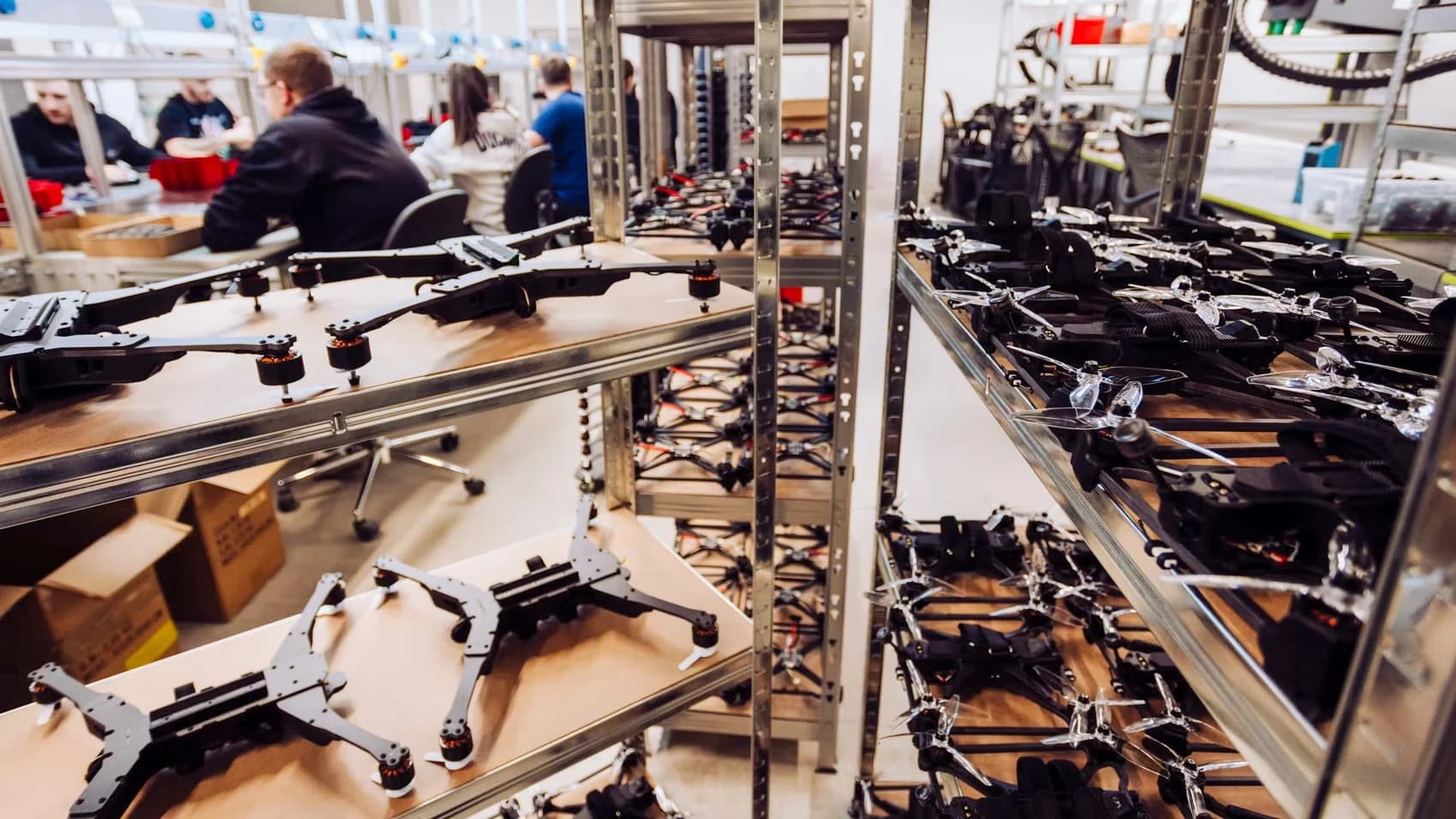
Orqa d.o.o., headquartered in Croatia, currently exports components and complete FPV and drone systems to more than 50 markets worldwide. Last year, the Financial Times FT1000 ranking of Europe's fastest-growing companies placed Orqa at No. 135 overall and second in the aerospace and defence category — positioning it among the rare European drone manufacturers that have built their reputation on actual orders rather than presentation slides.
RRS, which operates facilities in Ottawa and Mississauga, will be responsible for establishing the Canadian production line and plans to expand further in Toronto. RRS will be licensed across Orqa's full product catalogue, including the Wingman Co-Pilot AI assistant and the Arctic Falcon platform, and will receive an initial investment of CAD $20 million within the broader CAD $150 million framework.
Croatia is a small country, but its FPV industry punches well above its weight — a foundation built long before this deal was signed. Croatian manufacturers have supplied FPV combat drones to the Ukrainian battlefield for years, and the volume of shipments combined with real-world combat feedback has forced European FPV manufacturing to mature far faster than most Western procurement agencies anticipated. Orqa's FT1000 growth was not built at trade show booths — it was built on mass-production capability proven under fire.
Canada Becomes SAFE Initiative's First Non-European Member
According to PR Newswire, the most significant element of the announcement is not the dollar figure, but Canada's designation as the first non-European country invited to join the Security Action For Europe (SAFE) initiative — a European mechanism designed to strengthen allied sovereign defence capabilities.
The inclusion of a North American nation within a European industrial security framework represents the real geopolitical shift underlying this announcement, and the production agreement is the vehicle carrying it.
Ivan Jelusic framed the deal in institutional terms: "This memorandum will formally establish the strategic cooperation framework between RRS and Orqa for the joint development, manufacturing, and commercialisation of advanced defence technologies." Kevin Toderel was more direct: "Orqa is a global leader in small UAS, and we are proud to manufacture these systems in Canada."
Croatia Exporting Sovereign Production Capacity to Both Ottawa and Washington
The Canada deal is part of a broader strategic play by Orqa. Just weeks earlier, the same Croatian company launched Orqa U.S. LLC in partnership with By Light Professional IT Services — a new US-domiciled entity producing fully American-made drone systems for military and government buyers, delivering Blue UAS-compliant drones through a domestic US industrial base. Croatia is now simultaneously exporting sovereign production capacity to both Ottawa and Washington.
This is not a coincidence of timing — it is a business model.
The Canadian and American frameworks each carry their own compliance requirements. The US Blue UAS is a Department of Defense procurement list designed to exclude DJI hardware from federal fleets and prioritise American-made airframes. Canada does not yet have a formal Blue UAS equivalent, but Ottawa has political will, growing defence procurement momentum, and public support for domestic production.
For Orqa, this is an open window of opportunity — and a warning signal for Canadian drone manufacturers who assumed the sovereign production narrative was automatically theirs to claim.
Production Timelines Are Ambitious
The production targets deserve careful scrutiny. Moving from contract signing to 1,000 units per month by mid-2027 leaves just 15 months. Even for a company already shipping to over 50 markets, establishing a Canadian production line, hiring 100 employees, and completing Canadian military-use certification within that timeframe is a demanding schedule — not impossible, but far from straightforward.
The 10,000-units-per-month target by 2029 would place Orqa Canada among the world's largest FPV manufacturers by volume. If achieved, a new industrial node would appear on the Western drone manufacturing map.
The counter-drone system component also warrants independent attention. Orqa did not build its reputation on counter-UAS. Including counter-drone systems within a partnership centred on FPV production suggests either that the Canadian side is bringing this capability to the table, or that both parties plan to develop it jointly under the venture framework. The press release does not elaborate on this point.
Industry Outlook
The attendance of two heads of government and the EU security framework endorsement signal that this is not a standard investor announcement — it is an industrial policy move at the governmental level. Whether Canadian buyers, starting with defence customers and potentially extending to public safety, can actually absorb the output implied by those production numbers is the question that the next 18 months will answer.
It was not Silicon Valley but Ukraine that served as the true proving ground for the FPV industry. Watching that reality arrive in North America through a Croatian door should make the US drone sector uncomfortable. Within a single month, Orqa has established new production footholds on both sides of the North American border. That is not a friendly greeting from Zagreb — it is a scoreboard.
Croatia sold sovereign drones to Canada. Weeks earlier, it sold sovereign drones to the United States. The winner in this story is not the buyer — it is the builder who convinced both sides that only it could deliver what they needed.
Image credit: Orqa
原文來源: 查看原文
FAQ
Newsletter
Subscribe to our Low-Altitude Industry Newsletter
Daily curated news on low-altitude economy and drone industry, delivered to your inbox.