Voliro Launches Repeatability Feature to Bring CML-Style Asset Integrity Workflows to Drone Inspection
Voliro has announced a new Repeatability feature for its Voliro T subscription plan, combining RTK positioning, anchor-point setting, and AR navigation guidance to enable drone inspection operators to return precisely to the same physical measurement points across missions. The capability supports time-series data collection similar to Condition Monitoring Locations (CMLs), significantly improving the reliability of industrial asset integrity assessments.

Highlights
- Voliro has added a Repeatability feature to the Voliro T subscription plan, enabling drone operators to return precisely to the same physical inspection point using RTK positioning and AR navigation guidance.
- The feature creates drone-based equivalents of Condition Monitoring Locations (CMLs), allowing time-series data collection that supports reliable corrosion rate calculation and asset integrity trend analysis.
- Repeatability is included in the existing Voliro T subscription at no extra cost, with no hardware changes required for current subscribers.
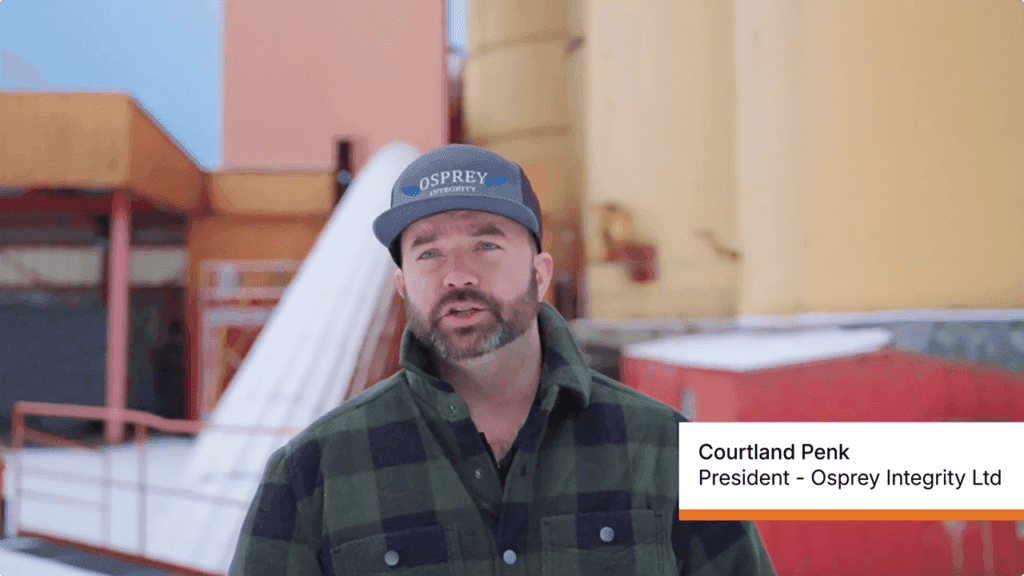
- Osprey Integrity President Courtland Penk confirmed the feature enables repeatable inspections and consistent data for tracking asset integrity changes over time.
- Target applications include elevated pipelines, pipe racks, towers, stacks, and hard-to-access inspection points across oil and gas, power, wind, chemical, and mining industries.
Voliro Launches Repeatability Feature to Bring CML-Style Asset Integrity Workflows to Drone Inspection
Robotic and drone inspection technology has fundamentally changed how industrial assets are examined. By reducing the need for personnel to physically access hazardous locations, these technologies have delivered meaningful gains in safety, operational efficiency, and data collection across the oil and gas, power, wind energy, chemical, and mining sectors. Yet inspections have historically captured only a snapshot of an asset's condition at a single point in time — without tracking how specific locations change over time. That gap is critical for asset integrity management.
The Limits of Snapshot Inspection
Snapshot inspections have clear value: they help identify defects, document current conditions, and reduce inspection risk. But when inspections are repeated, even minor variations in measurement position make results difficult to compare reliably.
This creates several challenges:
- Apparent surface changes may reflect positional variation rather than genuine deterioration.
- Corrosion rate and remaining-life estimates lose credibility.
- Inspection decisions tend toward conservative assumptions.
- Trend analysis becomes qualitative judgment rather than data-driven insight.
Why Repeatability Matters in Robotic NDT Inspection
Asset integrity management depends on comparable measurement data. This is precisely why Condition Monitoring Locations (CMLs) have been widely adopted across industries — by returning to the same physical location at regular intervals, teams can distinguish real change from measurement noise.
In practice, however, achieving true point-level repeatability is challenging, especially at elevation or in hard-to-reach locations. Traditional markers, drawings, or photographs offer some help, but they rarely guarantee genuine spatial repeatability in the field. Without it, teams are often left comparing data from slightly different locations and inferring trends as best they can.
"One of the biggest challenges in remotely operated robotic inspection is the ability to return to the same location. Voliro makes this possible, enabling repeatable inspections and consistent data so we can better understand how asset integrity changes over time." — Courtland Penk, President, Osprey Integrity
Introducing the Voliro Repeatability Feature
Voliro's new Repeatability feature combines anchor-point setting, RTK precision positioning, and augmented reality (AR) navigation guidance to allow operators to return precisely to the same physical inspection point across different missions.
During the initial inspection, the operator sets measurement point anchors directly on the asset, establishing accurate spatial references tied to the physical structure. On subsequent missions, the operator selects previously measured points and re-anchors; the system then uses AR overlay guidance to navigate the operator back to all relevant inspection locations.
Each new measurement is automatically associated with the original location, ensuring spatial consistency across missions. This enables reliable trend analysis, accurate corrosion rate calculations, and higher-confidence asset integrity decisions — transforming robotic inspection from isolated snapshots into consistent, time-series data.
Included in the Voliro T Subscription Plan
Importantly, the Repeatability feature is not an add-on module or a separate purchase. It is delivered as part of the Voliro T subscription plan, reflecting Voliro's commitment to continuously expanding value for its customers.
As inspection programs mature, asset owners and service providers gain access to new capabilities such as Repeatability without replacing hardware or renegotiating commercial terms. This ensures that improvements in inspection quality, data reliability, and workflow integration benefit all existing users consistently.
By including Repeatability in the subscription, Voliro helps customers transition from snapshot inspections to long-term, repeatable asset integrity workflows — all within a single unified platform.
What Changes With This Feature?
The Repeatability feature unlocks several significant shifts in how robotic inspection delivers value:
- From one-time inspections to condition monitoring: Inspections no longer just detect problems — they support trend tracking and ongoing surveillance.
- From qualitative interpretation to trustworthy data: Returning to the same location reduces measurement variability and makes trends more credible.
- From access-centric value to integrity-centric value: Robotic inspection moves beyond "safer access" to become a meaningful input into asset integrity workflows.
- From snapshots to decision support: Data accumulates over time in a comparable, reliable form that can directly inform decisions.
A Natural Fit for Asset Integrity Workflows
The Repeatability feature aligns closely with how existing asset integrity management programs already operate. By establishing drone-based equivalents of CMLs, robotic inspection can integrate more naturally into existing inspection and maintenance strategies.
This is especially relevant for:
- Elevated pipelines and pipe racks
- Towers, stacks, and columns
- Known corrosion or degradation areas
- Hard-to-access inspection points where repeated physical access is costly
In these contexts, Repeatability is not merely a technical enhancement — it is an operational breakthrough.
A Step Toward Predictable Asset Integrity Management
The Repeatability feature represents more than a new capability. It marks a fundamental shift in what robotic inspection is expected to deliver: not just access and visual imagery, but confidence that builds over time.
By enabling inspections to return to the same point again and again, Repeatability helps teams move from reactive problem detection toward predictive, data-driven asset integrity management.
Robotic inspection has already changed how assets are accessed and examined. Repeatability changes what those inspections are worth. By eliminating inter-position comparison errors and enabling true same-location measurements, the Repeatability feature transforms robotic inspection into a foundation for long-term insight, confidence building, and better decisions.
To learn more about the Voliro Repeatability feature, schedule a free demonstration.
原文來源: 查看原文
FAQ
Newsletter
Subscribe to our Low-Altitude Industry Newsletter
Daily curated news on low-altitude economy and drone industry, delivered to your inbox.
Reviewed and published by the LAETimes editorial desk ·