Antigravity A1 vs. DJI Avata 360: The One Feature That Changes Everything
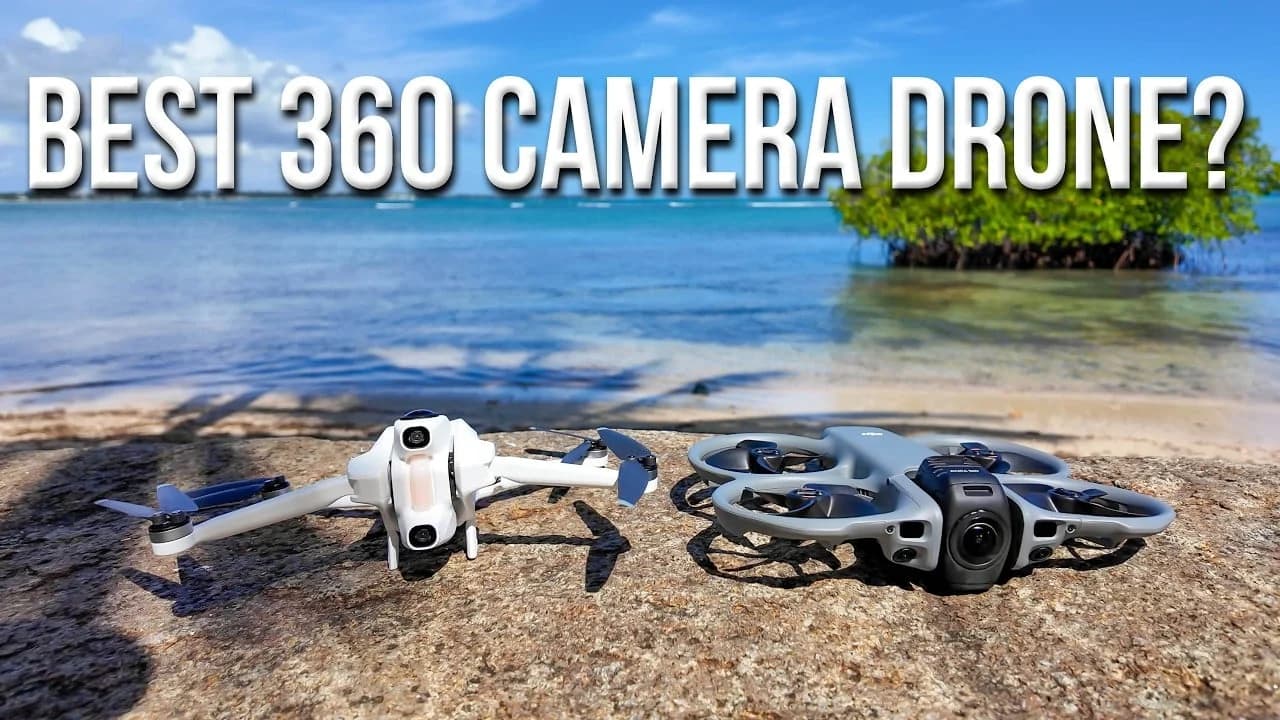
A hands-on comparison of two 360-degree drones — the Antigravity A1 and DJI Avata 360 — covering design, lens protection, signal strength, flight time, and image quality. The A1 wins on portability and battery endurance (25+ minutes), while the Avata 360 leads in signal reliability, lens protection, and DLog-M color flexibility. Buyers are advised to identify their flying style before choosing.
Highlights
- The Antigravity A1 with its extended battery achieves 25–26+ minutes of flight time, compared to just over 15 minutes for the DJI Avata 360 in windy conditions.
- The DJI Avata 360 significantly outperforms the Antigravity A1 on signal stability, particularly when flying behind obstacles, due to DJI's established transmission technology.
- The Avata 360's folding lens mechanism protects optics when the drone is powered off; the A1's retracted landing legs leave the bottom lens exposed on surfaces until startup.
- The Antigravity A1 exceeds 250 grams with the extended battery, requiring FAA registration in the United States and equivalent registration in other countries.
- The DJI Avata 360 supports DLog-M log color profile for post-production flexibility, while the A1 delivers more vibrant straight-out-of-camera color for users who prefer minimal editing.
If you're weighing up a 360-degree camera drone and can't decide between the Antigravity A1 and the DJI Avata 360, you're not alone. It's a genuinely tough call — but the real question isn't "which drone should I buy?" It's: "What kind of pilot am I?" or "What kind of pilot do I want to become?" Because at the end of the day, both drones are excellent. They're just excellent in different ways, for different use cases.
The goal of this article is simple: by the time you finish reading, you should have a much clearer idea of which one suits you better. A quick disclosure: the Avata 360 was purchased out of pocket, while Antigravity provided the A1 for review — making this a sponsored piece. That said, Antigravity explicitly requested a fair, objective head-to-head comparison and asked readers to judge for themselves.
Body Design: A1 Wins for Travel
Let's start with form factor — size, portability, and ease of transport. When packing for a trip to Puerto Rico, the dilemma of which drone to bring was eventually resolved by bringing both.
The Antigravity A1's foldable, lightweight design is its strongest travel argument.
The Avata 360 is undeniably solid. Its propeller guards give you real confidence in the air — clip a tree branch and you'll typically walk away without serious damage. The A1, by contrast, is more vulnerable in a collision; a hard knock risks damaging both the lenses and propellers. But for carry-on-only travelers, the A1's compact, packable form is hard to argue with. Portability: Antigravity A1 wins.
Lens Protection: Avata 360's Folding Lens Mechanism Is a Clear Advantage
There are a few meaningful differences here. The Antigravity A1's landing legs are retracted when powered off and only deploy after startup. This means that if you take the drone out of its case and set it on a table, a beach, or a rock, the bottom lens is almost immediately at risk of scratching — a lesson learned the hard way on day one, requiring a lens replacement.
Fortunately, both drones ship with lens replacement kits at a reasonable price. Whichever you choose, buying a spare lens kit is strongly recommended — you will need it.
The Avata 360 handles this more elegantly: when powered off, both lenses fold forward, allowing the body to rest stably on a surface. After takeoff, the lenses automatically rotate into their correct positions — one facing up, one facing down — to capture and stitch the 360-degree image. This design significantly reduces the risk of accidental lens scratches.
The Avata 360 also supports a single-lens mode, allowing you to shoot forward with just one lens if a full 360-degree image isn't needed — a feature the A1 lacks. That said, since the Avata 360 has no gimbal, single-lens footage can be shaky; shooting in full 360-degree mode is generally the better approach. Lens protection: Avata 360 wins.
Signal Strength: DJI's Years of Transmission Technology Show
On signal strength, DJI's years of investment in video transmission technology are difficult to match. It's worth emphasizing that headline figures like "10 km or 15 km maximum range" are largely meaningless in practice. What matters is: can the controller or FPV goggles maintain a stable connection when the drone flies behind an obstacle?
On that metric, the DJI Avata 360 is substantially better than the Antigravity A1. This isn't surprising — DJI has years of deep expertise in drone transmission, while the A1 (developed in partnership between Antigravity and Insta360) is a first-generation product. Just as DJI's original OcuSync 1 technology improved dramatically over time, the A1's transmission capabilities should evolve. But right now, signal strength: Avata 360 wins decisively.
Wind Resistance: A Draw at 30 mph
Both drones performed well in the strong coastal winds of Puerto Rico. The Avata 360 struggled slightly with crosswinds but handled headwinds without issue. The A1, which only flies forward, also showed solid headwind performance. Testing at El Morro fortress — where wind speeds were estimated at around 30 mph (approximately 48 km/h) — both drones handled the conditions without difficulty, delivering smooth, stable footage. Wind resistance: draw.
Control Options: Avata 360's Accessory Ecosystem vs. A1's Immersive Experience
The Antigravity A1 currently relies primarily on FPV goggles paired with a motion controller. A dedicated remote controller is expected in Q2 of this year (possibly slipping to Q3), which should broaden its appeal to pilots accustomed to traditional sticks.
The Avata 360, meanwhile, offers extensive control flexibility: Goggles N3, Goggles 3, a standard remote with a smartphone, the FPV 3 controller, and a screen remote are all supported. For pilots already embedded in the DJI ecosystem, buying just the drone body and spare batteries is enough to get flying immediately — no new accessories required.
That said, the A1's goggle experience is genuinely impressive — comfortable to wear, deeply immersive, and gives you a real sense of being in the sky. Regardless of which drone you choose, flying with goggles and a motion controller is strongly recommended, because that is the true essence of a 360-degree drone.
Flight Time: A1 with Extended Battery Wins Clearly
On battery endurance, the Antigravity A1 with the extended battery delivers 25 to 26+ minutes of flight time — a clear advantage. The Avata 360's best recorded flight in windy conditions came in at just over 15 minutes.
One caveat: the A1 with the extended battery exceeds 250 grams, which means registration with the relevant aviation authority (such as the FAA in the United States, or equivalent bodies in other countries) is required. But if flight time is a priority, battery endurance: A1 wins.
Noise: Both Are Loud, but the Avata 360 Is Shriller
Both drones produce similar overall noise levels — roughly 70 to 90 decibels depending on flight conditions. However, the Avata 360 emits a sharper, higher-frequency pitch that remains clearly audible at greater distances. The A1 is equally noticeable but produces a lower-frequency tone that is comparatively less irritating. Noise: A1 has the edge.
Image Quality: A1's Pleasing Colors vs. Avata 360's DLog-M Flexibility
Both drones have their strengths here:
- Antigravity A1: Straight-out-of-camera color is vibrant and pleasing. When viewed on a computer, the colors appear richer and more natural compared to the Avata 360's standard color profile — ideal for users who prefer to share footage without post-processing.
- DJI Avata 360: Supports DLog-M log color profile, providing a wider dynamic range and greater flexibility for color grading in post-production — well-suited to creators who want precise control over color and contrast.
In short: if you enjoy post-production, choose the Avata 360; if you prefer quick, direct-to-share output, choose the A1.
Verdict: What Kind of Pilot Are You?
Both 360-degree drones are outstanding products — but they suit very different users.
| Category | Antigravity A1 | DJI Avata 360 |
|---|---|---|
| Travel portability | ✅ Wins | — |
| Lens protection | — | ✅ Wins |
| Signal strength | — | ✅ Wins |
| Wind resistance | Draw | Draw |
| Flight time | ✅ Wins (extended battery) | — |
| Noise | ✅ Lower frequency | Shriller |
| Straight-out-of-camera color | ✅ More vibrant | — |
| Post-production flexibility | — | ✅ DLog-M support |
| Control options | Currently goggles + motion only | ✅ Multiple accessories |
If you value travel portability, extended flight time, and an immersive flying experience, the Antigravity A1 is the stronger choice. If signal reliability, control flexibility, post-production capability, or existing investment in the DJI ecosystem are your priorities, the DJI Avata 360 is the better fit.
Whichever you choose, fly it with goggles and a motion controller. That's where the real magic of a 360-degree drone lies.
原文來源: 查看原文
FAQ
Reviewed and published by the LAETimes editorial desk ·