How the 101st Airborne's Brigade Learned to Use Robots Instead of Soldiers for Breach Operations
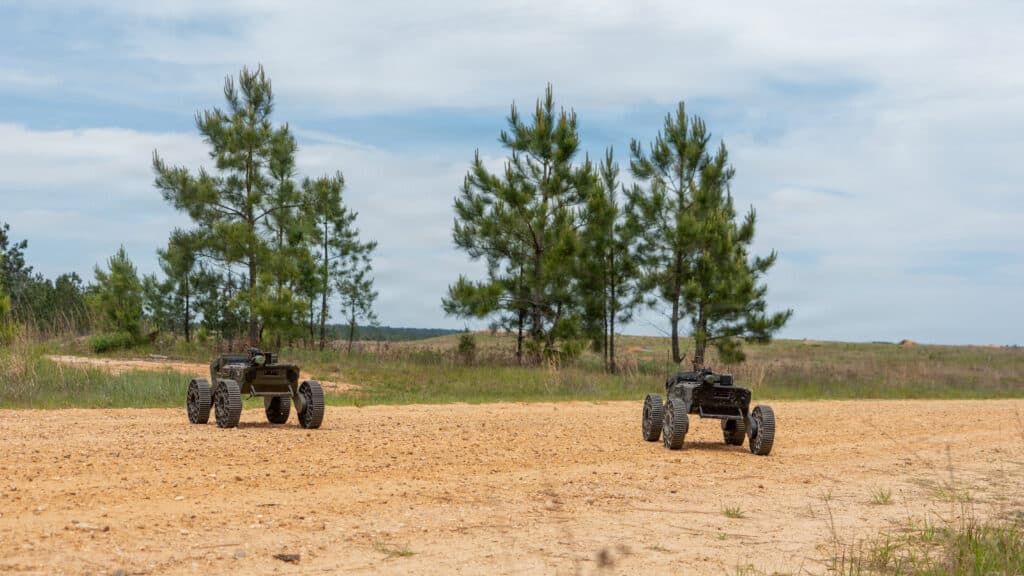
The 3rd Mobile Brigade Combat Team of the U.S. Army's 101st Airborne Division successfully executed a robot-led combined arms breach during a rotation at the Joint Readiness Training Center (JRTC) in Louisiana. The brigade commander confirmed to Breaking Defense that the exercise marks a significant milestone in replacing personnel with unmanned systems for high-risk battlefield tasks.

Highlights
- The 3rd Mobile Brigade Combat Team, 101st Airborne Division, completed a robot-led combined arms breach at JRTC in Fort Polk, Louisiana.
- Unmanned ground vehicles (UGVs) replaced soldiers in executing one of ground warfare's most casualty-intensive missions.
- The brigade commander confirmed the exercise's success to Breaking Defense, calling it a significant milestone for unmanned system integration.
- Results are expected to inform U.S. Army doctrine development for Robotic and Autonomous Systems (RAS) in high-intensity combat.
- The exercise reflects lessons drawn from Ukraine, where unmanned systems have demonstrated effectiveness in reconnaissance, mine clearance, and breach operations.
How the 101st Airborne's Brigade Learned to Use Robots Instead of Soldiers for Breach Operations
The 3rd Mobile Brigade Combat Team (3rd MBCT), 101st Airborne Division, successfully conducted a robot-centric combined arms breach operation during a recent rotation at the Joint Readiness Training Center (JRTC), the brigade's commander confirmed to defense publication Breaking Defense.
Replacing Soldiers with Machines: A New Approach to High-Risk Missions
A combined arms breach is widely regarded as one of the most dangerous tactical operations in modern ground warfare. Traditionally, it requires infantry, armored vehicles, and combat engineers to advance in coordination to clear enemy minefields and fortified defensive positions — exposing soldiers to an extremely high risk of casualties.
The central concept demonstrated in this exercise was to assign those high-risk tasks to unmanned ground vehicles (UGVs) and other robotic systems, allowing machines to absorb the danger while keeping soldiers out of harm's way.
Operational Validation at JRTC
Located at Fort Polk, Louisiana, JRTC is one of the U.S. Army's premier combat training centers, designed to replicate high-intensity operational environments. During the rotation, the 3rd MBCT successfully integrated robotic systems into a traditional breach operation, demonstrating that the associated tactics, techniques, and procedures (TTPs) are operationally viable.
The Broader Trend Toward Battlefield Autonomy
The outcome of this exercise aligns with the U.S. Army's ongoing efforts to advance its Next Generation Combat Vehicle (NGCV) program and the integration of Robotic and Autonomous Systems (RAS). Lessons from the battlefield in Ukraine have further reinforced the value of deploying unmanned systems for reconnaissance, mine clearance, and breach operations in high-threat environments — significantly reducing human casualties.
The results achieved by the 101st Airborne Division are expected to serve as a key reference point as the U.S. Army develops future doctrine for robotic and autonomous combat operations.
原文來源: 查看原文
FAQ
Newsletter
Subscribe to our Low-Altitude Industry Newsletter
Daily curated news on low-altitude economy and drone industry, delivered to your inbox.