1,569 Days: The Ukraine War Has Now Outlasted World War I
The war in Ukraine has officially surpassed World War I in duration at 1,569 days. New York Times correspondent Constant Méheut draws parallels and contrasts between the two conflicts, noting that drones have replaced poison gas as the key factor driving soldiers deeper underground. Ukrainian historian Yaroslav Hrytsak describes the conflict as 'World War I with drones.'

Highlights
- The Ukraine war reached 1,569 days in duration, officially surpassing the length of the First World War.
- Approximately 500,000 people have been killed in the Ukraine conflict — far fewer than the 9–11 million military deaths in WWI, yet the war continues with no clear end in sight.
- Ukrainian historian Yaroslav Hrytsak describes the Ukraine war as 'World War I with drones,' highlighting how persistent drone surveillance has replaced poison gas as the force driving soldiers deeper underground.
- Unlike WWI trenches — a response to artillery firepower — Ukraine's solitary foxholes are a direct response to omniscient drone-based machine vision.
- NYT correspondent Constant Méheut argues the Ukraine war will likely not end as WWI did, because drones, oil refineries, and the absence of collapsing empires make the structural conditions fundamentally different.
The war in Ukraine has officially surpassed the duration of the First World War, reaching 1,569 days. New York Times correspondent Constant Méheut examines the striking similarities — and critical differences — between the two conflicts.
Comparing Two Wars
World War I ended not because armies collapsed first, but because Germany's home front did — the Kaiser fled, and an armistice brought an unbearable war to a close.
How, then, will the Ukraine war end? Attrition alone does not appear sufficient. Approximately 500,000 people have been killed so far — a vastly different order of magnitude compared to the 9–11 million military deaths of a century ago — yet the war continues, and an exit appears no clearer than the Western Front did in 1916.
The conflict mirrors World War I in its tactics, yet differs profoundly in scale, political structure, and economic dynamics. It will likely not end the way WWI did. Drones are not poison gas; oil refineries are not blockaded ports. Even where the experience of living in a trench or dugout rhymes across the decades, the mechanisms of pressure are entirely different.
"The Deeper You Dig, the Longer You Live" — Ukrainian Soldier
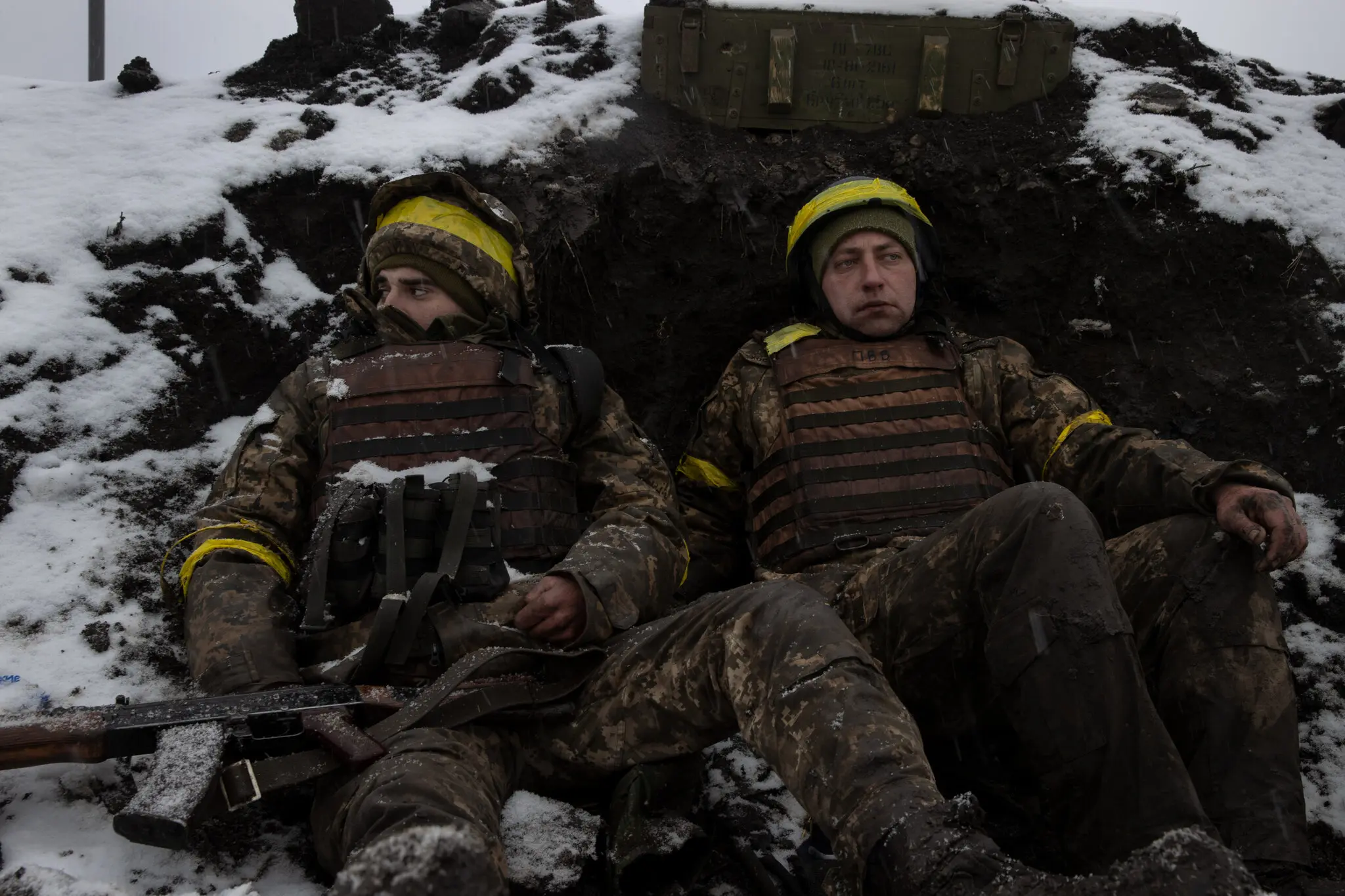
This observation is simultaneously a marker of civilizational regression and a piece of pragmatic survival advice. Human beings have returned to the earth because the sky has become dangerous in an entirely new way — surveilled by tireless machines that require no cover.
In World War I, artillery drove soldiers underground. In the Ukraine war, persistent machine-vision surveillance drives soldiers even deeper — and often alone. The trench was an answer to firepower; Ukraine's solitary foxhole is an answer to omniscient technology.
One might ask: which condition is more dehumanizing — climbing out of a trench en masse to face near-certain death, or dying alone beneath the gaze of a drone?
"This Is World War I with Drones." — Ukrainian Historian Yaroslav Hrytsak
What ultimately ended the First World War was not the trenches themselves, but the successive collapse of four empires. Today, the question remains: is there an empire poised to collapse? Or is Russia's system built for prolonged attrition — as it endured Stalingrad and pressed on?
Originally published in The New York Times: "The Ukraine War Has Now Lasted Longer Than World War I"; republished via the Small Wars Journal by Arizona State University.
原文來源: 查看原文
FAQ
Newsletter
Subscribe to our Low-Altitude Industry Newsletter
Daily curated news on low-altitude economy and drone industry, delivered to your inbox.