NATO and Ukraine Launch €250,000 'Airfield Denial Challenge' to Disrupt Russian Air Operations
NATO's Supreme Allied Commander Transformation (SACT) and Ukraine's Ministry of Defence have jointly launched the 'Airfield Denial Challenge,' offering €250,000 to companies, startups, and individuals who can develop technologies capable of persistently denying Russian use of their airfields. Submissions close July 20, 2025, with a final showcase event planned for September 3 in Poland.

Highlights
- NATO's SACT and Ukraine's Ministry of Defence are jointly offering a €250,000 prize through the Airfield Denial Challenge for technologies that can persistently deny Russian use of airfields.
- Submission deadline is July 20, 2025; a final showcase event is planned for September 3, 2025 in Poland, with the top 10 shortlist announced on August 11.
- Eligible solutions include drone swarms, autonomous munitions, and hybrid systems, but all must operate in GPS-denied and EW-contested environments and be deployable within one year.
- SACT stated that existing tools — including MLRS, ballistic missiles, and loitering munitions — have proven insufficient against defended Russian airfield targets.
- NATO has established a $500 million fund dedicated to developing weapons for Ukraine, which could help scale winning concepts into deployable systems.
NATO and Ukraine Offer €250,000 Prize to Disrupt Russian Airfield Operations
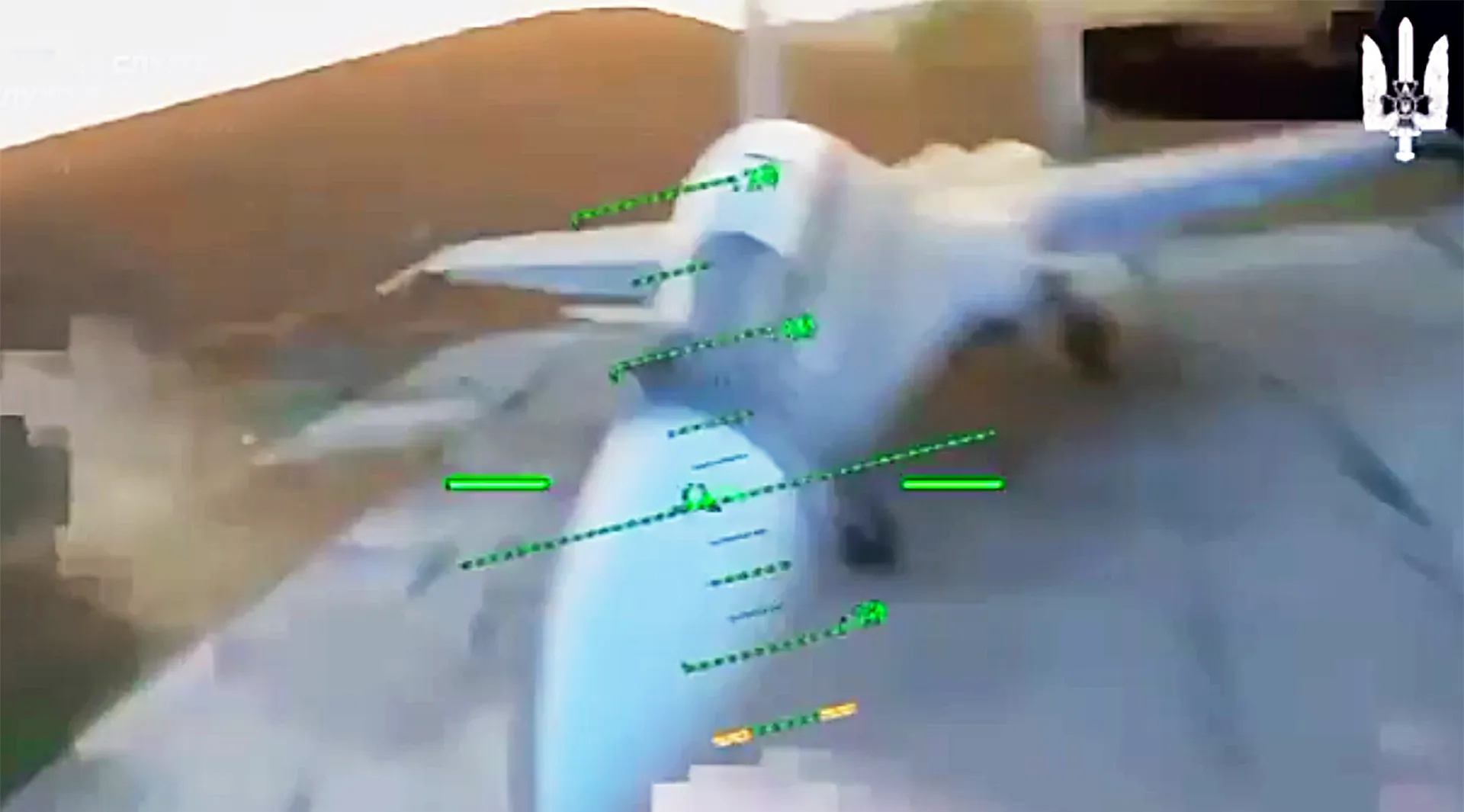
One of Russia's key advantages in its war against Ukraine has been its ability to launch tactical air strikes from rear bases largely out of reach of conventional Ukrainian forces. Although Ukraine has carried out multiple attacks against these facilities, it has so far been unable to consistently prevent Russian aircraft from generating high sortie rates and inflicting significant damage.
In response, Ukraine and NATO are now turning to the private sector for a breakthrough solution. The newly launched Airfield Denial Challenge offers a €250,000 prize to any company or individual that can present a credible method for denying Russia the use of its aviation bases.
The Core Problem: An Asymmetric Air Advantage
NATO's Supreme Allied Commander Transformation (SACT) framed the challenge in stark operational terms: "The combat experience of the Armed Forces of Ukraine (AFU) has clearly demonstrated that the adversary's ability to project air power from secure rear airfields represents one of the most decisive asymmetric advantages in the current conflict. Enemy tactical aviation, operating from bases beyond the range of Ukraine's conventional strike assets, continues to strike friendly forces, critical infrastructure, and civilian populated areas with precision-guided bombs, cruise missiles, and standoff munitions."
SACT underscored the strategic logic behind targeting airfields directly: "Every sortie originates from an airfield. Every airfield is a vulnerability — and if persistently denied, the adversary's air campaign is fundamentally disrupted at its source."
Existing Capabilities Fall Short
SACT acknowledged that current tools have proven insufficient: "Manned strike aircraft, ground-based long-range fires (MLRS, ballistic missiles), and conventional single loitering munitions have demonstrated limited effectiveness against defended airfield targets. These approaches lack the scale, persistence, and electronic warfare resilience required to simultaneously suppress multiple aim points across an airfield complex in a high-intensity EW environment."
Ukraine's Ministry of Defence added: "We need technologies that can permanently limit the enemy's ability to use aviation infrastructure — including aircraft, runways, fuel and ammunition storage, and ground support infrastructure. Ukrainian military technology companies, startups, and engineering teams are welcome to participate."
Technology-Agnostic, But Demanding Requirements
SACT has kept the challenge technology-agnostic, with eligible solutions including but not limited to:
- Drone systems of any configuration or range class
- Autonomous or semi-autonomous munitions and loitering systems
- Swarm attack and mass-effect solutions
- Alternative delivery mechanisms beyond conventional aviation platforms
- Hybrid solutions combining multiple technologies
Regardless of approach, all submissions "must be capable of operating in GPS-denied and electronic warfare contested environments, must function across all weather conditions and seasons, and must demonstrate a credible path to rapid deployment."
SACT is also seeking systems that can conduct sustained strikes deep within adversary-contested airspace without continuous human control, operate with full autonomy, and deliver "sufficient scale and precision against multiple aim points across an airfield simultaneously." Solutions must require minimal operator training and incorporate AI-assisted target recognition to "reduce reliance on specialist judgment."
Technology Readiness and Timeline Requirements
The submission guidelines specify that proposed solutions do not need to have been previously validated, but should be at a mid-to-high military Technology Readiness Level (TRL) — ranging from high-fidelity laboratory integration to near-operational or operational prototypes. Any solution requiring more than one year to deploy will not be considered.
Key Dates
- Submission deadline: July 20, 2025
- Top 10 shortlist announced: August 11, 2025
- Final showcase event (tentatively in Poland): September 3, 2025
A Formidable Challenge Despite Bold Ambitions
While the initiative is ambitious, whether it can genuinely produce a system capable of persistently grounding Russian air operations remains an open question.
Ukraine possesses one of the world's most innovative defence technology ecosystems, having developed, tested, and fielded numerous drones, missiles, and other weapons under wartime conditions — yet it has not achieved the objective this challenge is designed to solve.
One of Kyiv's core constraints is limited funding, compounded by what the Atlantic Council has described as Ukraine's "inability to mass-produce precision weapons or maintain a stable military supply chain."
Channelling innovative concepts through NATO — which has established a $500 million fund dedicated to developing weapons for Ukraine — could help bridge the gap between idea and deployable weapon. Even so, scaling any solution to the point where it meaningfully degrades Russia's tactical air capacity remains an enormously difficult undertaking.
原文來源: 查看原文
FAQ
Newsletter
Subscribe to our Low-Altitude Industry Newsletter
Daily curated news on low-altitude economy and drone industry, delivered to your inbox.