NATO and Ukraine Launch €250,000 Persistent Airfield Denial Innovation Challenge
NATO's Allied Command Transformation (ACT) and the NATO-Ukraine Joint Analysis Training and Education Centre (JATEC) have jointly launched the Persistent Airfield Denial Challenge, offering up to €250,000 in prizes for technologies capable of sustained denial of enemy airfield use. Submissions must have a range exceeding 150 km, a Technology Readiness Level of 5 or above, and must operate in GPS-denied and electronic warfare environments. The registration deadline is 20 July 2026.

Highlights
- NATO ACT and JATEC have jointly launched Innovation Challenge 2026-2, the Persistent Airfield Denial Challenge, with a total prize pool of up to €250,000 and a registration deadline of 20 July 2026.
- Eligible systems must exceed 150 km range, achieve TRL 5 or above, and operate in GPS-denied and electronic warfare environments; fixed static ground systems are explicitly excluded.
- Up to 10 finalists will be selected by 11 August 2026, with an in-person proposal event scheduled for 3 September 2026 in Warsaw, Poland.
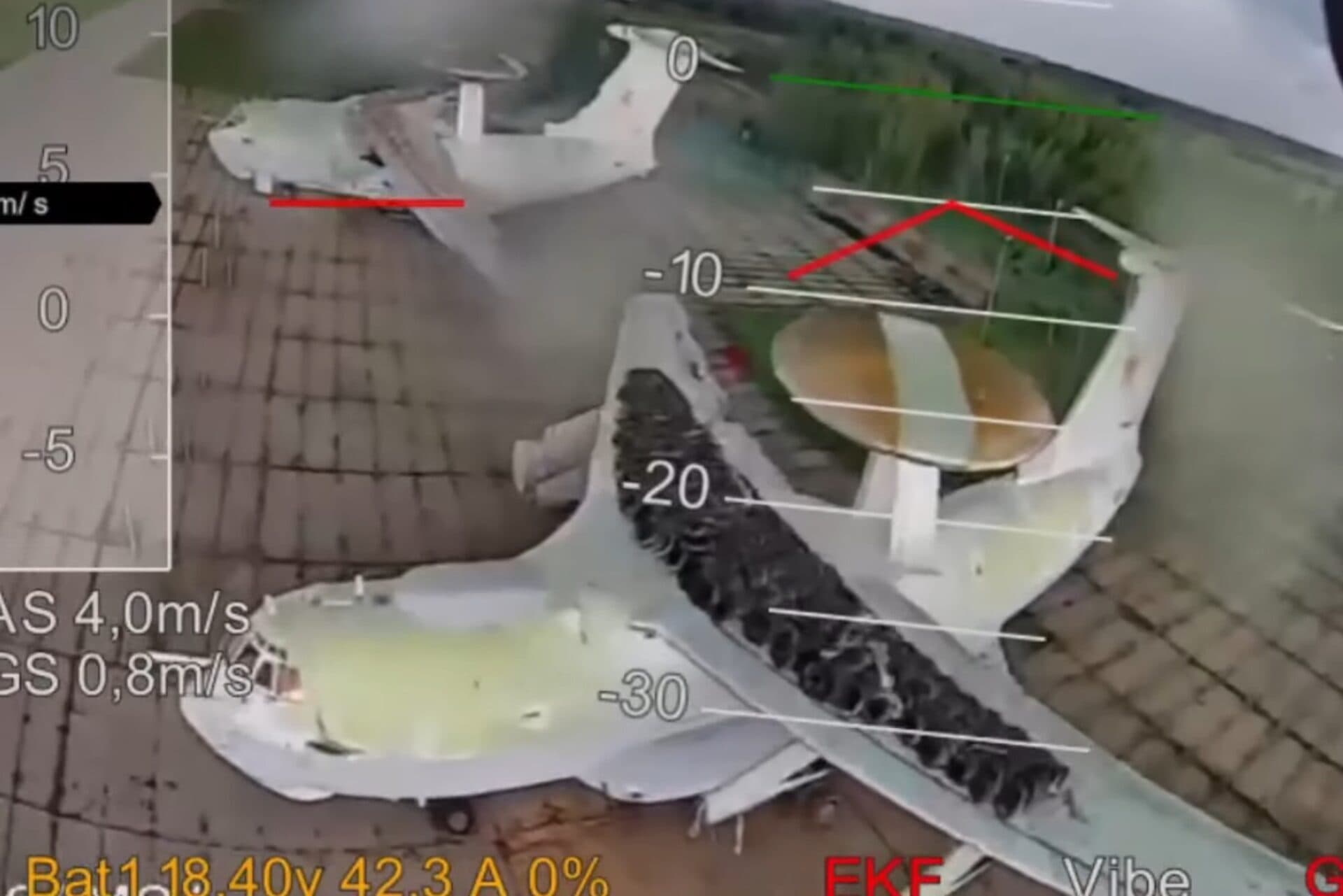
- The challenge was inspired by Ukraine's Operation Spiderweb in June 2025, in which pre-positioned drones struck Russian strategic bombers at deep-rear airfields.
- NATO currently lacks dedicated persistent airfield denial tools; existing standoff cruise missiles such as Storm Shadow and JASSM each engage a single aim point, cost over €1 million per shot, and cannot sustain denial effects.
NATO and Ukraine Launch €250,000 Persistent Airfield Denial Innovation Challenge
NATO's Allied Command Transformation (ACT) and the NATO-Ukraine Joint Analysis Training and Education Centre (JATEC) have jointly announced an open innovation challenge seeking technologies capable of persistently denying enemy use of airfields, with prize money of up to €250,000.
Formally designated Innovation Challenge 2026-2, the Persistent Airfield Denial Challenge has a registration deadline of 20 July 2026.
What the Challenge Is Looking For
The competition seeks solutions capable of autonomously or operator-directed strikes against aircraft, runways, fuel and ammunition storage facilities, and ground support infrastructure.
According to the Request for Innovative Proposals (RFIP) issued by Supreme Allied Command Transformation, the challenge is technology-agnostic and is open to uncrewed aerial systems of various ranges, autonomous or semi-autonomous munitions and loitering munition systems, swarm and mass-effect solutions, and hybrid designs.
Mandatory specifications significantly narrow the field: submitted systems must have a range exceeding 150 km (93 miles), a Technology Readiness Level (TRL) of 5 or above — meaning validation in a relevant environment has already been completed — and must be capable of operating in GPS-denied and electronic warfare environments across all weather conditions and seasons. Fixed or static ground systems without autonomous strike capability are explicitly excluded.
Born from Ukraine's War Against Russia
The challenge documentation directly links the requirement to Russia's sustained air campaign against Ukraine.
Russian tactical aviation has operated continuously from rear-area airfields beyond the range of Ukraine's conventional strike weapons, launching guided air bombs, cruise missiles, and standoff munitions — every sortie originating from an airfield.
NATO notes that existing options — including crewed attack aviation, long-range rocket artillery and ballistic missiles, and one-way loitering munitions — have shown limited effectiveness against protected airfield targets. The underlying logic is that point defences and the interception of individual weapons must be complemented by persistent denial at the source.
Ukraine has already put this concept into practice on a large scale, most notably in Operation Spiderweb in June 2025, which used pre-positioned drones to strike strategic bombers at airfields deep inside Russian territory.
Why NATO Lacks Dedicated Tools
Disrupting enemy runways has been a conventional mission for decades, historically carried out with weapons such as the British JP233 low-level dispenser and the rocket-assisted Durandal bomb — both of which fell out of use as standoff weapons rose to prominence in the 1990s.
The Apache air-launched cruise missile, developed by France's MBDA and entering service in the early 2000s, was purpose-built for this mission: it disperses ten KRISS submunitions to crater runways and uses delayed-action fuzes to complicate repair operations. Even so, closing a runway typically requires multiple missiles, and the effect is temporary — craters can be patched within hours.
These weapons have since left NATO frontline service. The UK retired the JP233 in 1998, while the Apache's airframe platform evolved into the SCALP EG/Storm Shadow, which replaced the submunition payload with a single penetrating warhead optimised for hardened shelters, bunkers, and ammunition depots rather than runways.
NATO air forces today rely on multi-purpose standoff cruise missiles for airfield strikes: Storm Shadow/SCALP, the German Taurus KEPD 350, and the US-made JASSM and JASSM-ER operated by Finland and Poland, among others. Each engages only a single aim point, costs over €1 million per shot, and is consumed on use — none can persistently deny an airfield, which is precisely the gap the RFIP identifies and why single-use solutions are excluded.
Prize Structure and Timeline
The maximum prize of €250,000 will be divided among up to three winners. Ten percent is paid upon selection, with the remaining 90% disbursed following a live demonstration of the winning solution at a later date.
Eligibility is restricted to organisations headquartered in NATO member states or Ukraine. ACT will select up to 10 finalists, with results expected to be announced on 11 August 2026. An in-person proposal event is scheduled for 3 September 2026 in Warsaw, Poland.
The challenge follows a similar mechanism established through NATO ACT–JATEC cooperation in 2025, which rapidly selected three European companies to develop multi-layered defence systems against Russian glide bombs.
原文來源: 查看原文
FAQ
Newsletter
Subscribe to our Low-Altitude Industry Newsletter
Daily curated news on low-altitude economy and drone industry, delivered to your inbox.