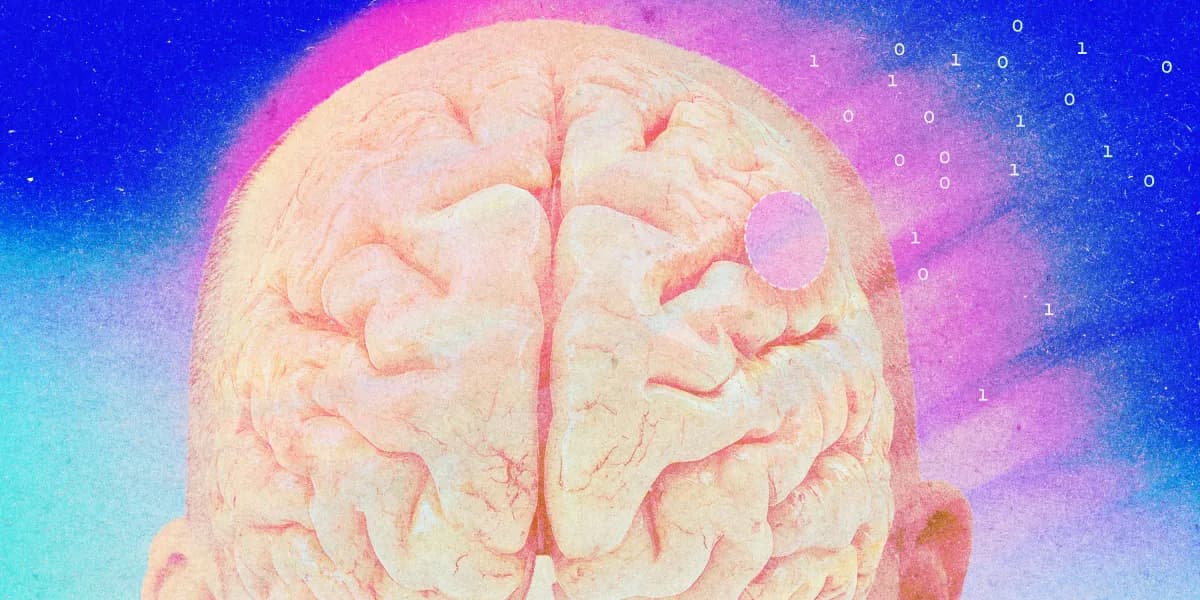
BCI Clinical Trials Surge: Global Implant Recipients More Than Double to Over 150
ALS patient Casey Harrell has regained near-independent communication thanks to a brain-computer interface (BCI) implanted in July 2023, allowing him to speak, browse the web, and continue climate advocacy. Global BCI trial participants have grown from 67 at end-2023 to over 150, driven by Neuralink, Synchron, and academic consortia. China has become the first country to approve BCI for medical use outside clinical trials.

Highlights
- Global BCI implant recipients have more than doubled from 67 at end-2023 to over 150 people by 2025, according to Utrecht University Medical Center researcher Mariska Vansteensel.
- ALS patient Casey Harrell has used a UC Davis BCI device continuously for nearly three years since his July 2023 implant, regaining speech, internet access, and income.
- Neuralink announced in January 2025 that it has implanted BCI devices in 21 people over the past two years.
- China became the first country worldwide to approve BCIs for medical use outside of clinical trials, with Shanghai-based Neuracle receiving approval after starting trials in November 2024.
- BCI effectiveness for ALS patients remains uncertain, as some devices initially work but later lose effectiveness — a phenomenon scientists have yet to fully explain.
BCI Clinical Trials Surge: Global Implant Recipients More Than Double to Over 150
Casey Harrell, an ALS patient described by researchers as the "first advanced user" of a neural implant device, was left paralyzed and unable to speak by his disease — yet with the help of a brain-computer interface (BCI), he has regained near-full independence.
A Revolutionary Device Restores a Life
Since receiving his implant in July 2023, Harrell has used the BCI system for nearly three years continuously. The device enables him to "speak," browse the internet, continue his climate advocacy work, earn an income, reconnect with family and friends, and even read picture books aloud to his daughter.
Researchers at UC Davis have worked alongside him to refine the system, improving speech recognition accuracy and adding features such as a "privacy mode" and a profanity filter — so Harrell can talk with his daughter without the risk of unintended language slipping through.
"This device is absolutely revolutionary for me," Harrell said.
How BCIs Work — and the Different Forms They Take
Harrell's device uses electrodes implanted in the brain to capture electrical signals associated with speech. The electrodes connect to two external ports on top of his head, which plug into a computer for signal processing. Software on the computer decodes the brain signals into phonemes — the basic units of speech — predicts what he intends to say, and outputs audio through a voice synthesized from his own pre-illness recordings. An eye tracker allows him to make corrections.
BCIs, however, come in several forms:
- Fully implanted wireless devices: no external ports required
- Cortical surface electrodes: less invasive, with electrodes placed on the brain's surface
- Wearable electrode caps: entirely non-invasive, but with lower signal quality
As a general rule, the closer the electrodes are to the target neurons, the clearer the signal — but the more invasive the surgery, the higher the risk of complications.
Global Trial Participation More Than Doubles
In 2024, Michelle Patrick-Krueger at the University of Houston and colleagues published a review covering all BCI clinical trials from 1998 — the year of the first recorded device implantation — through the end of 2023. The study found that 21 research teams had tested BCIs in a combined total of 67 volunteers.
Mariska Vansteensel, a BCI researcher at Utrecht University Medical Center in the Netherlands, noted: "Since then, that number has grown substantially." She now estimates that more than 150 people worldwide have received brain electrode implants — more than double the figure recorded at the end of 2023.
Industry and Academia Advance in Parallel
Multiple organizations are actively driving BCI development forward:
- Neuralink (founded by Elon Musk): announced in January this year that it has implanted devices in 21 people over the past two years
- Synchron: conducting device trials in North America and Australia
- Neuracle (Shanghai): began trials in November 2024 and has received approval for use outside of clinical trials
- Precision Neuroscience (founded by a former Neuralink co-founder): testing a cortical surface BCI device
- BrainGate: a multi-institution academic consortium including UC Davis, operating for over two decades, which has shifted its research focus in recent years from point-and-click control to speech decoding
On the regulatory front, China this year became the first country in the world to approve BCIs for medical use — a significant milestone for the field.
Still Experimental: Challenges Remain
Despite the encouraging progress, BCIs remain an experimental technology with many unanswered questions. Most implant recipients to date have been spinal cord injury patients; the benefits for other conditions such as ALS are less well understood. Some cases have shown that BCIs can work initially for ALS patients — even those with complete locked-in syndrome — only to lose effectiveness over time. Scientists do not yet fully understand why.
David Brandman, the lead researcher at UC Davis who performed Harrell's electrode implant surgery, stressed that answers will only come through continued research and more volunteers like Harrell who are willing to "contribute to science while gaining personal benefit."
This article was originally published in MIT Technology Review's weekly biotech newsletter, The Checkup.
原文來源: 查看原文
FAQ
Newsletter
Subscribe to our Low-Altitude Industry Newsletter
Daily curated news on low-altitude economy and drone industry, delivered to your inbox.