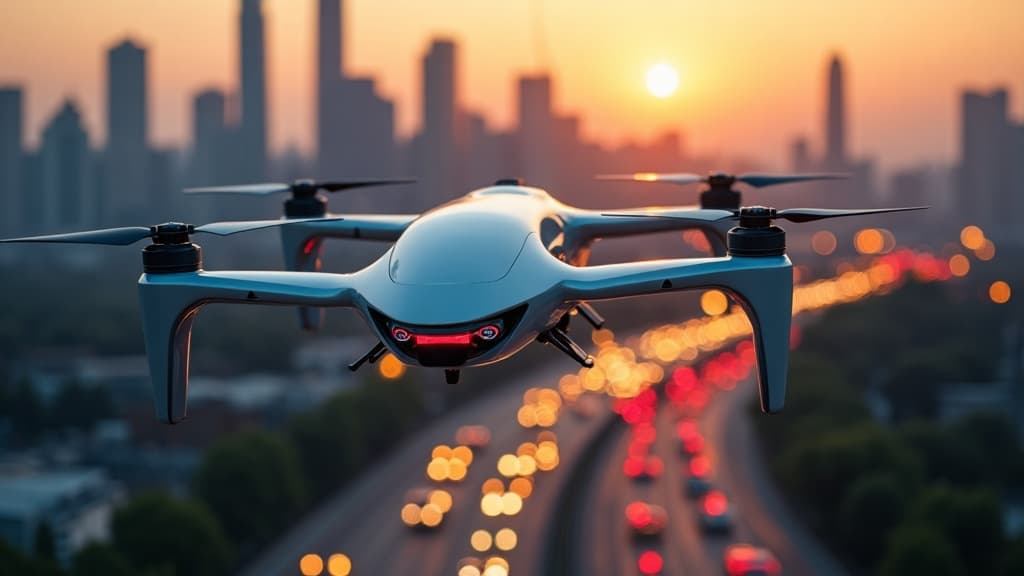
The Future of Flight Is Taking Off: Advanced Air Mobility Reshapes U.S. Aviation
A U.S. Federal Aviation Administration (FAA) official has published a commentary in The Washington Times highlighting how Advanced Air Mobility (AAM) — from electric air taxis to drone logistics for remote communities — is transforming transportation, boosting economic growth, and reinforcing America's global leadership in aviation innovation.

Highlights
- An FAA official published a commentary in The Washington Times calling AAM a transformative force for U.S. transportation and economic growth.
- AAM applications range from eVTOL electric air taxis in urban corridors to drone logistics connecting remote and underserved communities.
- Joby Aviation and Archer Aviation are actively advancing commercialization timelines as the U.S. builds out AAM regulatory frameworks and infrastructure.
- The FAA is accelerating certification and rulemaking to support a healthy AAM ecosystem ahead of anticipated commercial launch within the coming years.
- AAM is expected to alleviate urban traffic congestion and deliver a revolutionary shift in both city and intercity transportation.
The Future of Flight Is Taking Off: Advanced Air Mobility Reshapes U.S. Aviation
A U.S. Federal Aviation Administration (FAA) official, identified as Chris, recently published a commentary in The Washington Times underscoring the transformative impact of Advanced Air Mobility (AAM) on the American aviation industry.
Electric Air Taxis Lead the Way
AAM encompasses an increasingly diverse range of applications — from electric vertical take-off and landing (eVTOL) air taxis to drone-based logistics services designed to connect underserved and remote communities. This wave of innovation is not only reshaping public perceptions of urban air travel, but also offering fresh solutions to chronic ground-level traffic congestion.
A Dual Engine: Economic Growth and Industry Leadership
In the commentary, the FAA official argued that the rapid expansion of AAM stands to deliver meaningful benefits to the U.S. economy while further cementing America's dominant position in global aviation innovation. With companies such as Joby Aviation and Archer Aviation aggressively advancing their commercialization timelines, the United States is accelerating the development of the regulatory frameworks and infrastructure necessary to bring AAM operations to scale.
Policy Support and the Road Ahead
The FAA continues to drive forward the certification processes and rulemaking required to support a healthy AAM ecosystem. Industry observers broadly expect that, as technology matures and policy frameworks solidify, electric air taxis could enter commercial service within the coming years — potentially delivering a revolutionary shift in both urban and intercity transportation.
The original commentary was authored by FAA official @FAA_Chris and published in the opinion section of The Washington Times (@WashTimesOpEd).
原文來源: 查看原文
FAQ
Newsletter
Subscribe to our Low-Altitude Industry Newsletter
Daily curated news on low-altitude economy and drone industry, delivered to your inbox.