Amazon Prime Officially Launches in South Africa, but Drone Delivery Service Prime Air Is Notably Absent — Regulatory Barriers Are the Key Obstacle
Amazon has launched Prime in South Africa at just 59 rand per month, offering same-day delivery, streaming, and cloud gaming — but its drone delivery service Prime Air is conspicuously missing. South Africa's strict BVLOS restrictions, lengthy 12-month certification process, and high insurance requirements keep the MK30 drone grounded.

Highlights
- Amazon launched Prime in South Africa at 59 rand/month with same-day delivery, Prime Video, and Luna cloud gaming, but excluded Prime Air drone delivery.
- South Africa's SACAA has not authorized routine BVLOS flights, and commercial drone certification takes approximately 12 months to obtain.
- Commercial drone operators in South Africa must carry at least 500,000 rand (USD 27,000) in third-party liability insurance per drone.
- Amazon's MK30 drone has completed roughly 16,000 deliveries across five U.S. states as of February 2026 under FAA-approved BVLOS waivers.
- South Africa's Department of Transport has proposed dedicated drone corridors, but progress on landowner consent remains slow.
Amazon has officially launched its Prime membership service in South Africa at a monthly fee of just 59 South African rand (approximately USD 3.20). Subscribers gain access to same-day delivery, exclusive discounts, Amazon Prime Video, and Luna cloud gaming. However, one service is conspicuously absent — drone delivery via Prime Air.
When media asked Robert Koen, Amazon's Managing Director for Sub-Saharan Africa, he confirmed only that drone delivery is not available in South Africa and declined to elaborate further. For a company aggressively promoting Prime Air in North America, the silence itself speaks volumes.
What Does Amazon Prime Offer in South Africa?
Amazon's logistics in South Africa rely on local partner The Courier Guy, using Amazon's proprietary systems for last-mile delivery. Same-day delivery currently covers major cities including Pretoria, Johannesburg, and Cape Town, limited to the Gauteng and Western Cape provinces.
The Prime package is aggressively priced: 59 rand per month for same-day delivery with no minimum order, member-exclusive discounts, Amazon Prime Video, and Luna cloud gaming. Amazon is clearly aiming to capture the South African retail market — but drone delivery is entirely off the table.
The Regulatory Barriers Amazon Won't Talk About
South Africa has not yet authorized routine Beyond Visual Line of Sight (BVLOS) flights — the core prerequisite for making drone delivery viable. While the South African Civil Aviation Authority (SACAA) is developing a regulatory framework, daily delivery flights are currently not permitted.
Commercial drone certification alone poses a major challenge. South Africa ranks among the most difficult and costly countries in the world for certification. Operators typically wait approximately 12 months to obtain a Remote Operator Certificate, assuming all documentation is in order.
Costs are equally daunting: commercial operations require third-party liability insurance of at least 500,000 rand (approximately USD 27,000) per drone. South Africa's Department of Transport has proposed establishing dedicated drone corridors, but securing consent from landowners along these routes has been an extremely slow process.
The MK30 Drone Left Behind
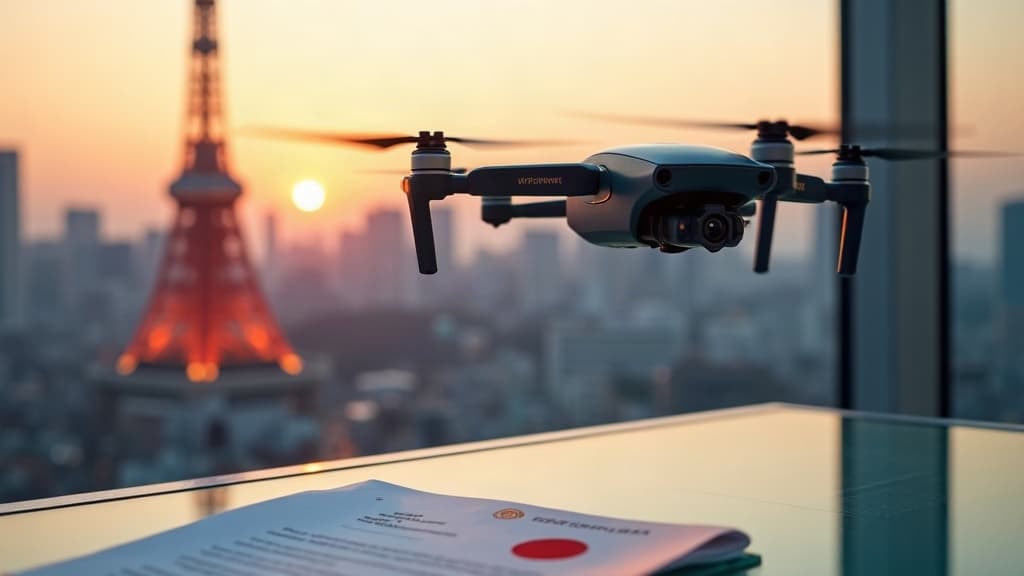
The drone that cannot make the trip to South Africa is Amazon's MK30. Weighing approximately 83 pounds (38 kg), the MK30 can carry packages up to 5 pounds (2.3 kg) within a 7.5-mile (12 km) service radius from its delivery station. Every flight depends on BVLOS authorization — precisely the type of permit South Africa does not currently issue.
In the United States, Amazon is already flying the MK30 autonomously in roughly five states. As of February 2026, Prime Air had completed approximately 16,000 deliveries across Texas, Michigan, Arizona, Florida, and Kansas, all under FAA-approved extended BVLOS waivers.
Same drone, same company, same vision — the only difference is that the regulatory environment determines whether it can ever leave the ground.
Analysis
This is not a failure by Amazon in South Africa — rather, South Africa has chosen a more conservative development path, and that choice has its merits. The 12-month certification period and high insurance thresholds effectively filter out unqualified operators, and a country still building its BVLOS framework has every right to proceed cautiously.
However, the trade-off is opportunity cost. While the U.S. has integrated drone delivery into everyday life, South African operators remain constrained by some of the world's strictest commercial operating regulations. Amazon can shrug and hand packages to a traditional logistics partner, but local startups with promising ideas cannot — and they are the ones being silently penalized by the regulatory status quo.
What deserves close attention is the Department of Transport's drone corridor proposal. If viable flight corridors are established and SACAA opens a genuine BVLOS pathway, South Africa could rapidly transition from a closed market to a competitive one. Until then, Prime Air remains grounded, and South African consumers' packages will continue traveling the old-fashioned way — by road.
Robert Koen had nothing to say about drones today, but that answer won't hold forever.
原文來源: 查看原文