Utah Firefighting Helicopter Forced to Dodge Unauthorized Drone, Just 17 Months After Super Scooper Strike
A firefighting helicopter battling a wildfire near Moab, Utah was forced to evade an unauthorized drone that entered the fire zone airspace. The incident comes just 17 months after a DJI Mini struck a Canadian water bomber during the Los Angeles Palisades fire, prompting renewed calls for drone operators to stay away from wildfires.

Highlights
- A firefighting helicopter near Moab, Utah was forced to halt operations after spotting an unauthorized drone in the fire zone airspace on June 9, 2026.
- The incident comes 17 months after a DJI Mini 3 Pro struck a Canadair CL-415 Super Scooper during the LA Palisades fire, punching a 7.6 × 15 cm hole in its wing and grounding it for five days.
- Palisades drone operator Peter Tripp Akemann was sentenced to 14 days in federal prison and approximately $156,000 in restitution for the January 2025 strike.
- The U.S. recorded a record 218 wildfire drone incursions in 2025; Utah's Buckley Draw fire alone lost 6.5 to 11 hours of aerial firefighting due to repeated drone intrusions.
- FAA has issued TFRs around all 11 FIFA World Cup stadiums with 5.6 km radius restriction zones; violations carry fines up to $75,000 plus criminal liability.
Firefighting Helicopter Dodges Drone as Utah Sounds the Alarm Again
A firefighting helicopter working to suppress a wildfire in the Moab area of Utah spotted an unauthorized drone in the fire zone airspace. Utah Fire Info immediately issued a warning on social media, sharing photographs of past drone-versus-aircraft collision damage to drive the message home. According to ABC4 in Salt Lake City, reporting on June 9, no injuries or collisions occurred in this incident.
The fire began as a residential blaze before spreading to brush near Highland Drive and Murphy Lane in the Moab area. When the helicopter crew spotted the drone overhead, the airspace was immediately cleared and firefighting operations were forced to halt.
The incident comes just 17 months after the January 2025 Super Scooper strike that shocked the nation — and fire agencies are still using the same collision damage photos to educate the public, suggesting drone operator behavior has barely improved.
Utah Fire Agency Backs Warnings with Real Collision Evidence
Utah Fire Info confirmed that the Moab firefighting helicopter encountered a drone during suppression operations. Although no collision or injuries occurred, the drone's mere presence posed a serious safety threat to the flight crew.
"Even a small drone can shatter a windshield or damage critical aircraft components," the agency warned, urging drone pilots to ground their aircraft whenever they see smoke or firefighting aircraft nearby. The agency closed with the long-running federal wildfire awareness slogan: "If you fly, we can't."
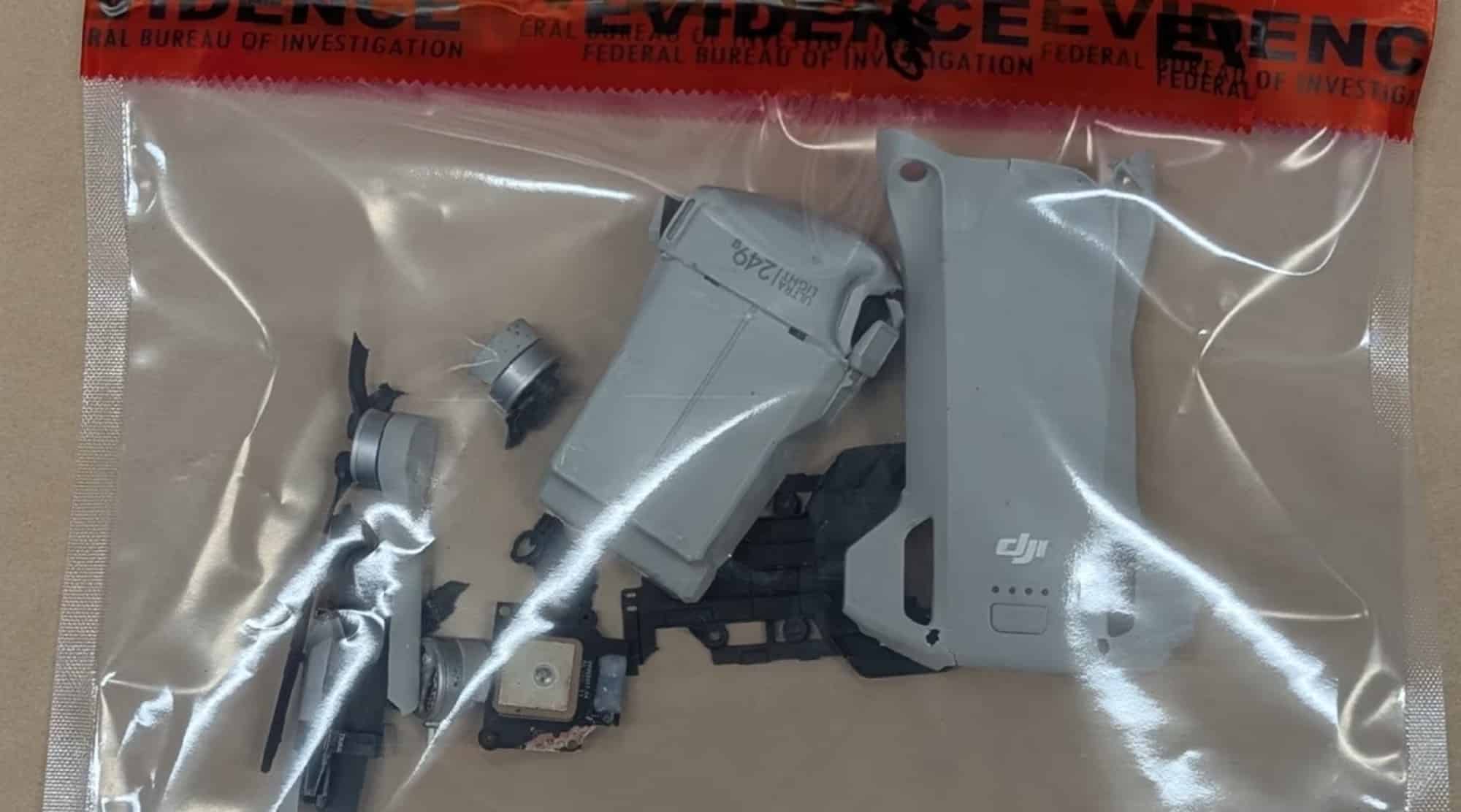
Alongside the warning, officials shared photographs of past drone-aircraft collision damage and educational graphics from the U.S. Forest Service. One damage photo showed a small DJI drone sealed in an evidence bag with forensic tape — an image that appears to match evidence photos released by the FBI in a high-profile case.
The Palisades Fire Water Bomber Strike: The Cost of Entering a Fire Zone
On January 9, 2025, a DJI Mini 3 Pro struck the left wing of a Canadair CL-415 "Super Scooper" water bomber dispatched by the Quebec provincial government to assist with the Los Angeles Palisades fire. The impact punched a 7.6 × 15 cm (3 × 6 inch) hole in the wing, grounding the aircraft for approximately five days — while one of the most destructive fires in California history continued to burn.
The operator was Peter Tripp Akemann of Culver City, Los Angeles, who launched his drone from a parking lot near Santa Monica's Third Street Promenade to observe fire damage. He flew the drone approximately 2,500 meters (over 1.5 miles), lost visual contact, and never saw the aircraft it struck. A Temporary Flight Restriction (TFR) was already in effect over the fire zone, prohibiting all drone flights. Akemann pleaded guilty to a federal misdemeanor charge of unsafe drone operation and in September 2025 was sentenced to 14 days in federal prison, 30 days of home confinement, approximately $156,000 in restitution, and 150 hours of community service.
That was the full cost of a single curiosity-driven flight using a sub-250-gram drone. The unidentified Moab pilot was just a few meters of flight path away from potentially facing the same consequences.
A Single Drone Sighting Can Ground Firefighting Aircraft for Hours
A single drone sighting near a wildfire forces fire managers to clear the airspace, because flight crews must assume the drone remains airborne for its full battery life plus a safety buffer. Helicopters land, tankers divert, and the fire continues to spread during the wait.
Utah has experienced this cost firsthand. During the 2025 Buckley Draw fire near Provo, repeated drone incursions cost the firefighting fleet 6.5 to 11 hours of flight operations. According to KUER, fixed-wing aircraft had to divert 16 to 32 kilometers (10 to 20 miles) away and wait 25 to 30 minutes after each sighting. Single-engine air tankers cost over $2,000 per hour to operate; large tankers can run as high as $20,000 per hour.
The problem is getting worse, not better. The U.S. recorded 218 wildfire drone incursions in 2025, an all-time high. Enforcement is also intensifying: a pilot in British Columbia, Canada was fined CAD $5,000 after their drone interrupted a firefighting helicopter's suppression operations over Okanagan Lake. Utah law provides penalties ranging from misdemeanor to felony for flying in wildfire TFR zones, with charges escalating to felony level when a drone interferes with firefighting aircraft operations.
This Summer's Temporary Flight Restrictions Extend Far Beyond Wildfires
Restricted airspace in the U.S. now extends well beyond fire zones, and this summer's TFR map is denser than ever. With the FIFA World Cup kicking off on June 11, the FAA has issued TFRs around all 11 host stadiums nationwide, establishing 5.6-kilometer (3-nautical-mile) radius, 914-meter (3,000-foot) altitude restriction zones on match days, with even tighter restriction rings around more than a dozen fan festival venues. An additional 100-plus restrictions cover team hotels and training camps, including in cities hundreds of miles from match venues. Violating an event TFR can result in civil fines of up to $75,000, plus criminal liability.
The basic principle is simple: do not fly near wildfires, emergency responders, or major events. Before every flight, check the FAA's TFR list or use an app that displays live TFR data, because many restrictions — like the Moab fire response — appear without warning.
Editorial Perspective
The Moab incident is the "lucky version" of the Palisades strike. Same class of drone, same fire zone airspace, same pilot decision — the only difference was a matter of meters.
What stands out is Utah Fire Info's approach: rather than posting a single awareness graphic, they shared real collision damage photographs, one of which appears to be the very evidence photo the FBI took of the shredded DJI Mini in the Palisades case. From California to British Columbia, fire agencies have realized that a drone sealed in an evidence bag is more persuasive than any infographic.
Utah's 2026 fire season is just getting started, and western fire warnings are expected to persist through October. Whether this year will surpass the record of 218 incursions remains to be seen, but the consequences of finding out the hard way are well documented: 14 days in prison, $156,000 in restitution, a criminal record — and the flight that caused it all took less time than reading this article.
原文來源: 查看原文