The Arms Trade Reversal: Taiwan Is Now Selling Drones to the U.S. Military
Taiwan is leveraging its robust ICT manufacturing base and China-free supply chains to sell domestically produced drones to the U.S. military. The island's drone industry hit NT$12.9 billion in 2024—2.5 times growth year-on-year—and has set a NT$40 billion target for 2030. The United States has already become Taiwan's third-largest drone export market.

Highlights
- Taiwan's drone industry output reached NT$12.9 billion in 2024, a 2.5-fold year-on-year increase, with the government targeting NT$40 billion by 2030.
- The United States became Taiwan's third-largest drone export market in Q1 2025, with USD 2.58 million in shipments, behind Poland and the Czech Republic.
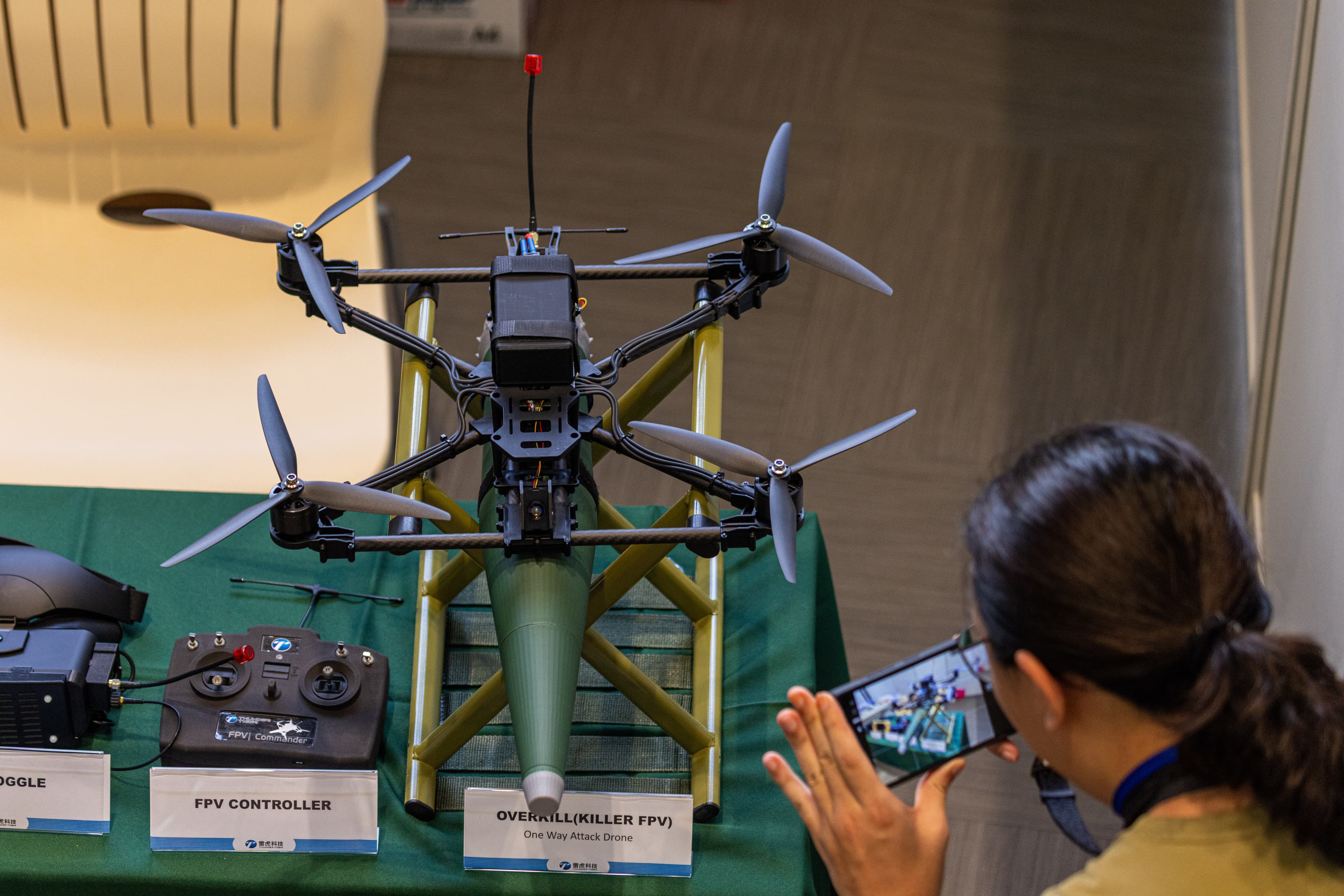
- Thunder Tiger's Overkill loitering munition became the first Asian drone to pass U.S. Department of Defense certification requirements.
- AUVSI and Taiwan's ITRI announced a drone technology collaboration on June 4, 2025, while the Metal Industries R&D Centre signed an MOU with Anduril.
- Taiwan's key competitive advantage is a supply chain entirely free of Chinese components, addressing U.S. cybersecurity and national security concerns over DJI and Chinese-made parts.
The Arms Trade Reversal: Taiwan Is Now Selling Drones to the U.S. Military
New Taipei City — For decades, the United States has sold advanced weaponry to Taiwan, with major American defense contractors supplying high-end systems to help the island bolster its military defenses against China.
Now, Taiwan—a comprehensive manufacturing powerhouse since the 1980s, particularly in high-tech hardware—is positioning itself to sell homegrown drones to the U.S. military, helping Washington reduce its dependence on Chinese supply chains. Analysts and recent deal activity both point to an accelerating trend.
Taiwan's Core Advantage: A China-Free Supply Chain
"Foreign governments value Taiwan's drones primarily because of its solid ICT technology foundation and its role as a trusted supply chain partner," said Li Yi-ching, an analyst at the Market Intelligence & Consulting Institute (MIC) in Taipei.
Li added: "From a supply chain perspective, Western nations are increasingly focused on reducing dependence on Chinese drones and Chinese-made components. Given cybersecurity concerns, wartime supply chain resilience, and national security considerations, the trustworthiness of component sourcing has become a key factor for Western governments when evaluating drone suppliers."
China-headquartered DJI currently holds at least 70% of the global commercial and consumer drone market, including in the United States.
Taiwan-U.S. Drone Cooperation Accelerates
On June 4, the American Institute in Taiwan (AIT) announced that the Virginia-based Association for Uncrewed Vehicle Systems International (AUVSI) is collaborating with Taiwan's Industrial Technology Research Institute (ITRI) on drone technology.
The day before, Taiwanese media reported that the Metal Industries Research and Development Centre had signed a memorandum of understanding with U.S. defense technology company Anduril.
"We recognize Taiwan's strengths in advanced manufacturing, electronics, and agile production, making it a natural and indispensable partner," AIT Director Raymond Greene said in the June 4 statement.
Last year, Taiwan manufacturer Thunder Tiger's Overkill-brand loitering munition became the first in Asia to pass U.S. Department of Defense certification requirements.
Rapid Industry Growth
Premier Cho Jung-tai stated on April 30 that Taiwan's drone industry generated NT$12.9 billion (approximately USD 410 million) in output last year—a 2.5-fold increase compared to 2024—with drone exports reaching NT$2.95 billion. Taiwan has been developing various types of drones since the 1990s.
In the first quarter of this year, the United States became Taiwan's third-largest drone import market with USD 2.58 million in shipments, trailing only Poland and the Czech Republic.
Premier Cho also noted that Taiwan aims to achieve NT$40 billion in drone industry output by 2030, emphasizing that Taiwan possesses a "complete supply chain."
Urgent U.S. Drone Demand
Analysts say the U.S. military is paying close attention to drone development in light of their extensive use in the Russia-Ukraine war. U.S. legislators proposed in 2025 to scale domestic drone production capacity to one million units per year.
However, Jeremiah Gertler, a senior advisor at aerospace consultancy AeroDynamic Advisory, cautioned: "Scaling U.S. industry to that level will take time, especially given that the United States does not yet have a strong commercial drone industry base."
"Under these circumstances, it is not at all surprising that the U.S. would ask allies to provide production capacity or finished products as a transitional solution," Gertler said.
Taiwan's Competitive Positioning
Doug Barry, an adjunct professor at George Washington University and international trade consultant, predicted that Taiwan can offer the United States a "scalable" solution to meet demand for drone swarm operations in air and naval warfare—capabilities that China will also be watching closely.
Taiwanese independent technology analyst Sean Su said Taiwan manufacturers can produce drones in both small and large batches, which may represent a significant advantage over other suppliers.
He stressed, however, that Taiwan's "biggest draw" is a supply chain entirely free of Chinese components. U.S. officials have consistently raised concerns about data security, espionage risks, and supply chain vulnerabilities associated with any military equipment sourced from China.
"Drones are generally low-cost overall, so it doesn't matter if China's are cheaper," Su said, adding that Taiwan's drones are "already tens of times cheaper than many other platforms, yet performance may be even better."
原文來源: 查看原文