Mystery Drones Land on Rooftops in Norwich, Connecticut — Police Investigate as World Cup Airspace Restrictions Take Hold
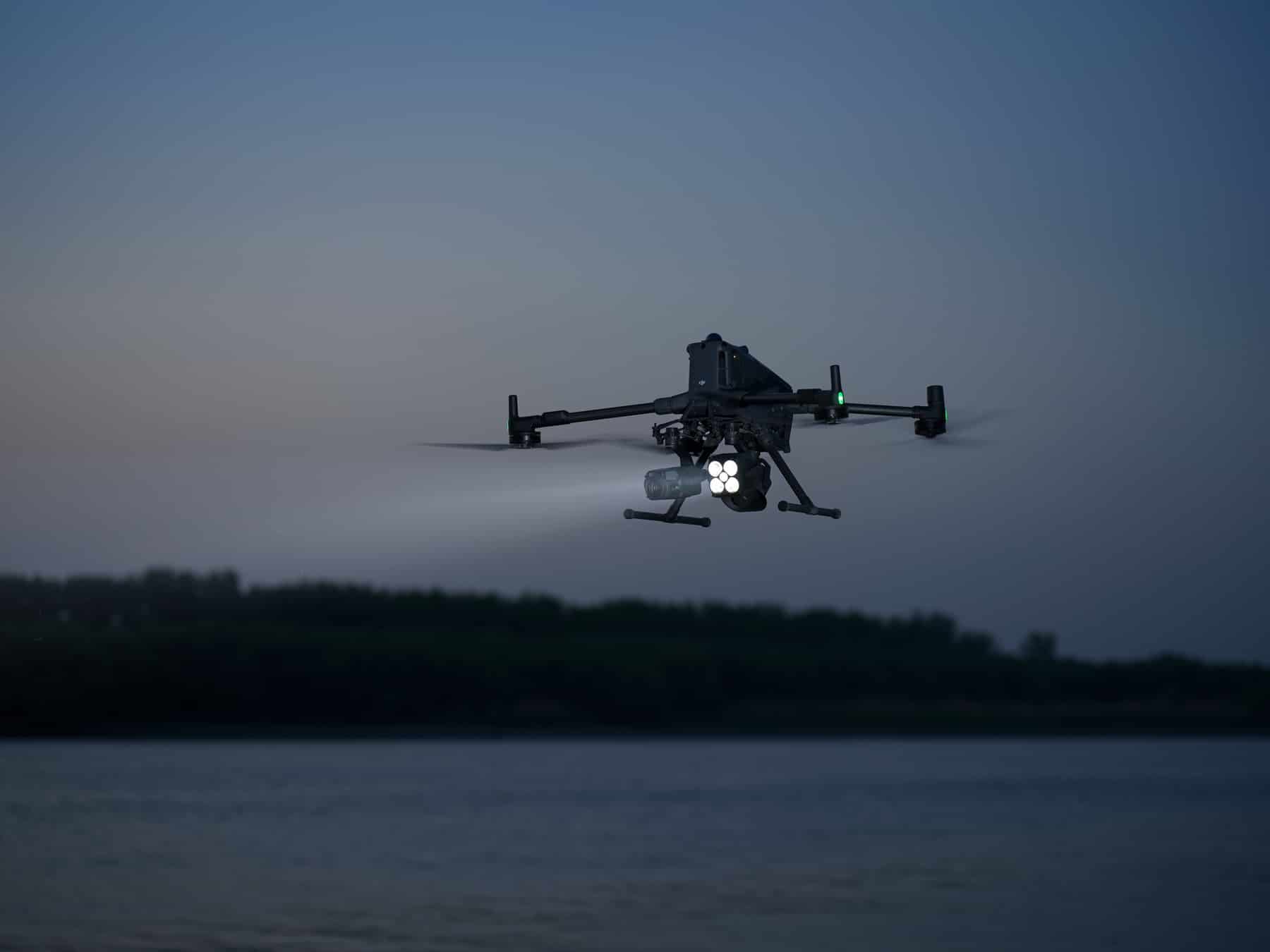
Residents of Norwich, Connecticut, have reported large drones hovering low over their homes for several consecutive nights in early June, with at least one aircraft landing on a rooftop and illuminating a backyard gathering with a spotlight. Police have confirmed an investigation is underway. The incidents coincide with sweeping FAA airspace restrictions tied to the FIFA World Cup, heightening scrutiny of any unidentified drone activity in the U.S. Northeast.

Highlights
- Norwich, Connecticut police confirmed a formal investigation after an officer personally witnessed a large drone flying over a residential property in early June 2026.
- At least one drone reportedly landed on a rooftop and directed a spotlight at backyard gathering before extinguishing its lights — behavior inconsistent with simple misidentification.
- Connecticut State Police deployed drone-detection systems, including Dedrone RF sensors, in New London County — the same jurisdiction as Norwich — as recently as 2024, giving authorities a viable technical path to identify the operator.
- FAA Remote ID rules mandatory since March 2024 require most registered drones to broadcast identification signals; flying with Remote ID disabled is itself a federal violation.
- More than 100 FIFA World Cup Temporary Flight Restrictions are active across the U.S. Northeast, with civil penalties up to $75,000 per violation, making any unidentified drone activity in the region especially sensitive through July 19.
Norwich Residents Report Nightly Low-Altitude Drone Activity Over Homes
Multiple residents of Norwich, Connecticut — a city of roughly 40,000 in New London County in the state's southeastern corner — told local broadcaster Fox61 that large drones had descended to within a few feet of their rooftops on several consecutive nights in early June. Norwich Police confirmed a formal investigation after an officer personally witnessed one of the aircraft.
Homeowner Christie Milligan said two drones, each spanning several feet in width, approached her property on two consecutive nights. After she called police, one of the aircraft flew directly over her head while she was giving a statement to an officer in her yard. "It was big — quite substantial in size. This was definitely not a toy," she told Fox61.
Milligan added that one drone directed a spotlight at her daughter and friends gathered in the backyard before switching off its lights. Her daughter, Na'omi, said she watched a drone land on the rooftop and fly around neighboring properties, and believed the operator was acting deliberately. Another resident described an aircraft that could extinguish all lights and become completely invisible against the night sky. Norwich Police declined media interviews but confirmed the investigation is active.
The FAA warned in February that it would pursue legal action against drone operators who endanger public safety, violate airspace regulations, or facilitate criminal activity.
Behavior Pattern Differs from Past Misidentification Cases
The majority of "mystery drone" reports in recent years have ultimately been attributed to manned aircraft, planets, stars, balloons, birds, or even plastic bags upon closer examination. However, an aircraft that lands on a rooftop and spotlights teenagers in a backyard cannot be explained away as the Orion constellation. The Norwich reports describe close-range, low-altitude behavior that is not consistent with misidentification.
That said, the historical record still demands measured skepticism. During the 2024 New Jersey drone panic, former Maryland Governor Larry Hogan reported dozens of large drones flying over his Davidsonville home; flight trackers and amateur astronomers subsequently identified the footage as showing aircraft on approach to BWI Airport and, again, Orion. Federal agencies ultimately attributed the majority of the more than 5,000 calls logged during that episode to manned aircraft, planets, and stars. A defense contractor later claimed its car-sized test vehicle had triggered the initial wave of sightings in November 2024. As recently as April of this year, United Airlines retracted a report of a Boeing 737 being struck by a drone near San Diego after inspection revealed no damage.
One point worth clarifying: Na'omi told Fox61 that the drone was eavesdropping on her family. Consumer-grade camera drones cannot capture usable audio in flight — rotor noise overwhelms all other sound, which is why drone footage is typically muted or recorded with separate ground-level audio. The Norwich operator may well have been recording video, which is invasive enough, but audio surveillance is almost certainly not what occurred.
Night-time size estimates are also notoriously unreliable. Without a reference point, a one-meter consumer drone at 30 metres altitude can appear identical to a much larger aircraft flying considerably higher. The New Jersey "car-sized drone" episode already provided that lesson.
Connecticut Has the Technical Capability to Identify the Operator
Connecticut has built drone-detection infrastructure near Norwich over the past two years, giving this case better-than-average odds of resolution. Remote ID receivers and radio-frequency (RF) sensors can simultaneously locate a broadcasting drone and its operator, and state police deployed this category of equipment in the same county — New London — as recently as 2024.
FAA Remote ID rules, mandatory since March 2024, require most registered drones to broadcast an identification signal during flight. Free smartphone apps and low-cost receivers can read that signal from the ground. During the wave of sightings in December 2024, Connecticut State Police deployed drone-detection systems in Groton and New London — both in New London County, the same jurisdiction as Norwich. The state has since expanded its network further, applying to install Dedrone RF sensors on school rooftops in New Haven; those sensors can classify drone types, pinpoint locations, and often identify the operator.
If the aircraft over Norwich are modern consumer or commercial drones, technical identification is a well-solved problem. If they are homebrew builds with Remote ID disabled, that is itself a federal violation and narrows the suspect pool considerably. An answer is achievable — the critical variable is whether anyone pointed a receiver at the sky before the sightings stopped.
World Cup Airspace Restrictions Raise the Stakes
The Norwich sightings occurred days before the FIFA World Cup opened on June 11, with federal counter-drone assets heavily concentrated across the U.S. Northeast and more than 100 drone-specific Temporary Flight Restrictions (TFRs) already in effect. Every unidentified drone report now competes for attention with genuine event-security operations.
The FAA has designated each World Cup venue as a strict no-fly zone, with civil penalties of up to $75,000 per violation and criminal fines reaching $100,000. Restrictions extend well beyond the stadiums themselves: protected zones around team base camps cover cities hundreds of miles from match venues. One TFR has locked down the entire downtown core of Providence, Rhode Island — approximately 65 kilometres (40 miles) from Norwich — through July 21, to protect the hotel housing the Ghana national team.
This security posture cuts both ways. A surge of misidentified drone reports during the tournament could flood tip lines that need to remain clear for genuine violations — the same dynamic that overwhelmed investigators with thousands of dead-end leads during the 2024 New Jersey episode. On the other hand, if a deliberate bad actor is conducting harassment flights over residential properties in southeastern Connecticut, that operator is now flying in the most heavily monitored airspace the region has ever seen.
DroneXL Analysis
DroneXL has tracked every wave of mystery drone sightings since the first reports near Picatinny Arsenal, New Jersey, in November 2024. The pattern has been remarkably consistent: mass sightings, weeks of official silence, and a resolution attributing the bulk of reports to airliners, Jupiter, or a contractor's test program. The tri-state area has now been at the center of the phenomenon twice: New Jersey in 2024, and Connecticut in 2026.
Norwich breaks the pattern in one significant respect: a rooftop landing and a backyard spotlight are pilot decisions, not optical illusions. Either the witness accounts contain material errors, or someone in southeastern Connecticut is deliberately flying drones toward residential properties. Both scenarios have precedent.
The question the available reporting cannot answer is whether anyone in Norwich — including police — conducted a Remote ID scan during any of these flights. Fox61's coverage makes no mention of it, and that answer is determinative. The state's detection equipment is in the same county. If Norwich Police announce an identified operator in the coming weeks, this becomes a routine enforcement story. If the sightings fade away without resolution, as happened in New Jersey, that silence will be telling in its own right. The World Cup window runs through July 19; statements from the Norwich Police Department and Connecticut State Police during that period merit close attention, given that the same agencies are now simultaneously responsible for event airspace security and have clear incentive to close this case quickly.
原文來源: 查看原文