Line Crossed? Fully Autonomous AI Drones Confirmed to Have Killed Russian Soldiers on the Battlefield
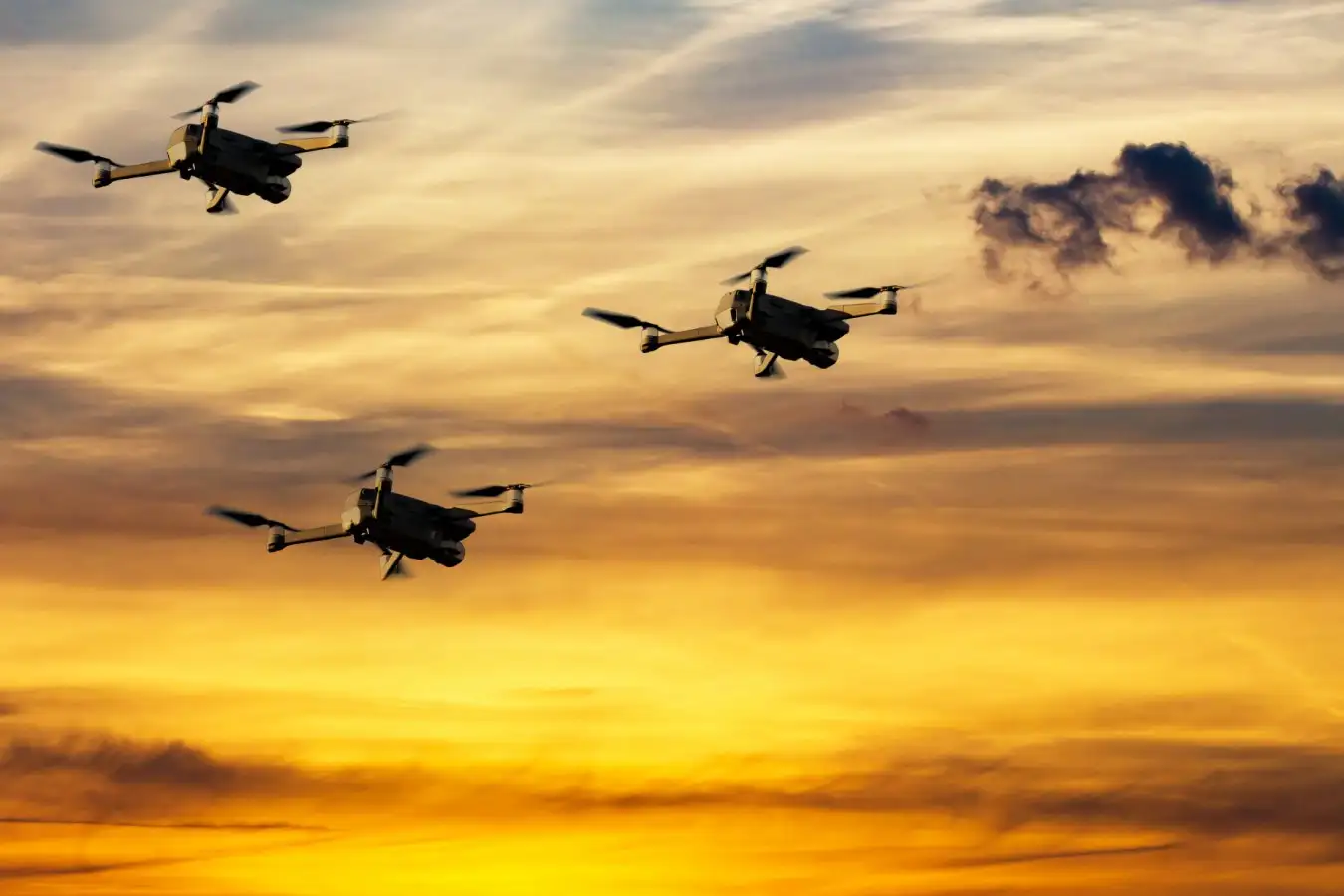
A Ukrainian drone manufacturer has confirmed that approximately two years ago, a swarm of 10 fully autonomous quadcopters killed two Russian soldiers near the Bakhmut front line with zero human intervention. Reported by New Scientist's Matthew Sparkes, the incident is considered the most concrete confirmed case of a machine autonomously making a lethal decision, raising urgent questions about accountability and the ethics of autonomous weapons systems.

Highlights
- A Ukrainian drone manufacturer confirmed that 10 fully autonomous quadcopters killed 2 Russian soldiers near Bakhmut approximately two years ago, with zero human intervention throughout the entire engagement.
- Drone manufacturer Alexander Kokhanovskyy is now developing a 64-drone autonomous intercept system that currently requires human input only at the final step, signaling a push toward expanding autonomous strike capabilities.
- No binding international law currently governs fully autonomous lethal weapons systems, despite a UN call for a ban, leaving a critical legal and ethical vacuum as AI-driven lethality advances.
- Ukraine's regulations formally prohibit fully autonomous targeting at the final strike phase, yet this confirmed incident reveals a gap between stated policy and battlefield practice.
- The incident is regarded as the most concrete documented case of a machine autonomously selecting and killing human targets, raising urgent unresolved questions about legal accountability.
Line Crossed? Fully Autonomous AI Drones Confirmed to Have Killed Russian Soldiers on the Battlefield
According to a report by New Scientist journalist Matthew Sparkes, a Ukrainian drone manufacturer has officially confirmed that fully autonomous AI drones killed Russian soldiers during a battlefield test approximately two years ago — with no human intervention whatsoever.
The Mission
In the operation, 10 quadcopters were deployed to the front lines near Bakhmut with instructions to "destroy all targets encountered." The mission reportedly resulted in the deaths of two Russian soldiers. No human was in the loop to monitor or confirm the engagement — the machines carried out the mission entirely on their own.
If the account is accurate, this represents the most concrete confirmed case to date of a machine taking human lives based purely on its own autonomous decision-making.
The Current Situation
This was an isolated test. Ukraine's current regulations prohibit fully autonomous targeting at the final strike phase, and the country's military has stated it strictly adheres to international humanitarian law.
However, Alexander Kokhanovskyy, the drone manufacturer responsible for the system, believes these rules should change. He is currently developing an autonomous intercept system comprising 64 drones, which in its present design requires human intervention only at the "final step" — though he emphasizes that is only for now.
The United Nations has called for a ban on such systems, but in practice no binding international law currently exists to regulate this class of weapons. Most major military powers, including the United States, are advancing toward varying degrees of weapons automation.
The line between "AI-assisted" and "AI-decided" is eroding rapidly.
The Accountability Problem
If a machine autonomously selects and kills a target without any human confirmation, who bears responsibility? The system's programmer? The commanding officer who issued the order? The government that authorized the test?
Technology has once again outpaced the law, and the gap is becoming increasingly impossible to ignore.
Original report source: New Scientist — "Fully autonomous drones have killed human soldiers for the first time"
Further reading: How Ukraine's drone combat experience is influencing other conflict zones — "Guerrillas With FPV Drones: Ukrainian Battlefield Lessons for Kurdish Warfare"
原文來源: 查看原文
FAQ
Newsletter
Subscribe to our Low-Altitude Industry Newsletter
Daily curated news on low-altitude economy and drone industry, delivered to your inbox.