From 'Predictable Surprise' to Policy Priority: The Push to Accelerate Counter-UAS Deployment
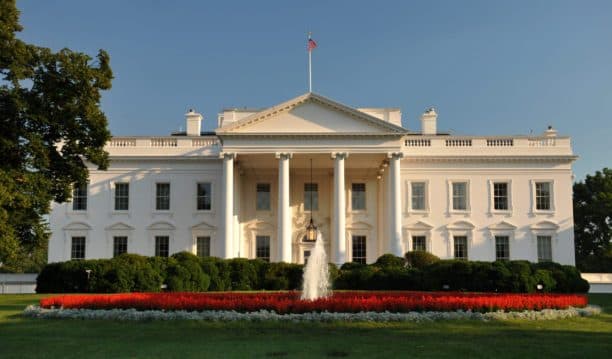
A foiled drone attack plot targeting a White House UFC event has reignited debate in U.S. security circles over how quickly state, local, tribal, and territorial governments should be authorized to deploy counter-drone systems. As drone threats evolve faster than existing response frameworks, the policy authorization gap between federal agencies and first responders is under increasing scrutiny.

Highlights
- A foiled drone attack plot targeting a UFC event at the White House has reignited U.S. policy debate over counter-UAS deployment authorization.
- Counter-UAS authority in the U.S. currently rests exclusively with federal agencies—DoD, DHS, and DOJ—leaving state and local first responders without legal tools to act against drone threats.
- Industry stakeholders and policy advocates are calling on Congress to expand C-UAS authorization to state, local, tribal, and territorial governments through a more flexible legal framework.
- Drone threats can complete a mission in minutes, making the centralized federal authorization model increasingly inadequate for real-world response timelines.
- A policy shift expanding local C-UAS authorization would significantly enlarge the addressable market for counter-drone technology vendors, though balancing privacy, spectrum, and aviation safety remains a key challenge.
From 'Predictable Surprise' to Policy Priority: The Push to Accelerate Counter-UAS Deployment
The pace at which drone threats are evolving is outstripping the capacity of existing countermeasures. A reported foiled plot to deploy a drone against a UFC event at the White House has once again focused attention on a question that U.S. security circles have long debated: how quickly should state, local, tribal, and territorial (SLTT) governments be granted authority to deploy counter-UAS systems?
Threat Evolution Outpaces Response Capabilities
The White House incident is far from an isolated case. In recent years, the use of drones for harassment, reconnaissance, and potential attack has grown steadily across the globe, with critical infrastructure and large public events emerging as prime targets. Security experts have long described such incidents as a 'Predictable Surprise'—a threat that is clearly visible yet fails to generate adequate policy action before harm is done.
The Authorization Gap
In the United States, authority to deploy and operate counter-UAS (C-UAS) systems currently rests primarily with federal agencies, including the Department of Defense (DoD), the Department of Homeland Security (DHS), and the Department of Justice (DOJ). In most circumstances, state and local law enforcement agencies have no legal authority to actively jam or interdict a drone, even when facing a clear and present threat.
This structural authorization gap means that when a threat materializes within a local jurisdiction, first responders are frequently left without the legal basis or technical tools to act—forced to wait for federal assets to arrive.
Growing Calls for Faster Deployment
In the wake of the White House incident, industry stakeholders and policy advocates have renewed calls on Congress and relevant executive agencies to close this gap and expand C-UAS authorization to local governments as quickly as possible. Proponents argue that the highly centralized federal authorization model is fundamentally ill-suited to countering drone threats that can complete a mission in a matter of minutes.
They advocate for a more flexible authorization framework that would allow state and local governments to legally operate detection, tracking, and even interdiction systems under defined conditions—filling the window left open by the inherently slower pace of federal response.
Opportunities and Challenges for the Counter-UAS Industry
For counter-drone technology vendors, a shift in the policy environment would represent a significant expansion of the addressable market. However, designing solutions that balance operational effectiveness with compliance requirements—protecting civil liberties, avoiding radio frequency spectrum interference, and ensuring aviation safety—remains a core challenge for the entire industry.
As the drone threat environment continues to intensify, the industry and policymakers alike are watching closely to see when the 'Predictable Surprise' will finally become a genuine policy priority.
原文來源: 查看原文
FAQ
Newsletter
Subscribe to our Low-Altitude Industry Newsletter
Daily curated news on low-altitude economy and drone industry, delivered to your inbox.