Australia Trials Backpack-Deployable Counter-Drone System That Sets Up in Under Two Minutes
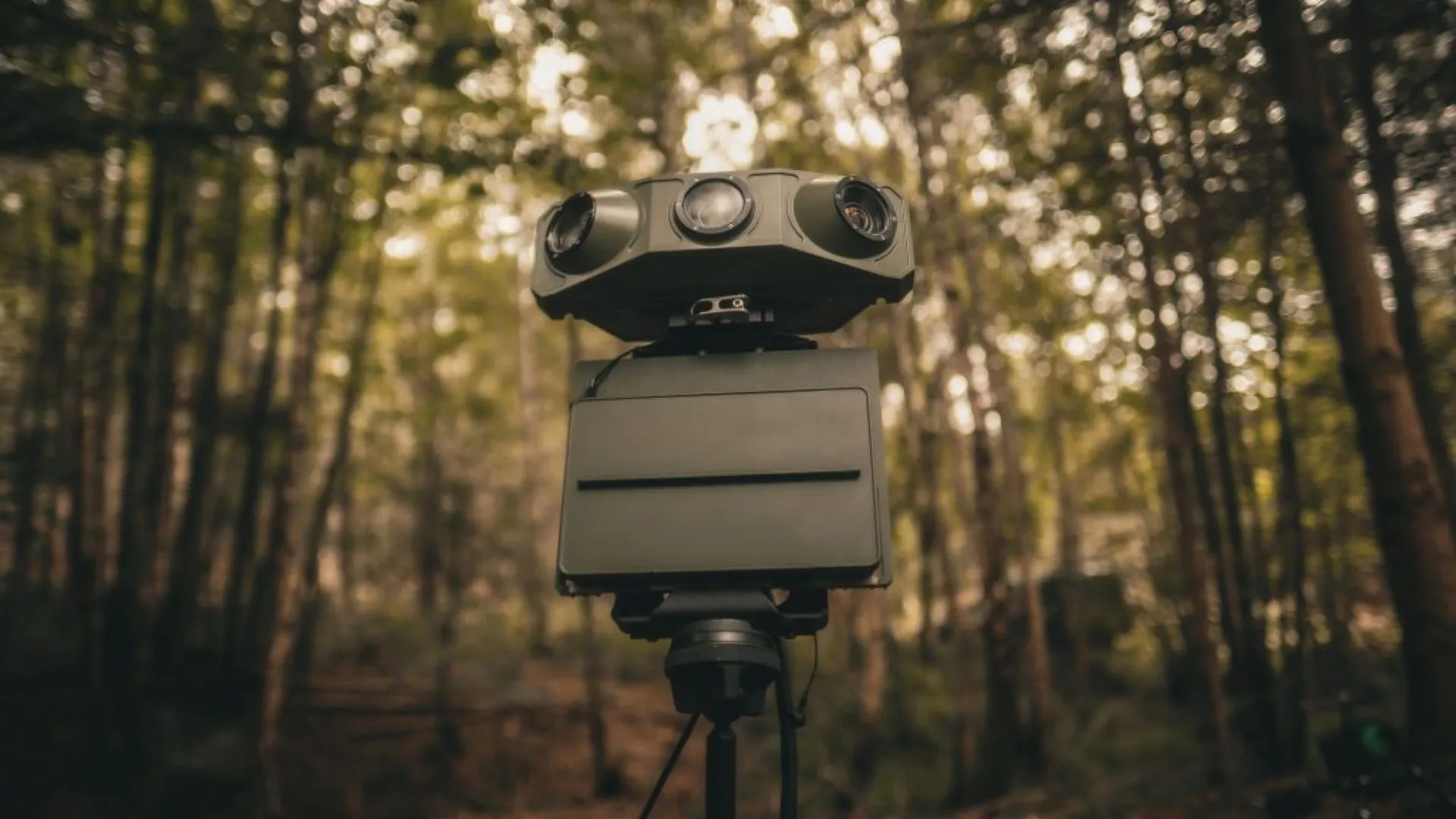
Under the AU$1.3 billion Land 156 counter-drone programme, the Australian Defence Force has contracted UK defence-tech firm OpenWorks to evaluate its Vision Guard smart-optics system. The AI-powered platform can be fully deployed in under two minutes, fits inside a standard military backpack, and is designed to give dismounted infantry early warning against Class 1 drone threats.

Highlights
- The Australian Defence Force has contracted UK firm OpenWorks to evaluate the Vision Guard counter-drone system under the AU$1.3 billion Land 156 programme.
- Vision Guard can be fully deployed in under two minutes and fits inside a standard military backpack, making it suitable for dismounted infantry operations.
- The system uses a proprietary AI engine to detect and classify Class 1 drones by fusing data from radar, optical, and acoustic sensors.
- Vision Guard has previously been tested by European and US defence agencies and participated in the joint UK–US Project Vanaheim interoperability trial.
- The contract reflects a broader Western military trend toward distributed, portable counter-UAS systems as low-cost drones pose growing threats to frontline troops.
Australia Trials Backpack-Deployable Counter-Drone System That Sets Up in Under Two Minutes
Australia is accelerating its efforts to protect frontline troops from small unmanned aerial vehicle (UAV) threats, awarding a contract to defence technology company OpenWorks under the Australian Defence Force's (ADF) Land 156 counter-drone programme.
OpenWorks will supply its Vision Guard smart optical system for evaluation as part of the ADF's AU$1.3 billion counter-drone capability enhancement initiative. Military planners intend to deploy the compact platform as an early-warning system for dismounted soldiers operating in high-threat environments.
The move reflects a broader shift among Western militaries toward distributed counter-UAS solutions. Recent conflicts have made clear that low-cost commercial and military-grade drones pose a serious threat to forces operating beyond the reach of traditional air-defence coverage.
Designed for the Frontline
OpenWorks engineered Vision Guard with a primary focus on giving soldiers rapid situational awareness without adding excessive load to their kit. The system combines panoramic surveillance with AI-driven detection software capable of identifying and tracking small drones at extended range.
Operators can have the system fully operational in under two minutes, enabling units to establish surveillance positions quickly. OpenWorks states that soldiers can carry the core unit and associated sensors in a standard military backpack.
The platform supports multiple sensor configurations, allowing users to integrate both active and passive detection technologies—including radar and acoustic sensors—according to mission requirements. OpenWorks' software then fuses data from all sensors to improve detection accuracy and reduce operator workload.
The company imposed strict size, weight, and power (SWaP) constraints during development, enabling small combat units to maintain persistent awareness of aerial threats while continuing to operate independently.
AI-Powered Drone Detection
At the heart of Vision Guard is OpenWorks' proprietary artificial intelligence engine. The software automatically analyses sensor inputs and classifies potential threats, with a particular focus on detecting and identifying Class 1 drones—the smallest category of military and commercial unmanned aerial vehicles.
Despite their compact size, Class 1 drones have become a persistent challenge on the modern battlefield due to their low cost, reduced radar cross-section, and rapidly improving capabilities. Vision Guard's early-warning function is intended to give troops additional time to respond before a drone completes a reconnaissance pass or initiates an attack.
Defence agencies in Europe and the United States have already tested or operationally deployed the technology. Vision Guard also participated in Project Vanaheim, a joint UK–US experimental programme examining the future of interoperable counter-UAS operations.
Growing Demand for Counter-Drone Capability
Australia's contract award comes as military organisations worldwide significantly increase investment in layered counter-UAS systems. Defence planners are increasingly prioritising portable, manoeuvre-compatible solutions over reliance on large strategic assets.
OpenWorks Chief Commercial Officer James Cross said the company recognises the responsibility that comes with supporting the modernisation of Australia's armed forces, positioning Vision Guard as a compact system purpose-built to enhance situational awareness for distributed combat units. Cross added that OpenWorks is proud to support Australia's efforts to strengthen its counter-drone capabilities.
As the drone threat continues to evolve, defence programmes such as Land 156 are expected to play a pivotal role in shaping the next generation of battlefield surveillance and force-protection technologies.
原文來源: 查看原文
FAQ
Newsletter
Subscribe to our Low-Altitude Industry Newsletter
Daily curated news on low-altitude economy and drone industry, delivered to your inbox.