U.S. Army Launches Drone-Deploying High-Altitude Balloons from Landing Craft in African Lion 26 Exercise
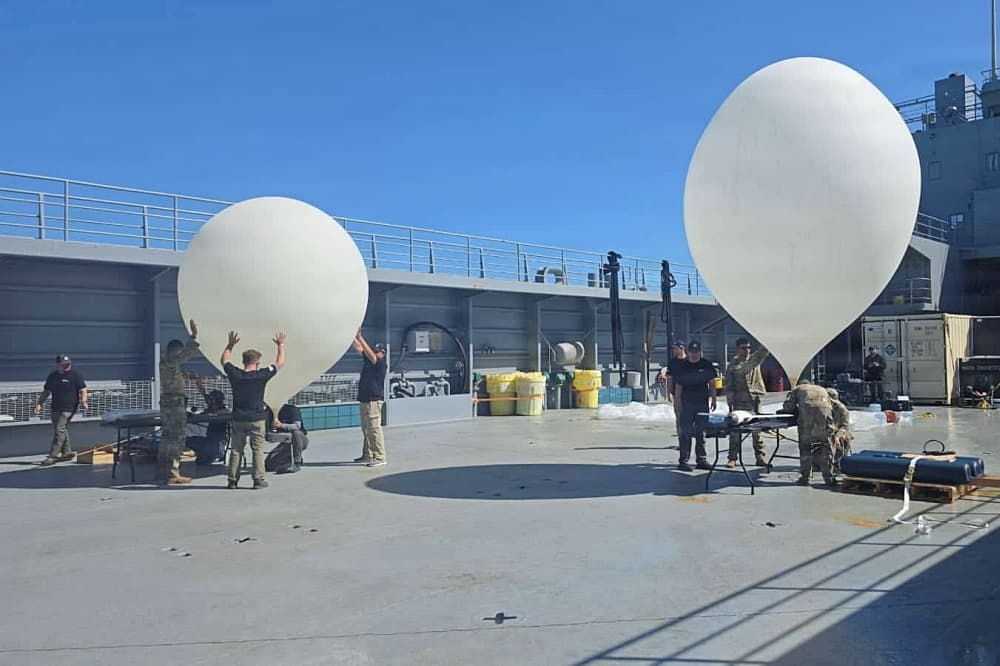
The U.S. Army tested a novel long-range precision strike capability last month during the African Lion 26 exercise off the coast of Morocco, launching multiple low-observable miniature high-altitude balloons from a landing craft. Developed by Mach Industries, the system deploys one-way attack drones and provides satellite communication links, aiming to extend operational reach without relying on conventional launch platforms.

Highlights
- The U.S. Army launched multiple low-observable miniature high-altitude balloons from a landing craft during African Lion 26 off Morocco's coast.
- The system, developed by Mach Industries, deploys one-way attack drones and provides a satellite communications link to extend operational range.
- The low-observable balloon design reduces radar detectability, improving mission stealth in contested environments.
- Conducting the launch from a naval landing craft demonstrates U.S. intent to integrate balloon-drone systems with existing sea-based platforms.
- One-way attack drones (loitering munitions) have grown in strategic importance following their prominent use in recent modern conflicts.
U.S. Army Launches Drone-Deploying High-Altitude Balloons from Landing Craft in African Lion 26 Exercise
The U.S. Army last month launched multiple low-observable miniature high-altitude balloons from a landing craft during an exercise off the coast of Morocco, testing a new launch-effects and satellite communications capability developed by Mach Industries. The goal: enabling long-range communications and precision strikes using one-way attack drones.
African Lion 26 Puts Emerging Technology to the Test
The exercise, designated African Lion 26, focused on real-world validation of emerging technologies being developed for U.S. forces. Conducted along Morocco's coastline, the event underscored the U.S. military's drive to evaluate new unmanned systems and balloon-based platforms across diverse geographic environments.
High-Altitude Balloons as Drone Delivery Platforms
The Mach Industries system uses miniature high-altitude balloons as relay and delivery platforms, releasing one-way attack drones over a target area while simultaneously maintaining a satellite communications link. This configuration dramatically extends operational range. The low-observable design of the balloons also makes them significantly harder to detect on adversary radar, adding a layer of mission stealth.
Strategic Implications of One-Way Attack Drones
One-way attack drones — also referred to as "kamikaze drones" or loitering munitions — have gained considerable prominence in recent modern conflicts. By using high-altitude balloons as forward-deployed launch vehicles, U.S. forces can conduct precision strikes at extended range without depending on traditional launch sites, demonstrating the asymmetric flexibility this approach offers.
Sea-Based Platforms Extend Operational Depth
The decision to conduct the launch from a landing craft signals that the U.S. military is actively exploring the integration of naval vessels with next-generation unmanned systems, further expanding the depth and flexibility of joint sea-land operations. Should this technology mature into operational service, it would represent a meaningful enhancement of U.S. capabilities in both littoral and open-ocean environments.
This article is based on publicly available reporting summaries. Full details of the exercise remain subject to official disclosure.
原文來源: 查看原文
FAQ
Newsletter
Subscribe to our Low-Altitude Industry Newsletter
Daily curated news on low-altitude economy and drone industry, delivered to your inbox.