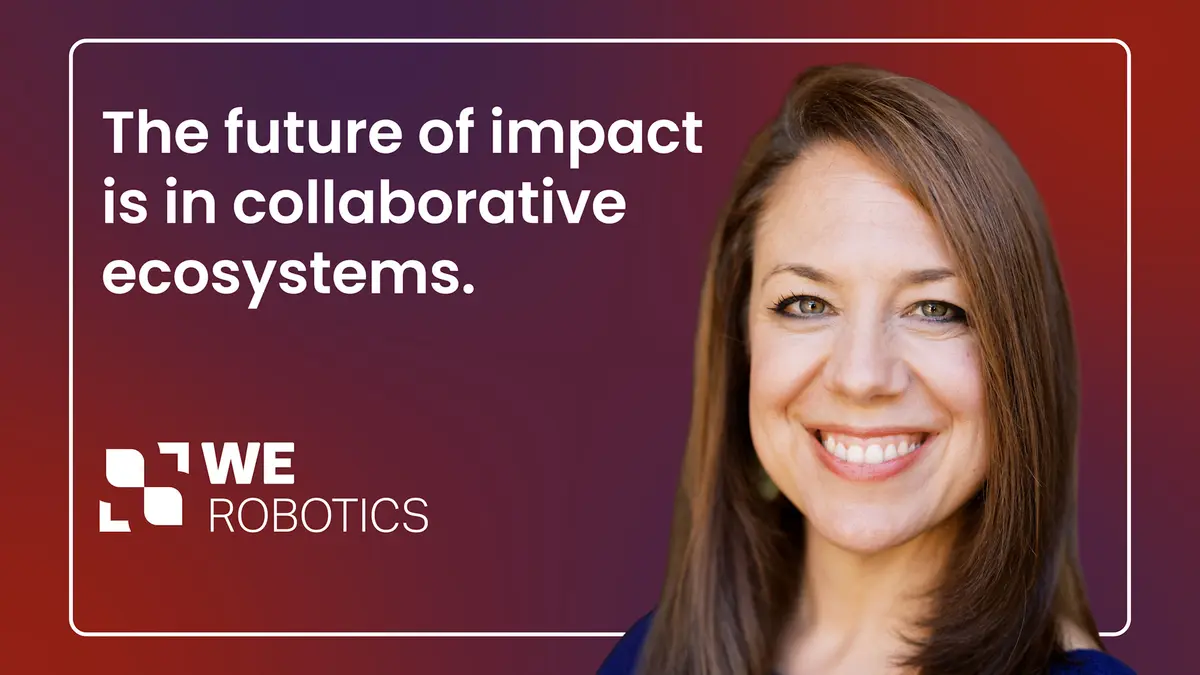
Collaborative Ecosystems: The Key to Achieving Deep and Lasting Social Impact
Systems-change researcher Cynthia Rayner argues that no single organization can tackle today's complex social challenges alone. By building collaborative ecosystems rooted in shared vision, trust, and systems thinking, diverse stakeholders—including those in the drone and emerging-tech industries—can generate collective impact far beyond what any one actor could achieve independently.

Highlights
- Cynthia Rayner, a systems-change researcher, contends that single organizations can no longer effectively address complex challenges such as climate change, social inequality, or technology ethics on their own.
- Collaborative ecosystems enable resource sharing, knowledge exchange, and goal alignment across multiple stakeholders, generating collective impact that surpasses what any individual organization can achieve.
- Rayner identifies four pillars of effective collaborative ecosystems: shared vision, adaptive structure, trust-based partnerships, and systems thinking.
- The collaborative ecosystem framework is directly applicable to the drone industry, where coordination among industry, government, academia, and civil society is critical for sound regulatory and safety frameworks.
- Rayner's research concludes that genuine, lasting impact requires collective action and shared accountability among all participating stakeholders.
Collaborative Ecosystems: The Key to Achieving Deep and Lasting Social Impact
Systems-change researcher Cynthia Rayner has shared her insights on the power of collaborative ecosystems, exploring how multi-stakeholder collaboration can produce broader and more enduring social change.
The Era of Going It Alone Is Over
Rayner argues that in the face of today's complex social challenges, no single organization or initiative can succeed in isolation. Issues such as climate change, social inequality, and technology ethics all require actors from different sectors working together to generate genuine systemic impact.
The Core Value of Collaborative Ecosystems
The collaborative ecosystem concept holds that organizations, institutions, and individuals do not operate in silos—they are interdependent and mutually reinforcing. Through resource sharing, knowledge exchange, and goal alignment, such ecosystems can unleash collective impact that far exceeds the capacity of any single organization.
Key Elements of Lasting Change
Rayner's research identifies several characteristics common to collaborative ecosystems capable of producing durable social change:
- Shared vision: Participants hold a consistent understanding of—and commitment to—common goals
- Adaptive structure: The ability to adjust and evolve in response to changing conditions
- Foundation of trust: Partnerships built on transparent communication and mutual respect
- Systems thinking: Understanding the root causes and interconnections of problems from a holistic perspective
Implications for the Drone and Technology Industries
This framework applies equally to the drone and broader emerging-technology sectors. When it comes to navigating regulatory development, establishing safety standards, and expanding markets, a collaborative ecosystem spanning industry, government agencies, academic institutions, and civil society will be an essential foundation for healthy sector growth.
Rayner's research serves as a reminder: real impact comes from collective action—from stakeholders willing to work together and share accountability for outcomes.
原文來源: 查看原文
FAQ
Newsletter
Subscribe to our Low-Altitude Industry Newsletter
Daily curated news on low-altitude economy and drone industry, delivered to your inbox.