U.S. Army Advances Continuous Fiber 3D Printing Technology to Accelerate Missile Component Production
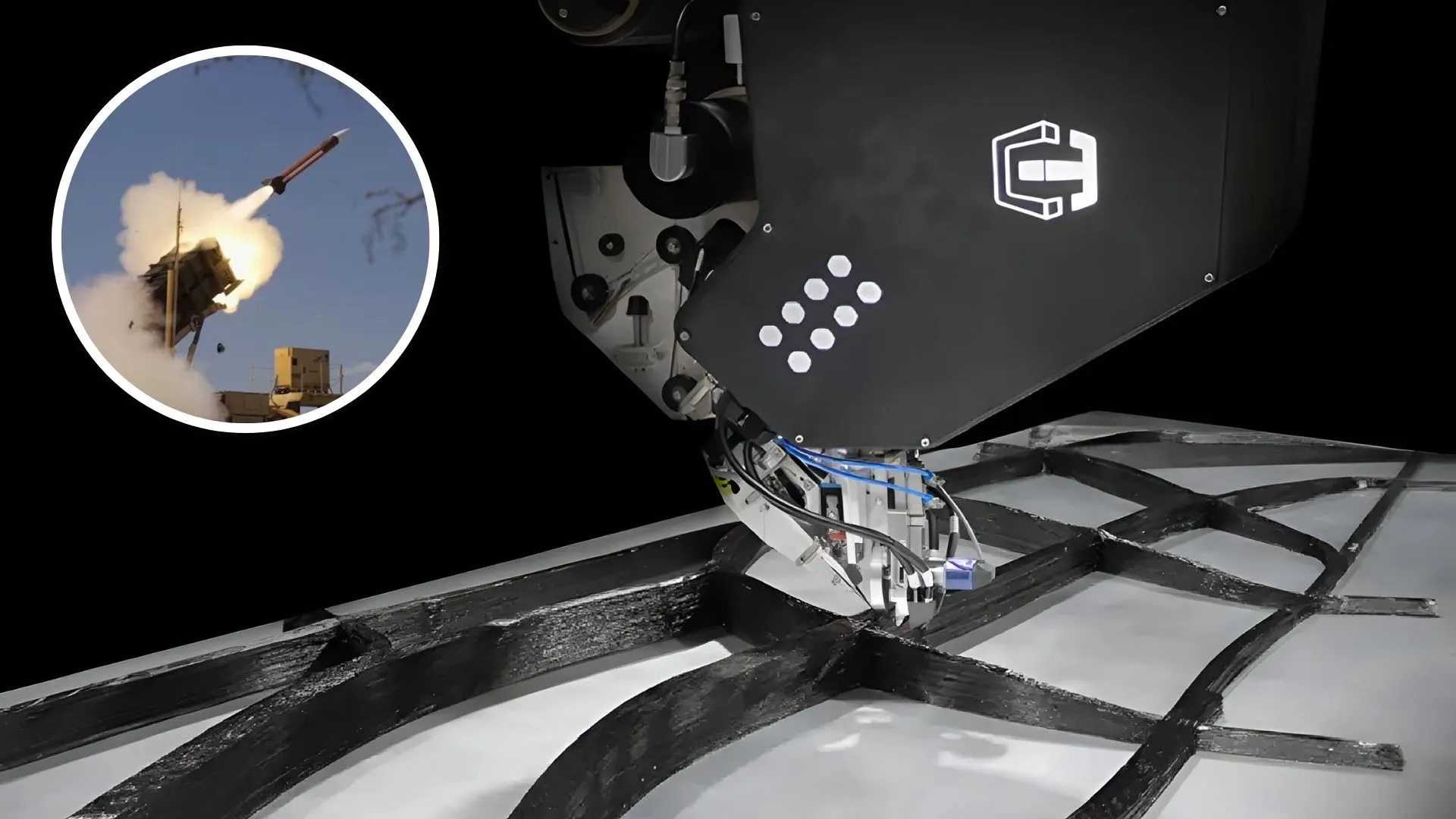
The U.S. Army has awarded Continuous Composites a multi-year contract to evaluate its CF3D (continuous fiber 3D printing) manufacturing technology for improving production efficiency and reducing costs for precision strike missile components. The program integrates DEVCOM Aviation & Missile Center, the ManTech program, and America Makes, with collaborations including Aurora Flight Sciences.

Highlights
- The U.S. Army awarded Continuous Composites a multi-year contract to evaluate CF3D technology for Precision Strike Missile (PrSM) component production, aiming to cut costs and increase throughput.
- The program is backed by DEVCOM Aviation & Missile Center, the ManTech program, and America Makes, reflecting the DoD's push for scalable domestic defense manufacturing.
- Continuous Composites secured a $2 million SBIR Phase II contract with Aurora Flight Sciences to develop next-generation lightweight airframe structures for launched effects drone platforms.
- A separate $1.25 million AFWERX contract focuses on automated fiber steering and rapid UV curing processes for next-generation aerospace structural joining technologies.
- The series of Army and Air Force contracts signals growing defense-sector adoption of automated composite manufacturing to address production bottlenecks in missile and aircraft systems.
U.S. Army Evaluates CF3D Technology to Enhance Missile Production Capability
The U.S. Army is evaluating a new manufacturing approach aimed at accelerating missile production while reducing costs. Continuous Composites has been awarded a multi-year contract to assess how its CF3D (continuous fiber 3D printing) manufacturing technology can improve production processes for components required by existing and future precision strike systems.
The program integrates the U.S. Army DEVCOM Aviation & Missile Center, the Manufacturing Technology (ManTech) program, and America Makes, and aligns with the Department of Defense's broader objectives to advance scalable production methods and strengthen domestic manufacturing capacity for advanced defense systems.
Scaling Up Composite Manufacturing
Continuous Composites will evaluate how the CF3D process and fiber-steering design capabilities can support production requirements for the Precision Strike Missile (PrSM) architecture. The assessment covers nosecones, tail fins, leading edges, bulkheads, and other high-performance structural components that demand precision and durability.
Conventional manufacturing methods for these parts are often constrained by production rates and consistency issues. The company aims to establish a repeatable process that increases overall throughput while meeting the performance standards required for aerospace and defense applications.
The program also emphasizes reducing production variability and improving supply chain resilience, helping manufacturers bring advanced designs into larger-scale production while addressing broader aerospace and missile requirements.
The Core of Advanced Manufacturing Technology
CF3D technology combines continuous fiber-reinforced materials with automated manufacturing processes to produce complex composite structural components. Continuous Composites states that the process can manufacture lightweight parts for demanding aerospace applications while simplifying production workflows.
CEO Steve Starner said the company is focused on addressing manufacturing challenges associated with high-performance, high-temperature materials, with the goal of reducing program risk, enhancing system capability, and supporting future defense production needs. "We believe our technology can bring transformative capabilities to the U.S. industrial base," Starner said, adding that the company is actively helping customers build scalable production capacity aligned with DoD priorities.
Broader Defense Applications Portfolio
This contract further expands the company's growing defense manufacturing project portfolio. Continuous Composites is also working with Boeing subsidiary Aurora Flight Sciences under a separate U.S. Army Small Business Innovation Research (SBIR) program to develop next-generation airframe structures for launched effects platforms — a program originally led by the Navy that was subsequently transitioned to the Army.
This project has entered Phase II with a $2 million contract, utilizing CF3D manufacturing, fiber steering, and topology optimization to develop lightweight airframe structures with greater internal volume and payload capacity, improving structural performance while reducing material usage and overall weight.
In addition, Continuous Composites has received a $1.25 million contract through the AFWERX Manufacturing Challenge program, focused on developing next-generation aerospace structural joining and reinforcement technologies using CF3D automated fiber steering, rapid UV curing, and digital optimization processes.
Researchers are evaluating whether the technology can produce load-bearing stiffeners that can be bonded to composite panels or directly integrated during manufacturing — addressing a longstanding challenge in lightweight airframe design: improving structural strength and stability without adding unnecessary weight.
The series of Army- and Air Force-backed programs further underscores a trend of defense agencies actively evaluating automated composite manufacturing technology across multiple aerospace applications, with a focus on increasing production throughput, improving manufacturing consistency, and alleviating future manufacturing bottlenecks for missile and aircraft systems.
原文來源: 查看原文
FAQ
Newsletter
Subscribe to our Low-Altitude Industry Newsletter
Daily curated news on low-altitude economy and drone industry, delivered to your inbox.