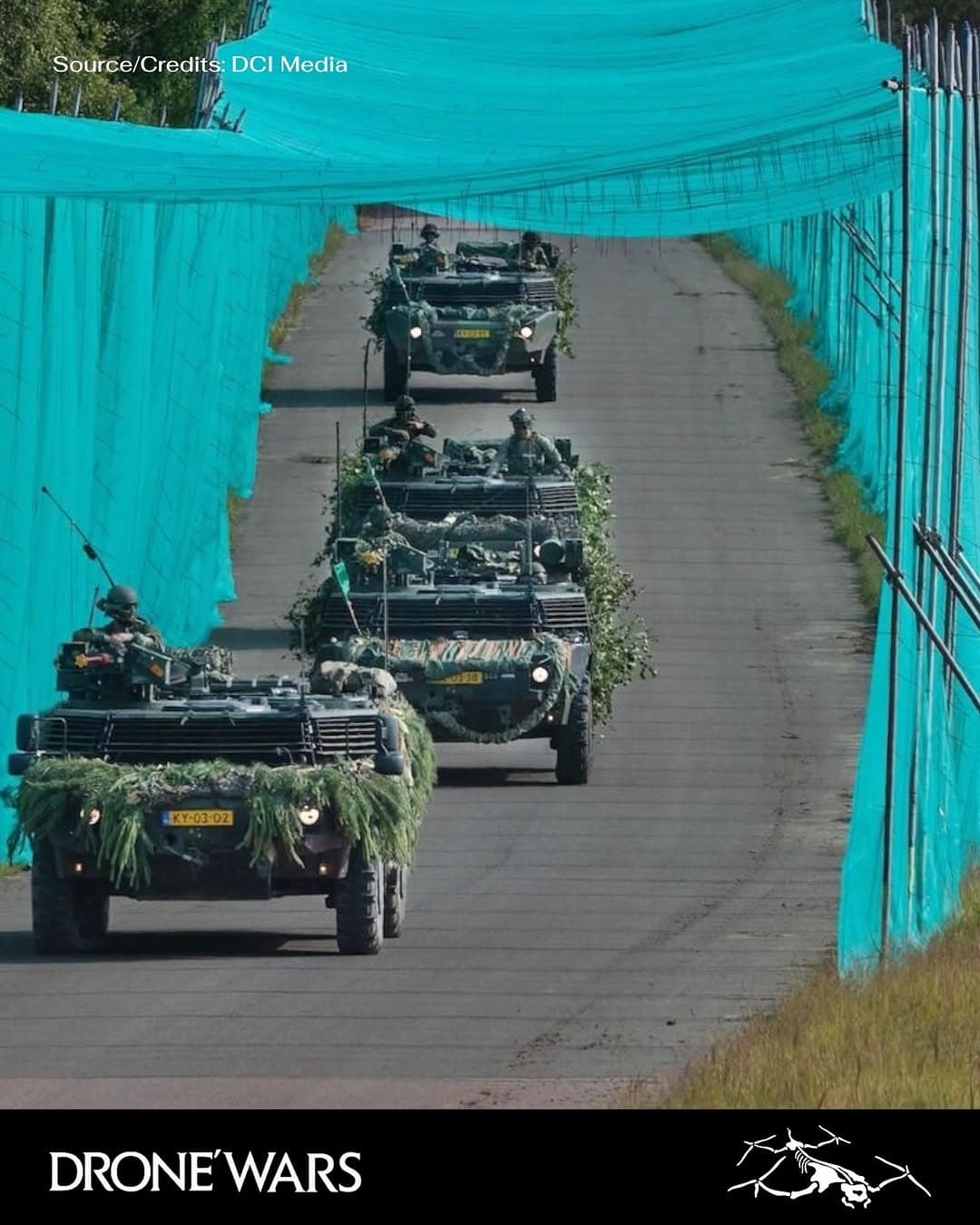
Dutch Army's 'Exercise Fighter Lion' Integrates Ukrainian Counter-Drone Tactics for the First Time
The Dutch Army conducted Exercise Fighter Lion near Bergen-Hohne, Germany, involving approximately 7,000 troops. For the first time, the exercise integrated counter-drone tunnel systems derived from Ukrainian battlefield experience, dedicated drone warfare units, and passive C-UAS measures including anti-drone nets and security cordons, all within a simulated environment of persistent drone threats and electronic warfare pressure.

Highlights
- Exercise Fighter Lion, held near Bergen-Hohne, Germany, involved approximately 7,000 Dutch Army soldiers, making it one of the largest Dutch military exercises in recent years.
- The Dutch Army integrated counter-drone tunnel systems based on Ukrainian battlefield experience for the first time during this exercise.
- Dedicated drone warfare units were incorporated into training scenarios alongside passive C-UAS measures including anti-drone nets and security cordons.
- The exercise simulated a composite threat environment featuring persistent drone presence and electronic warfare pressure to train troops in high-intensity conditions.
- The large-scale adoption of passive counter-drone measures in the exercise reflects an accelerating NATO trend toward building comprehensive C-UAS defence architectures.
Dutch Army's 'Exercise Fighter Lion' Integrates Ukrainian Counter-Drone Tactics for the First Time
The Dutch Army has launched a large-scale military exercise that, for the first time, incorporates anti-drone nets, security cordons, and other passive counter-UAV (C-UAS) protective measures on a broad scale — marking a significant step forward in the Netherlands' approach to countering modern drone threats.
Exercise Scale and Location
Dubbed Exercise Fighter Lion, the drill took place near Bergen-Hohne, Germany, with approximately 7,000 Dutch soldiers taking part. It stands as one of the most substantial Dutch Army exercises in recent years.
First Integration of Ukrainian Counter-Drone Tactics
The exercise's most notable feature was the first-ever integration of counter-drone tunnel systems derived from real-world Ukrainian combat experience, alongside the incorporation of dedicated drone warfare units into training scenarios. This development signals that the Dutch military is actively absorbing frontline lessons from drone warfare on the Russia-Ukraine battlefield and translating them into concrete training programmes.
Simulating Real-World Drone Threat Environments
The exercise was designed around a composite operational scenario featuring sustained drone threat presence and electronic warfare (EW) pressure, with the aim of training troops to maintain combat effectiveness under high-intensity drone threats while gaining hands-on experience deploying passive protective measures.
The Importance of Passive Counter-Drone Measures
As drones become increasingly prevalent on the modern battlefield, passive protective measures — such as anti-drone nets and security cordons — have emerged as a vital complement to active electronic countermeasure systems, owing to their low cost and ease of deployment. The Dutch Army's large-scale incorporation of these measures into Exercise Fighter Lion reflects a broader NATO-wide trend of accelerating the development of comprehensive C-UAS defence architectures.
Source / Image Credit: DCI Media
原文來源: 查看原文
FAQ
Newsletter
Subscribe to our Low-Altitude Industry Newsletter
Daily curated news on low-altitude economy and drone industry, delivered to your inbox.