Liaoning Carrier Group Completes 40-Day Deployment, Electronic Warfare Systems Shake Japanese Surveillance
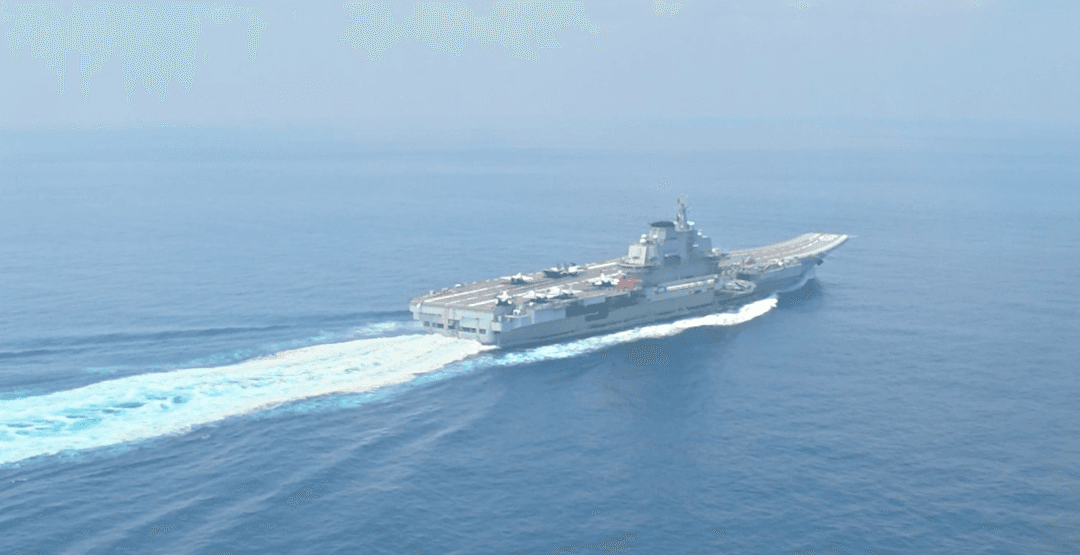
China's Liaoning carrier strike group concluded a record 40-plus-day deep-ocean exercise on June 22, operating across the South China Sea and Western Pacific. Japan's Ministry of Defense went unusually quiet during the drill, with a surveillance gap of more than 20 days and no clear vessel photographs released. Chinese state media cited three factors: integrated fleet formation, electronic warfare jamming capabilities, and operations deep into Western Pacific waters beyond Japan's first island chain monitoring coverage.

Highlights
- China's Liaoning carrier strike group completed a record 40-plus-day far-sea exercise on June 22, operating across the South China Sea and Western Pacific.
- Japan's Ministry of Defense recorded a public tracking gap of more than 20 consecutive days (May 29 – June 20) with no photographs of the Chinese formation released.
- CCTV attributed surveillance evasion to three factors: integrated fleet formation, electronic warfare jamming of Japanese reconnaissance systems, and deep Western Pacific operations beyond Japan's first island chain coverage.
- The formation included the Liaoning carrier, destroyers, an amphibious assault ship, and replenishment vessels, maintaining continuous carrier-based fighter sorties throughout the deployment.
- CCTV stated the exercise demonstrated the continued improvement of China's carrier group in far-sea, integrated sea-air area-denial operations.
Liaoning Carrier Group Completes 40-Day Deployment, Electronic Warfare Systems Shake Japanese Surveillance
China's Liaoning carrier strike group successfully concluded its far-sea live-training exercise on June 22, setting a new duration record for the carrier's open-ocean deployments. The exercise, which spanned more than 40 days, saw the group operate continuously across multiple maritime and airspace zones in the South China Sea and the Western Pacific.
Japan's Defense Ministry Tracking Records Show Unusual Gaps
According to a CCTV report dated June 24, Japan's Ministry of Defense (JMoD) broke from its usual practice of publishing extensive, high-quality photographs of the Chinese formation. Its tracking records also showed conspicuous interruptions. A JMoD bulletin issued on June 1 contained only text-based information — route charts and carrier-based aircraft sortie counts — with no accompanying imagery. No further visual intelligence was published until the group returned to port.
More significantly, Japan's publicly available tracking record stopped abruptly on May 29 and did not resume until June 20 — a gap of more than 20 consecutive days with no open-source documentation.
Japanese vessels and aircraft did conduct multiple close-range surveillance passes against the Liaoning group during the exercise. However, the Chinese formation maintained a high state of readiness throughout, continuously launching carrier-based fighter sorties and flexibly adjusting its tactical formation.
CCTV Analysis: Three Factors That 'Shook Off the Watchers'
Chinese state broadcaster CCTV offered a detailed three-part analysis of how the carrier group managed to evade sustained Japanese surveillance.
1. Integrated Fleet Composition Enhances Combat Resilience
The formation that put to sea included not only the Liaoning but also destroyers, an amphibious assault ship, and replenishment vessels, creating an integrated operational system covering air defense, anti-submarine warfare, anti-ship operations, and logistical sustainment. The close coordination among ship types significantly raised the group's overall combat resilience, forcing trailing Japanese reconnaissance platforms to maintain greater standoff distances and preventing effective close-in photography.
2. Electronic Warfare Systems Compress Japan's Intelligence-Gathering Window
The Liaoning group's electronic warfare (EW) suite substantially increased the difficulty faced by Japanese reconnaissance platforms. Radar search operations, electronic intelligence collection, communications relay, and data fusion processes are all susceptible to disruption by Chinese electromagnetic activity. This reportedly prevented Japanese forces from accurately identifying individual vessel positions within the formation, tracking carrier-based aircraft launch-and-recovery rhythms, or coordinating optimal observation angles. Control of the electromagnetic spectrum directly compressed the space available for effective Japanese intelligence collection.
3. Deep Western Pacific Operations Exploit Gaps in Japan's Surveillance Chain
The Liaoning group operated deep into the Western Pacific — precisely the zone where Japan's first island chain surveillance architecture is at its weakest and most prone to target loss. Japan's surveillance advantage is concentrated at relatively fixed near-shore chokepoints such as the Miyako Strait and the Bashi Channel. In the open Western Pacific, persistent reconnaissance coverage has historically been sparse. Once the formation moved into open ocean, its maneuver space expanded dramatically, effectively stretching Japan's tracking chain to its breaking point and preventing continuous situational awareness of the group.
Growing Far-Sea Area-Denial Capability
CCTV noted that Japan's inability to photograph or continuously shadow the group reflects the sustained improvement of China's carrier strike group in integrated sea-air, system-of-systems far-sea area-denial operations. The exercise was not only the longest far-ocean deployment in the Liaoning's history but also a practical validation of the formation's combat readiness in complex open-ocean environments.
原文來源: 查看原文
FAQ
Newsletter
Subscribe to our Low-Altitude Industry Newsletter
Daily curated news on low-altitude economy and drone industry, delivered to your inbox.