Ukraine's Top Attack Drone Maker Moves Into Ballistic Missile Defense
Ukrainian military-tech firm Fire Point, responsible for roughly 60% of Ukraine's long-range strikes against Russia, has signed an agreement with German radar manufacturer Hensoldt to co-develop the 'Freyja' ballistic missile interceptor system. The company aims to bring per-intercept costs below $700,000—far cheaper than the Patriot PAC-3—with a first live intercept test planned before the end of 2027.

Highlights
- Fire Point's drones account for approximately 60% of Ukraine's long-range strike missions against Russia, including an FP-2 attack on a Tyumen refinery 1,286 miles from Ukraine's border on June 20.
- Fire Point has signed an agreement with German radar firm Hensoldt to co-develop the 'Freyja' (FP-7.X) ballistic missile interceptor, with additional talks underway with Thales, Leonardo, and Kongsberg.
- The FP-7.X is designed to intercept ballistic missiles at 15 miles altitude at a target cost of $700,000 per intercept—compared to approximately $3.8 million for a Patriot PAC-3 interceptor.
- Fire Point plans to begin mass-producing the FP-7.X at three units per day from August, with a first live ballistic missile intercept test targeted before the end of 2027.
- Ukraine's NABU has opened a corruption investigation into Fire Point, which holds over $1 billion in government contracts in 2025, though no charges have been filed.
Ukraine's Top Attack Drone Maker Moves Into Ballistic Missile Defense
Kyiv, Ukraine — Fire Point, the Ukrainian military-tech company that has driven much of the country's deep-strike drone campaign against Russia, has announced a major strategic pivot into missile defense. The firm signed a significant agreement with a foreign partner this month to develop a low-cost ballistic missile interceptor, positioning it as a player on both ends of the kill chain—offensive deep strike and active air defense.
Fire Point: The Engine Behind Ukraine's 'Long-Range Sanctions'
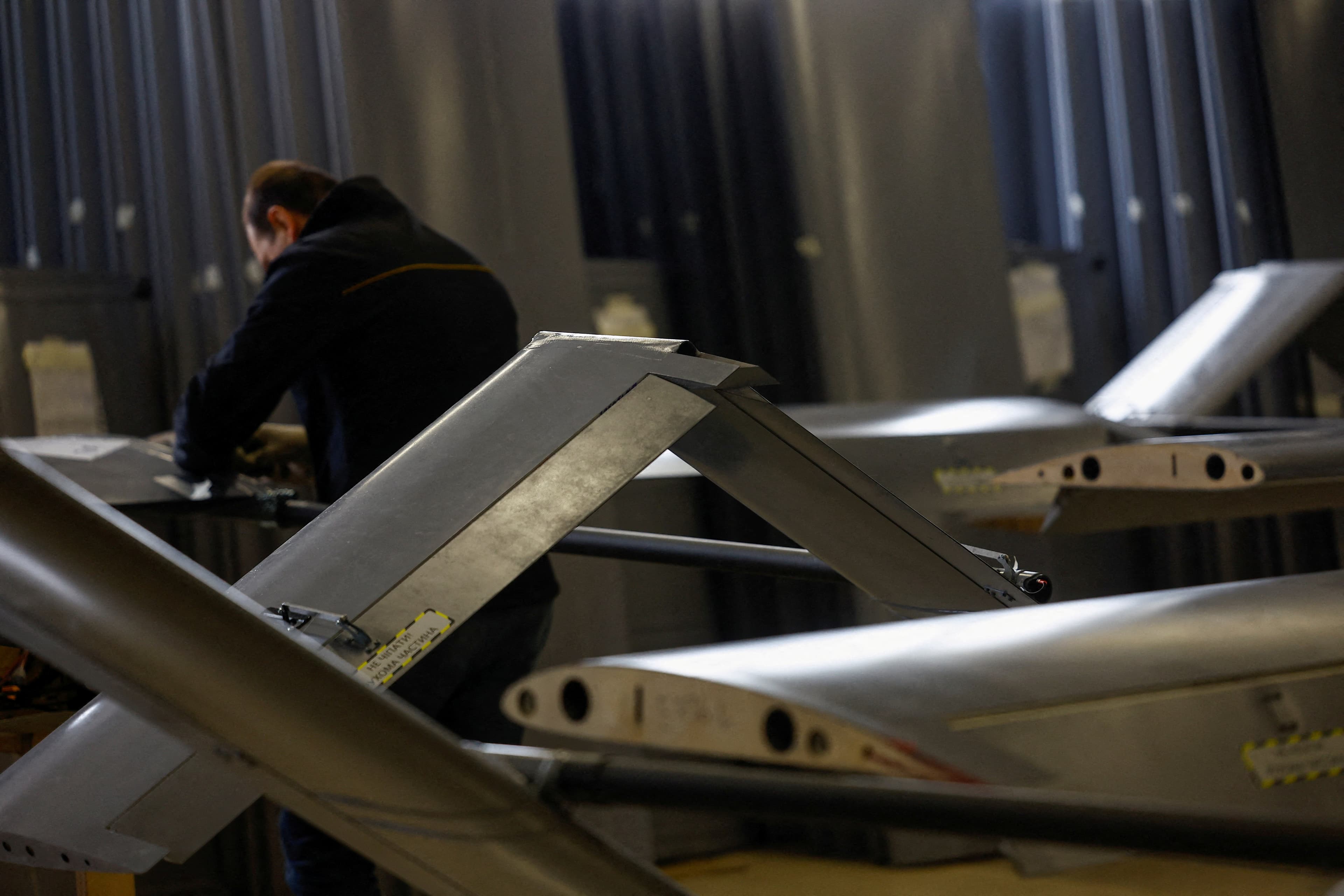
Fire Point manufactures the weapons that form the backbone of Ukraine's long-range strike operations against Russia, including the FP-1 deep-strike drone, the shorter-range FP-2, and the FP-5 Flamingo cruise missile.
Denys Shtilerman, co-founder and chief designer of the company, told media at Eurosatory—the biennial global defense exhibition held in France this month—that Fire Point's drones currently account for approximately 60% of Ukraine's strike missions against Russia.
"The fires you see burning on your TV screens inside Russia—these drones are behind them," he said in an interview with Ukrainian state media in Paris.
Those strikes are the operational core of what President Volodymyr Zelenskyy has branded Ukraine's "long-range sanctions" strategy: deploying long-range drones and missiles to hit oil refineries, fuel storage depots, and munitions plants hundreds of miles inside Russian territory, aiming to cut off the fuel supply and revenue streams sustaining Moscow's war machine.
Latest Model Reaches Beyond 3,000 Kilometers
Fire Point's newest variant, the FP-2, successfully struck a refinery in Russia's Tyumen region on June 20. President Zelenskyy said the target was 1,286 miles (approximately 2,070 km) from Ukraine's border.
The company states that an upgraded FP-1 has had its range extended from 1,025 miles to 1,677 miles, while the FP-2 can carry a 440-pound (approximately 200 kg) warhead up to 230 miles (approximately 370 km).
"A new modernized FP drone has been tested and can now strike targets at a distance of 3,000 kilometers. I thank the engineers at Fire Point," Zelenskyy said in his nightly address on June 20.
According to the Institute for the Study of War, Ukraine has conducted at least 28 strikes against Russian oil infrastructure in June alone, driving Russian gasoline output to multi-year lows and forcing Moscow to restrict domestic fuel sales.
Entering Defense: The 'Freyja' System and the Hensoldt Partnership
Fire Point is now developing the FP-7.X interceptor missile system, codenamed "Freyja", in partnership with European defense companies, formally entering the air defense market.
"Fire Point is joining the anti-ballistic missile coalition," Shtilerman wrote on X on May 14. "Soon, interceptor missiles will fly over the skies of Ukraine and all of Europe."
The Freyja system is designed to integrate radar, tracking, and command-and-control components from multiple European suppliers. Fire Point has confirmed a signed agreement with Germany's Hensoldt and is in discussions with France's Thales (radar), Italy's Leonardo (tracking), and Norway's Kongsberg (command and control).
Target: Per-Intercept Cost Below $700,000
Speaking to Reuters in April, Shtilerman said the company's goal is to bring the cost of intercepting a single ballistic missile to under $1 million—compared to the U.S. Patriot system, which typically fires two to three interceptors per engagement at a cost of several million dollars each.
"If we can bring the cost down below $1 million, this will be a game-changer for air defense solutions," he said. "We plan to complete the first ballistic missile intercept by the end of 2027."
The FP-7.X is designed to intercept ballistic missiles at an altitude of 15 miles (approximately 24 km) at a per-intercept cost of approximately $700,000—$300,000 below the original internal target and a fraction of the roughly $3.8 million unit cost of a Patriot PAC-3 interceptor. Fire Point plans to begin mass production from August at a rate of three units per day.
Fire Point co-founder Iryna Terekh posted flight test footage on X in early June, stating that the FP-7.X had completed a "fully controlled maneuvering flight" test.
Shtilerman framed the move into missile defense as proof that Ukraine has transitioned from aid recipient to arms supplier: "Ukraine is no longer just a recipient of certain assistance—it has become a provider of security solutions for all of Europe, and indeed for the entire world."
Rapid Rise, Serious Questions: $1 Billion in Contracts Triggers Investigation
Fire Point's meteoric ascent has not been without controversy. The company did not exist before Russia's full-scale invasion in 2022—its predecessor was a film and talent casting agency. It has since become one of Ukraine's largest defense contractors, with government contracts this year exceeding $1 billion, according to The New York Times.
That scale of public funding has drawn Fire Point into Ukraine's widening anti-corruption spotlight. According to The Kyiv Independent, the company was named in leaked audio recordings linked to Timur Mindich, a businessman with longstanding ties to President Zelenskyy who has since fled Ukraine amid a sweeping energy corruption scandal. Ukraine's National Anti-Corruption Bureau (NABU) has opened an investigation into Fire Point.
Fire Point denies that Mindich holds any ownership stake, insisting the company is solely owned by its co-founders. No charges have been filed against the company. Fire Point has also actively cultivated Western backing, appointing former U.S. Secretary of State Mike Pompeo to its advisory board in November of last year.
Next Step: Extending Strike Range to 3,000 Kilometers
President Zelenskyy has said that Fire Point's next-generation drones will achieve a range of 1,864 miles (approximately 3,000 km), bringing refineries and munitions plants in the Ural Mountains and western Siberia within strike range.
Fire Point says it aims to deliver on the president's promise before the end of this summer.
原文來源: 查看原文
FAQ
Newsletter
Subscribe to our Low-Altitude Industry Newsletter
Daily curated news on low-altitude economy and drone industry, delivered to your inbox.