Quantum Magic 8-Ball: Using Photons to Generate Truly Random Answers
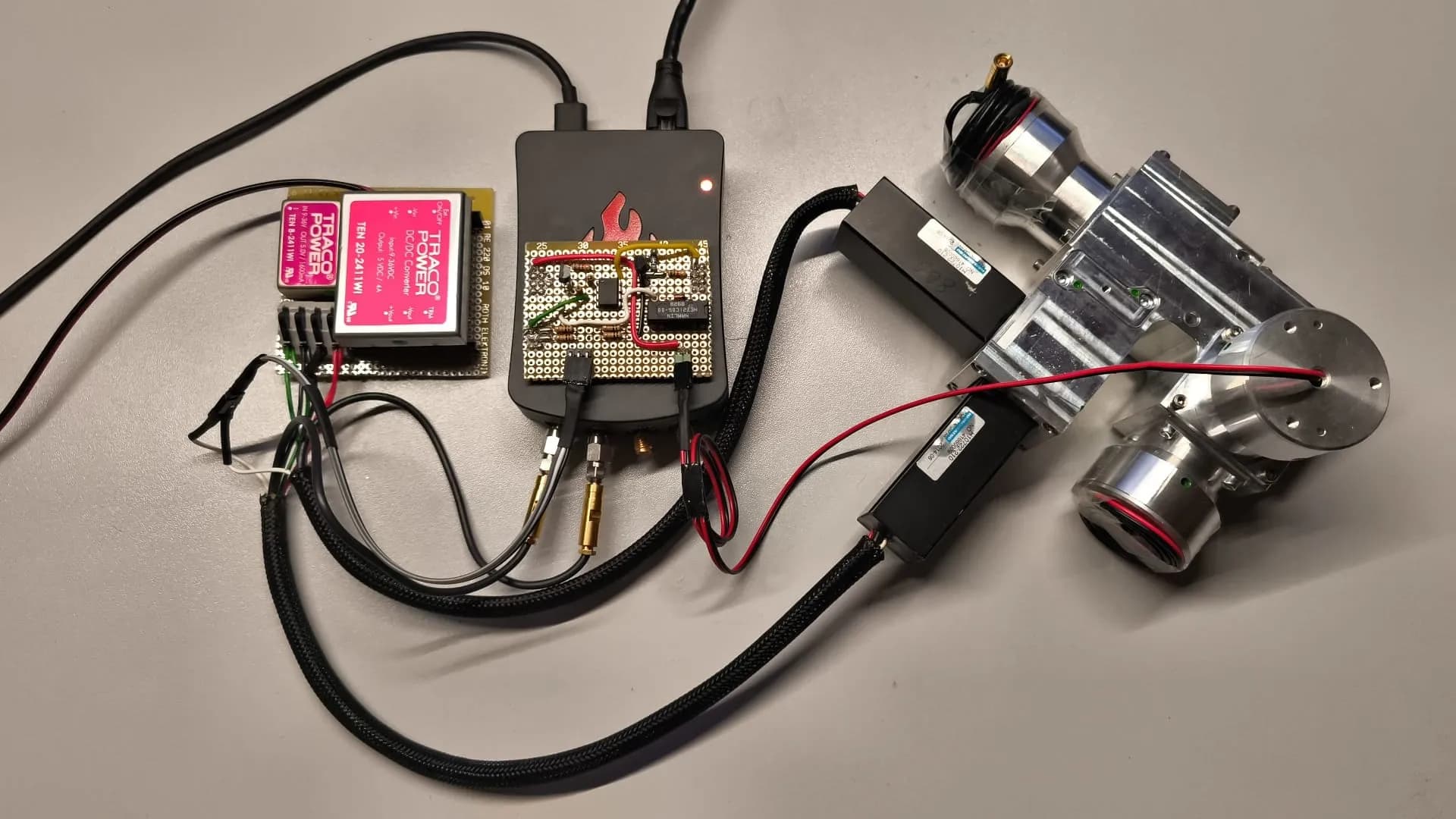
Maker David Noel Ng has applied quantum physics to the classic Magic 8-Ball toy, using a photon beam splitter and photomultiplier tubes to generate genuinely random yes/no outcomes. The results drive a software-based Magic 8-Ball that answers questions. The project combines low-level quantum physics, electronic circuitry, and code to demonstrate a real-world application of quantum randomness.

Highlights
- Maker David Noel Ng built a Quantum Magic 8-Ball that uses a photon beam splitter and two photomultiplier tubes to produce one truly random binary result per photon.
- The light source is attenuated so that only a single photon travels through the optical path at any given moment, ensuring each measurement is an independent quantum event.
- Quantum randomness outcomes feed directly into a random number generator that controls a software-based Magic 8-Ball's answers.
- The project combines low-level quantum physics, analog electronic circuitry, and software code into a fully functional question-answering device.
- Unlike conventional pseudo-random number generators, the device's randomness is grounded in the inherently probabilistic nature of quantum mechanics, making results impossible to predict or reproduce.
Quantum Magic 8-Ball: Using Photons to Generate Truly Random Answers
If you've ever cracked open a classic Magic 8-Ball, you know what's inside: little more than a multi-faced polyhedron floating in dark liquid. The toy offers an "approximately random" way to pose pressing questions to the universe — things like "Are my parents going to get divorced?" or "Does Beth like me?" — even if the answers are almost never accurate.
If you'd prefer a Magic 8-Ball that is more reliably random (while still making no guarantees about accuracy), a project recently completed by maker David Noel Ng might catch your eye.
The Concept: True Randomness Through Quantum Effects
The core idea is straightforward: harness quantum effects to produce genuinely random outcomes, feed those outcomes into a random number generator, and let the generator determine the answers displayed by a software Magic 8-Ball. David explored several implementation approaches before settling on the design he felt best suited the task.
Hardware Design: Photons, a Beam Splitter, and Photomultiplier Tubes
In the final version of the device:
- A light source emits photons, attenuated to the point where, in practice, only a single photon travels through the optical path at any given moment.
- Each photon passes through a beam splitter, producing one of only two possible outcomes: it either passes straight through the mirror and strikes Photomultiplier Tube A, or it is reflected and strikes Photomultiplier Tube B.
- This process yields a genuinely random "yes/no" result for every photon that passes through.
David provides a clear explanation of the low-level physics at work, alongside a walkthrough of the supporting electronic circuitry and code that transform the apparatus into a functional Magic 8-Ball capable of actually answering questions.
Closing Thoughts
Homebrew Magic 8-Ball builds are nothing new, and few manage to replicate the distinctive tactile experience of the original toy. That said, they all serve the same purpose: handling questions that are too trivial to warrant a visit to a tarot reader or fortune teller. If you have your own unconventional method for interpreting the will of the cosmos, feel free to share it via the editorial inbox.
原文來源: 查看原文
FAQ
Newsletter
Subscribe to our Low-Altitude Industry Newsletter
Daily curated news on low-altitude economy and drone industry, delivered to your inbox.