Defense Surveying Breakthrough: Drones and Emerging Technologies Tested for Beach and Shallow-Water Mapping
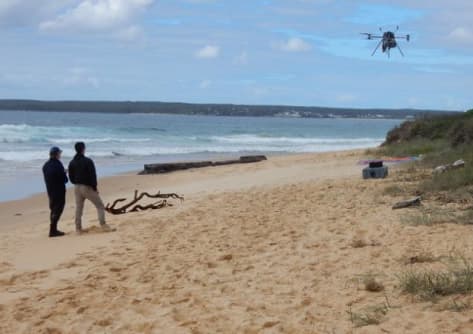
A defense team has completed field tests of multiple emerging technologies designed for topographic surveying in beach and shallow-water environments. The trials mark a significant advancement in military geospatial intelligence gathering, with potential applications in amphibious operations, humanitarian relief, and coastal reconnaissance. Technologies evaluated include drone aerial surveying, underwater sonar scanning, and multispectral imagery analysis.

Highlights
- A defense team completed field evaluations of drone aerial surveying, underwater sonar scanning, and multispectral imagery analysis for beach and shallow-water topographic mapping.
- Conventional survey methods face significant limitations in intertidal zones and sandy beaches; the new technologies aim to overcome these constraints with higher efficiency and accuracy.
- Precise coastal terrain data is identified as mission-critical for amphibious landing operations, humanitarian assistance, and disaster response planning.
- Full technical reports and findings from the trials are to be released by relevant defense authorities at a future date.
- The trials are expected to inform military procurement decisions and shape operational doctrine for coastal geospatial intelligence collection.
Defense Surveying Breakthrough: Drones and Emerging Technologies Tested for Beach and Shallow-Water Mapping
A defense team has recently completed field evaluations of several emerging technologies aimed at conducting topographic surveys in beach and shallow-water environments.
Focus on Complex Coastal Terrain
The trials centered on the challenge of collecting high-precision geospatial data across difficult coastal and littoral terrain. Conventional surveying methods have long struggled with intertidal zones, sandy beaches, and shallow-water areas — environments characterized by rapidly changing conditions, limited accessibility, and mixed land-water interfaces. The introduction of new technologies is expected to significantly improve both the efficiency and accuracy of data collection in these settings.
Strategic Importance of Coastal Mapping
Accurate surveying of beach and shallow-water environments is critical to military operational planning. In scenarios such as amphibious landing operations, humanitarian assistance, and disaster response, precise terrain data can directly determine mission success or failure. The ability to rapidly generate reliable maps of coastal zones gives commanders a decisive advantage during both planning and execution phases.
Technologies Under Evaluation
Several cutting-edge tools are now central to modern coastal terrain surveying:
- Drone aerial surveying — Unmanned aerial vehicles provide rapid, high-resolution photogrammetric mapping of beach and shoreline areas without the need for personnel to enter hazardous zones.
- Underwater sonar scanning — Acoustic scanning systems map submerged terrain features, identifying potential obstacles and depth profiles critical for amphibious operations.
- Multispectral imagery analysis — Sensors capturing data across multiple wavelengths enable analysts to distinguish between water depths, sediment types, and submerged obstacles that are invisible to standard optical cameras.
The current defense trials are expected to validate the reliability and operational utility of these technologies in real-world tactical environments.
Next Steps
Full test reports and detailed technical findings are to be released by the relevant defense authorities at a later date. The results are anticipated to inform procurement decisions and shape future doctrine for military coastal survey operations.
原文來源: 查看原文
FAQ
Newsletter
Subscribe to our Low-Altitude Industry Newsletter
Daily curated news on low-altitude economy and drone industry, delivered to your inbox.