Russian Soldier Fires Heat-Seeking MANPADS Near Burning Fuel Depot, Completely Misses Ukrainian Drone
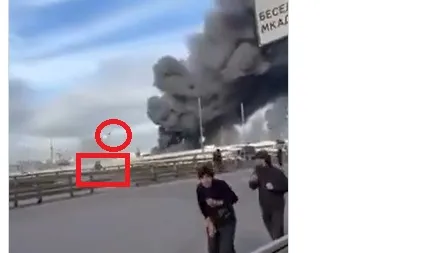
Leaked footage shows a Russian soldier attempting to intercept a Ukrainian drone using a shoulder-fired MANPADS near a burning fuel depot. The missile veered wildly off course, its infrared seeker overwhelmed by heat signatures from the surrounding fire. The incident highlights the inherent limitations of heat-seeking missiles in complex thermal environments and underscores the tactical advantages small electric-powered drones hold against legacy air-defense systems.

Highlights
- A Russian soldier fired a MANPADS at a Ukrainian drone near a burning fuel depot; the missile missed completely due to IR seeker interference from the fire.
- MANPADS infrared seekers lock onto heat signatures and can be deceived by strong ground-based thermal sources such as burning fuel depots.
- Ukrainian small drones are predominantly electric-powered, generating far less heat than manned aircraft and making them inherently difficult targets for heat-seeking missiles.
- The footage, widely shared on social media, underscores the asymmetric advantage small drones hold over legacy Russian air-defense systems in the Ukraine conflict.
- Ukraine exploits environmental conditions — including battlefield fires — to degrade the effectiveness of Russian infrared-guided air-defense weapons.
Russian Soldier Fires Heat-Seeking MANPADS Near Burning Fuel Depot, Completely Misses Ukrainian Drone
Recently circulated footage shows a Russian soldier attempting to shoot down a Ukrainian drone with a man-portable air-defense system (MANPADS) near a blazing fuel depot — only for the missile to veer dramatically off course in what observers have called an embarrassing display of the weapon's limitations.
How Heat-Seeking Missiles Work — and Where They Fall Short
MANPADS widely used by Russian forces rely on infrared (heat-seeking) guidance: the seeker head locks onto the heat emitted by an aircraft's engine or airframe rather than tracking a radar return. These weapons were originally designed to engage low-altitude fixed-wing aircraft and helicopters.
In practice, however, IR guidance systems are highly susceptible to background thermal interference. When a high-intensity heat source — such as a burning fuel depot — is present in the engagement zone, the missile's seeker is often drawn toward the stronger ground-based signature rather than the intended airborne target, causing it to miss entirely.
Small Electric Drones Hold a Natural Advantage Against IR Missiles
The small unmanned aircraft Ukraine employs extensively are predominantly electric-motor-driven, producing far less heat than conventional manned aircraft. This alone makes them difficult targets for heat-seeking missiles. When multiple competing thermal signatures clutter the battlespace, the probability of a successful intercept drops even further.
Battlefield Implications
The incident is a fresh reminder that Russian forces face significant tactical blind spots when relying on legacy air-defense tools against the Ukrainian drone threat. By contrast, Ukraine continues to refine its drone employment doctrine, exploiting terrain and environmental conditions — such as the intense heat of a burning depot — to confuse and evade Russian air-defense systems, demonstrating a high degree of operational adaptability.
The video has spread widely on social media and is being cited as further evidence of the asymmetric advantage drones now hold in the Russia-Ukraine conflict.
原文來源: 查看原文
FAQ
Newsletter
Subscribe to our Low-Altitude Industry Newsletter
Daily curated news on low-altitude economy and drone industry, delivered to your inbox.