US Special Operations Command Seeks Long-Range Loitering Munition
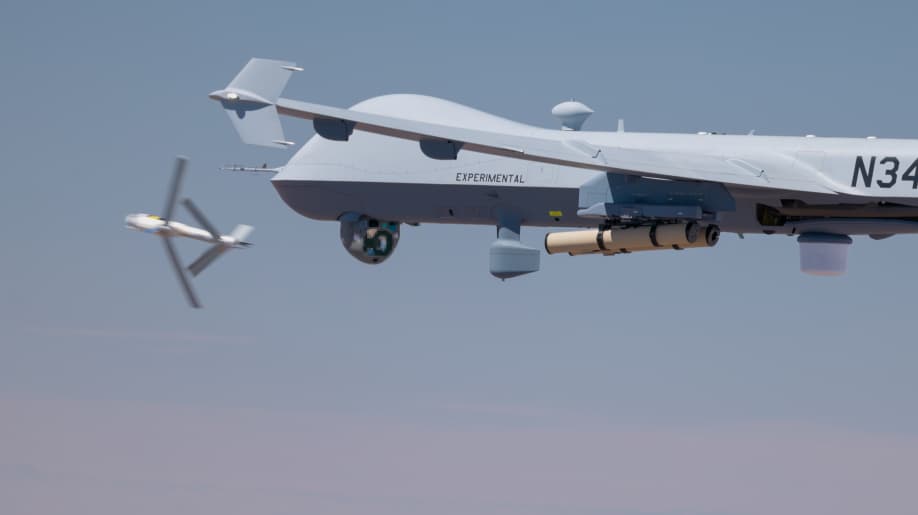
US Special Operations Command (SOCOM) has issued a Request for Information seeking an Air Loitering Munition (ALM) with a minimum range of 75 nautical miles, at least 40 minutes of loitering time, and a maximum weight of 95 lbs. The air-launched weapon would enable aircraft such as the MC-130J to strike deep targets from outside enemy air defense envelopes.

Highlights
- SOCOM issued an RFI on June 26 seeking an Air Loitering Munition (ALM) with a minimum range of 75 nautical miles and at least 40 minutes of loitering endurance.
- The ALM must weigh no more than 95 lbs and be launchable from altitudes between 5,000 and 30,000 feet at speeds of 50 to 100 knots.
- The weapon must be compatible with the Common Launch Tube (CLT), fitting within 42 inches in length and 5.9 inches in diameter in that configuration.
- SOCOM plans a single demonstration assessment on the AC-130J Ghostrider and has requested cost estimates for orders of 500, 1,000, and 3,000 units.
- If fielded, the ALM would allow MC-130J gunships to strike deep targets from beyond enemy air defense envelopes, at a standoff range of approximately 100 miles.
US Special Operations Command Seeks Long-Range Loitering Munition
US Special Operations Command (SOCOM) is actively pursuing a compact but long-range loitering munition capability.
Program Objectives and Background
According to a Request for Information (RFI) published by SOCOM on June 26, the program aims to develop an Air Loitering Munition (ALM) whose "range and capabilities exceed those of the existing SOPGM (Stand-Off Precision Guided Munition) family." Industry responses are due by July 27.
Key Technical Specifications
Per the RFI, the ALM must be launchable from altitudes between 5,000 and 30,000 feet, with a minimum range of 75 nautical miles. Once on station, the munition must be capable of loitering for at least 40 minutes at altitudes between 500 and 3,000 feet, maintaining airspeeds of 50 to 100 knots, with a maximum all-up weight of 95 lbs.
By comparison, AeroVironment's Switchblade 600 — procured by SOCOM in 2021 for shipborne weapons testing — has a range of more than 55 miles and weighs 33 lbs. The ALM's guidance suite will operate in passive mode, with the ability to home in on radio frequency emissions or employ automatic target recognition technology.
Launch Platform Compatibility
The requirement calls for the ALM to be deployable from SOCOM fixed-wing aircraft. Ideally, the weapon should be compatible with the Common Launch Tube (CLT) — a device that enables most military and civilian aircraft to deploy tube-launched munitions.
In CLT configuration, the ALM must not exceed 42 inches in length and 5.9 inches in diameter. If carried on BRU-71 or BRU-78 weapons racks, dimensions may extend to 90 inches in length and 9 inches in width.
Demonstration and Procurement Planning
The program will include "a single demonstration assessment on the AC-130J Ghostrider or other special operations platforms." The RFI also asks vendors to provide rough order-of-magnitude cost estimates for quantities of 500, 1,000, and 3,000 units.
SOCOM stated it is "looking for truly innovative, outside-the-box thinking, conceptual approaches, and ideas on how industry could rapidly design, manufacture, and deliver the above capability."
The Growing Role of Long-Range Loitering Munitions
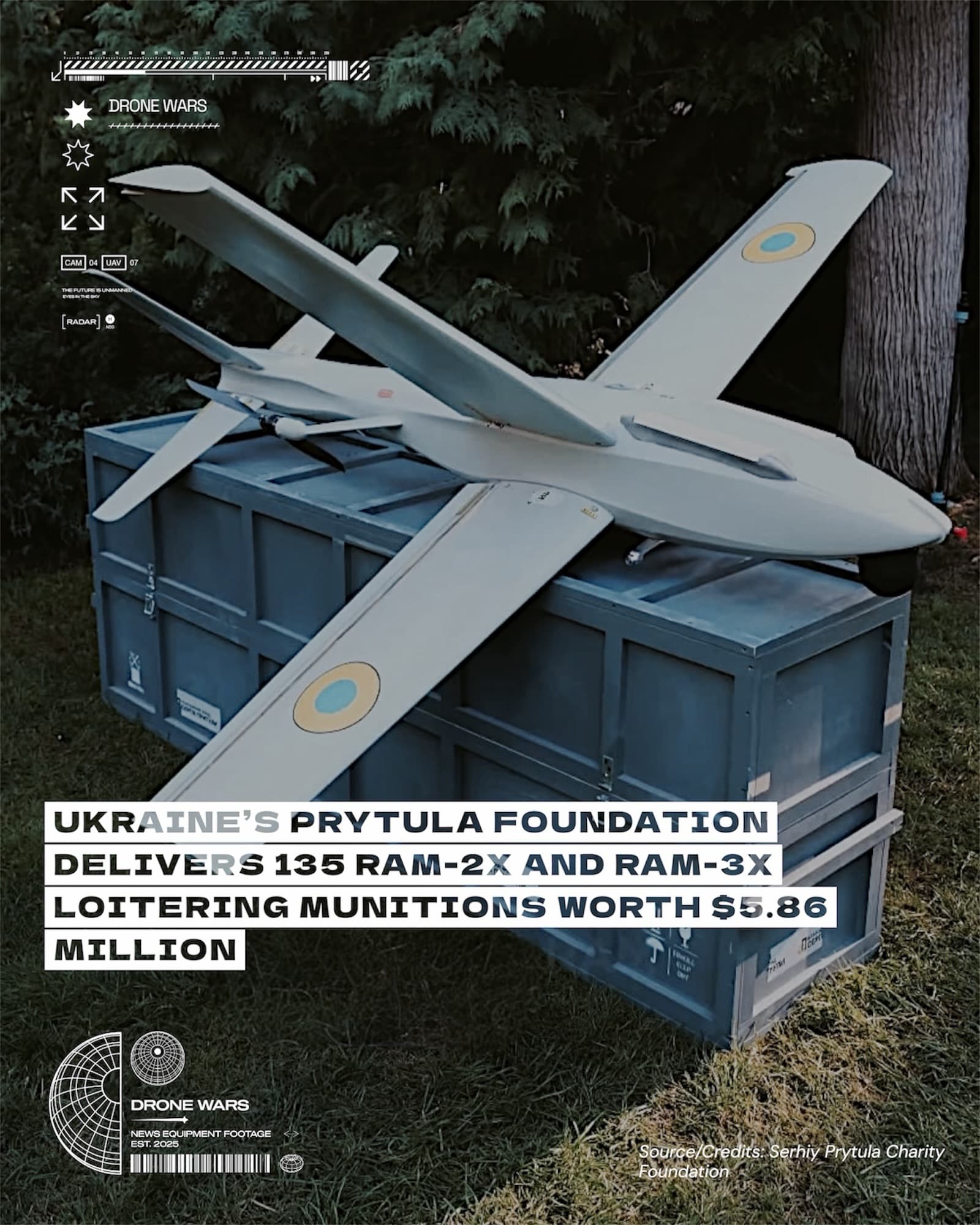
While short-range man-portable loitering munitions have become a fixture on the modern battlefield, long-range variants are playing an increasingly prominent role.
During the 2020 Nagorno-Karabakh War, Azerbaijan used Israeli-made Harop drones to devastate Armenian forces. Ukraine and Russia have both deployed long-range loitering munitions extensively throughout their conflict. Earlier this month, Russia struck Kyiv with Banderol drones, reportedly capable of a range of 500 miles and carrying a 150-lb warhead.
Armed with a loitering munition with a range of approximately 100 miles, SOCOM's MC-130J gunships and other aircraft would be able to hunt targets deep inside enemy territory while remaining outside the engagement envelope of adversary air defense systems.
原文來源: 查看原文
FAQ
Newsletter
Subscribe to our Low-Altitude Industry Newsletter
Daily curated news on low-altitude economy and drone industry, delivered to your inbox.