The Invisible Threat to Vintage Electronics Collections: How Cables Leave Mystery Impressions During Storage
Collectors of vintage electronics have long puzzled over cable-shaped indentations appearing on plastic casings during storage. The culprit is not heat, but 'plasticizer migration': plasticizers in PVC cables slowly leach into ABS housings, causing cosmetic damage and making cable insulation brittle. Proper preservation involves storing PVC cables separately and maintaining cool, dry conditions.

Highlights
- Vintage electronics casings develop cable-shaped indentations due to plasticizer migration from PVC cables into ABS plastic housings, not heat damage.
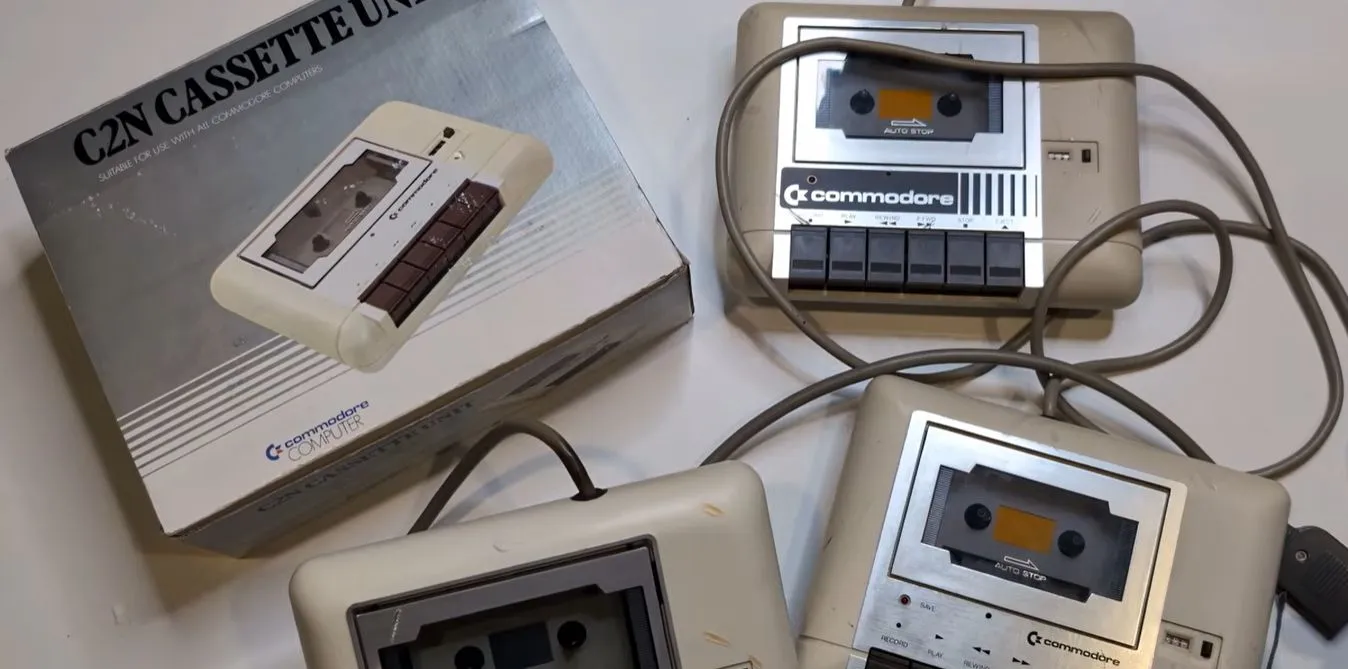
- YouTube channel Run Stop Restored identified plasticizer migration as the cause, using a Commodore Datasette tape drive as a case study.
- ABS plastic has a high plasticizer absorption capacity, making it especially vulnerable to cosmetic damage when PVC cables are stored in direct, prolonged contact.
- PVC cable insulation loses plasticizers during migration, causing it to harden and become brittle — a process accelerated by higher storage temperatures.
- Devices from the 1980s face the greatest risk because phthalate-free plasticizer alternatives were not yet available, and period formulations were chemically less stable.
The Invisible Threat to Vintage Electronics Collections: How Cables Leave Mystery Impressions During Storage
Many vintage electronics collectors will recognise the phenomenon: cable-shaped indentations appearing on a device's plastic casing, as though the cable has somehow melted into the shell. Strangely, the equipment was never powered during storage, and neither side of the contact could have generated temperatures high enough to melt plastic — yet the result looks unmistakably like heat damage.
YouTube channel Run Stop Restored recently published a detailed video explaining the true cause: plasticizer migration, not heat fusion.
What Are Plasticizers?
Plasticizers are additives blended into various plastics to increase flexibility and improve other material properties. PVC (polyvinyl chloride) is especially dependent on plasticizers to perform as expected in applications requiring elasticity — including the insulation on electronics cables.
When a PVC cable remains in prolonged, close contact with another polymer, its plasticizers slowly migrate into the adjacent material.
ABS Housings Are Particularly Vulnerable
As demonstrated in the video using a Commodore tape drive, consumer electronics housings of that era were typically made from ABS (acrylonitrile butadiene styrene) — a plastic with a notably high capacity to absorb plasticizers. When cables are wound tightly around a device for storage, the sustained contact allows plasticizers to continuously leach into the ABS shell. Neither the Commodore Datasette nor power supply bricks are spared.
Meanwhile, as the PVC insulation loses its plasticizers, it gradually hardens and becomes brittle — a process that accelerates at higher ambient temperatures.
How to Properly Store Vintage Equipment
To prevent plasticizer migration from damaging irreplaceable original finishes, collectors should follow these guidelines:
- Never wrap PVC cables around the device — store them separately
- Keep PVC cables away from ABS and other susceptible plastics
- Store equipment in cool, dry environments to slow the migration process
- Applying a protective coating to the housing can help create a barrier, particularly for older equipment
1980s Equipment Faces the Highest Risk
The problem is especially acute for devices from around the 1980s. At the time, phthalate-free alternative plasticizers had not yet been developed, and existing formulations were less stable, making migration far more likely. Modern manufacturing has improved compound formulations considerably, but PVC components in vintage equipment should still be treated with heightened caution.
For collectors, understanding the mechanics of plasticizer migration is an essential first step in protecting the cosmetic integrity of these rare pieces of electronics history.
原文來源: 查看原文
FAQ
Newsletter
Subscribe to our Low-Altitude Industry Newsletter
Daily curated news on low-altitude economy and drone industry, delivered to your inbox.