UK Royal Navy and Army Complete First Large-Scale Trial of Nyan OWE One-Way Attack Drone System
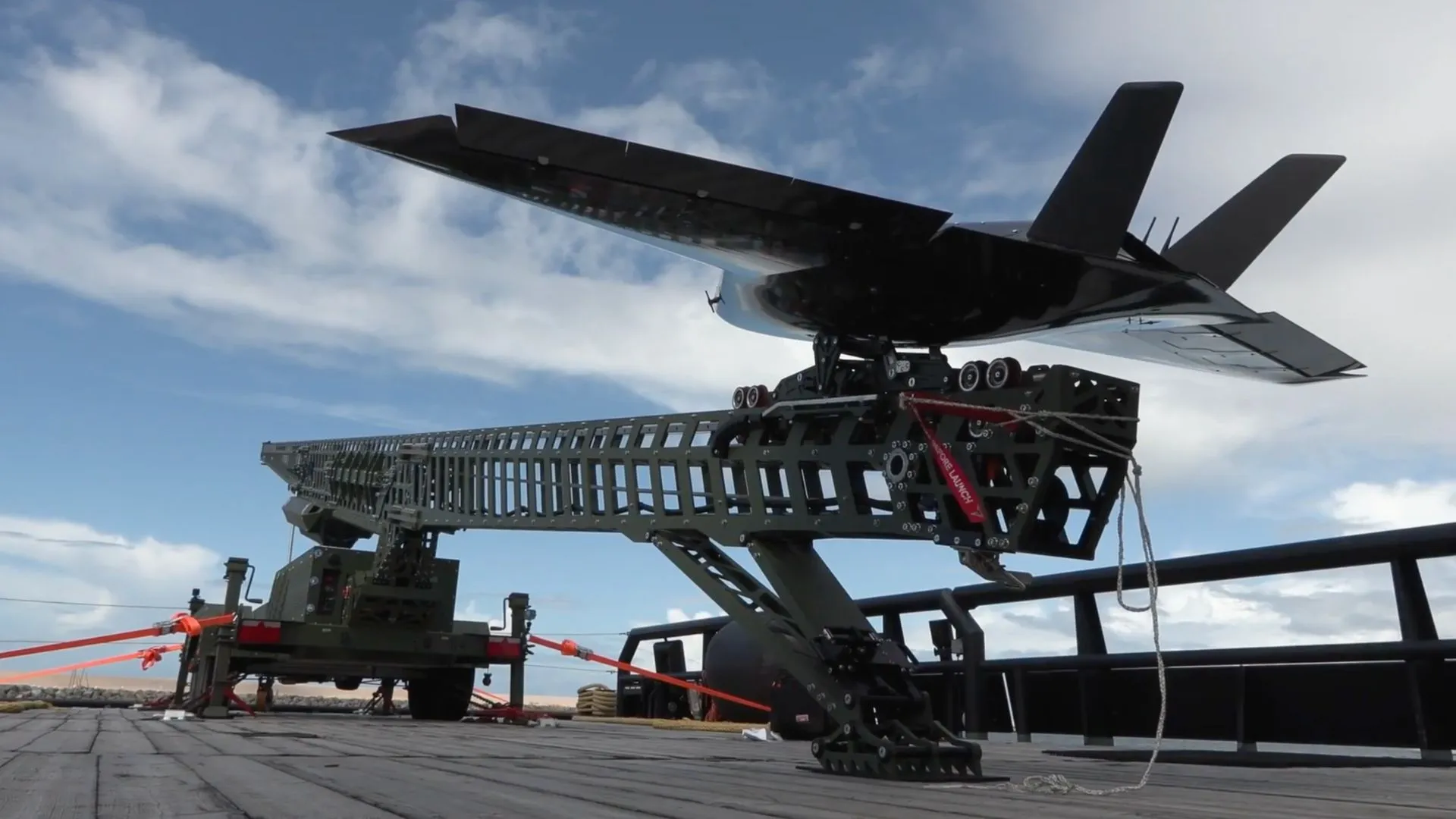
The British Royal Navy and Army have completed the first large-scale trial of the domestically developed 'Nyan OWE' one-way effector (OWE) drone system, designed for both land and maritime missions. Built by BAE Systems subsidiary Callen-Lenz, the system has a wingspan of approximately 2.9 metres and was launched from the trials vessel XV Patrick Blackett during Exercise Neptune Reach. The next phase of testing may take place aboard HMS Queen Elizabeth.

Highlights
- The UK Royal Navy and Army completed the first large-scale maritime trial of the Nyan OWE one-way effector drone during Exercise Neptune Reach, launching from the trials vessel XV Patrick Blackett.
- The Nyan OWE was developed by BAE Systems subsidiary Callen-Lenz, features a 2.9-metre wingspan, and has surpassed 1,000 units produced.
- The launcher system deployed during the trial can propel drones at speeds of up to 180 feet per second (approximately 54.9 m/s) from a moving naval platform.
- The Royal Navy and Air and Space Warfare Centre are considering the next phase of testing aboard HMS Queen Elizabeth.
- Project Vantage is a tri-service initiative accelerating maritime attack drone integration as part of the UK's broader 'hybrid navy' strategy.
UK Royal Navy and Army Complete First Large-Scale Trial of Nyan OWE One-Way Attack Drone System
The British Royal Navy and Army have completed the first large-scale trial of a domestically developed one-way effector (OWE) drone system designed for dual land and maritime roles.
The system, designated Nyan OWE, was designed and manufactured by Callen-Lenz, a subsidiary of BAE Systems. The airframe has a wingspan of approximately 9.5 feet (around 2.9 metres) and is engineered to deliver precision strike capability in highly contested operational environments.
Exercise Neptune Reach: First Maritime Live Trial
The latest round of testing was conducted earlier this month during Exercise Neptune Reach. Nyan OWE drones were launched from the trials vessel XV Patrick Blackett, operating off the southern coast of England. The exercise brought together the Royal Navy, Army, and Royal Air Force in a tri-service operation under Project Vantage — an initiative aimed at accelerating the testing and evaluation of maritime attack drone systems.
One-Way Effectors Drive the Vision of a Hybrid Royal Navy
UK Minister for Defence Procurement and Industry Luke Pollard stated that the UK is decisively moving towards a 'hybrid navy', with advanced uncrewed systems set to become a core element of Royal Navy operations.
Pollard emphasised that integrating Army and Navy expertise, and deploying attack drones from ships, is accelerating the development of critical capabilities. He noted that this cross-service collaboration will help UK forces maintain a technological edge over potential adversaries in an increasingly competitive security environment.
Earlier this year, the British Army tested the Nyan drone during Exercise Spring Storm in Estonia, assessing its value as part of a deep strike capability to enhance support to NATO allies.
Callen-Lenz CEO Matt Foster noted that the Nyan platform has already proven its effectiveness in land-based operations, with more than 1,000 units produced to date. He said the successful trial demonstrated the platform's value in a maritime context, representing another significant milestone and reflecting the close partnership between industry and the armed forces.
HMS Queen Elizabeth May Serve as the Next Test Venue
During the latest trial, engineers installed a launcher system on the vessel's deck capable of propelling one-way effector drones at speeds of up to 180 feet per second (approximately 54.9 metres per second), enabling assessment of the Nyan system's operational performance aboard a moving naval platform. The trial focused on refining launch performance and operational reliability under dynamic maritime conditions.
Following the exercise, the Royal Navy's Capability Team and the Air and Space Warfare Centre immediately began analysing results, with the next phase of trials potentially planned for HMS Queen Elizabeth.
Royal Navy Maritime One-Way Effector Capability Sponsor David Burton stated that Project Vantage represents an important step in integrating uncrewed systems into the future hybrid fleet. By combining crewed platforms with autonomous technology, the project aims to extend operational reach, increase the tempo of operations, and enhance strike effectiveness.
Burton explained that through close collaboration with the Army, the Atlantic Strike concept is being accelerated into a deployable fleet capability, further advancing the Royal Navy's multi-domain operations strategy.
原文來源: 查看原文
FAQ
Newsletter
Subscribe to our Low-Altitude Industry Newsletter
Daily curated news on low-altitude economy and drone industry, delivered to your inbox.