Ukraine Plans Drone Agreements with Seven NATO Members by Year-End — But the Drones Are the Smallest Part
Ukraine aims to sign drone agreements with at least seven NATO members by end of 2026, with some deals potentially closing at the Ankara NATO Summit on July 7–8. Six countries have already signed, including Saudi Arabia, the UAE, Qatar, Azerbaijan, Latvia, and Lithuania. The agreements center not on hardware delivery, but on Ukraine's four years of hard-won expertise in radar, sensors, and operational systems for defeating Iranian-designed Shahed attack drones.

Highlights
- Ukraine plans to sign drone agreements with at least seven NATO members by end of 2026, with some deals expected at the NATO Ankara Summit on July 7–8.
- Six countries have already signed — Saudi Arabia, UAE, Qatar, Azerbaijan, Latvia, and Lithuania — making Ukraine a defense exporter rather than solely a recipient of Western aid.
- The agreements sell counter-drone system expertise, radar integration, and operator training — not physical drones — because Ukraine's hardware delivery capacity is currently committed to domestic needs.
- Ukraine's roughly $2,500 interceptors vs. multi-million-dollar Patriot missiles cost ratio drove Gulf state interest after Iran's Shahed strikes exposed critical capability gaps during U.S.-Israeli operations in spring 2025.
- Latvia's government collapsed in May 2025 after a Ukrainian drone diverted by Russian electronic warfare struck a fuel depot in Rēzekne; Latvia subsequently signed a drone agreement and announced a joint production facility in eastern Latvia.
Ukraine Plans Drone Agreements with Seven NATO Members by Year-End — But the Drones Are the Smallest Part
Ukraine plans to sign drone agreements with at least seven NATO member states by the end of 2026, with some deals potentially finalized as early as this week at the NATO Summit in Ankara. Davyd Aloian, Deputy Secretary of Ukraine's National Security and Defense Council, disclosed this target in an interview published Monday.
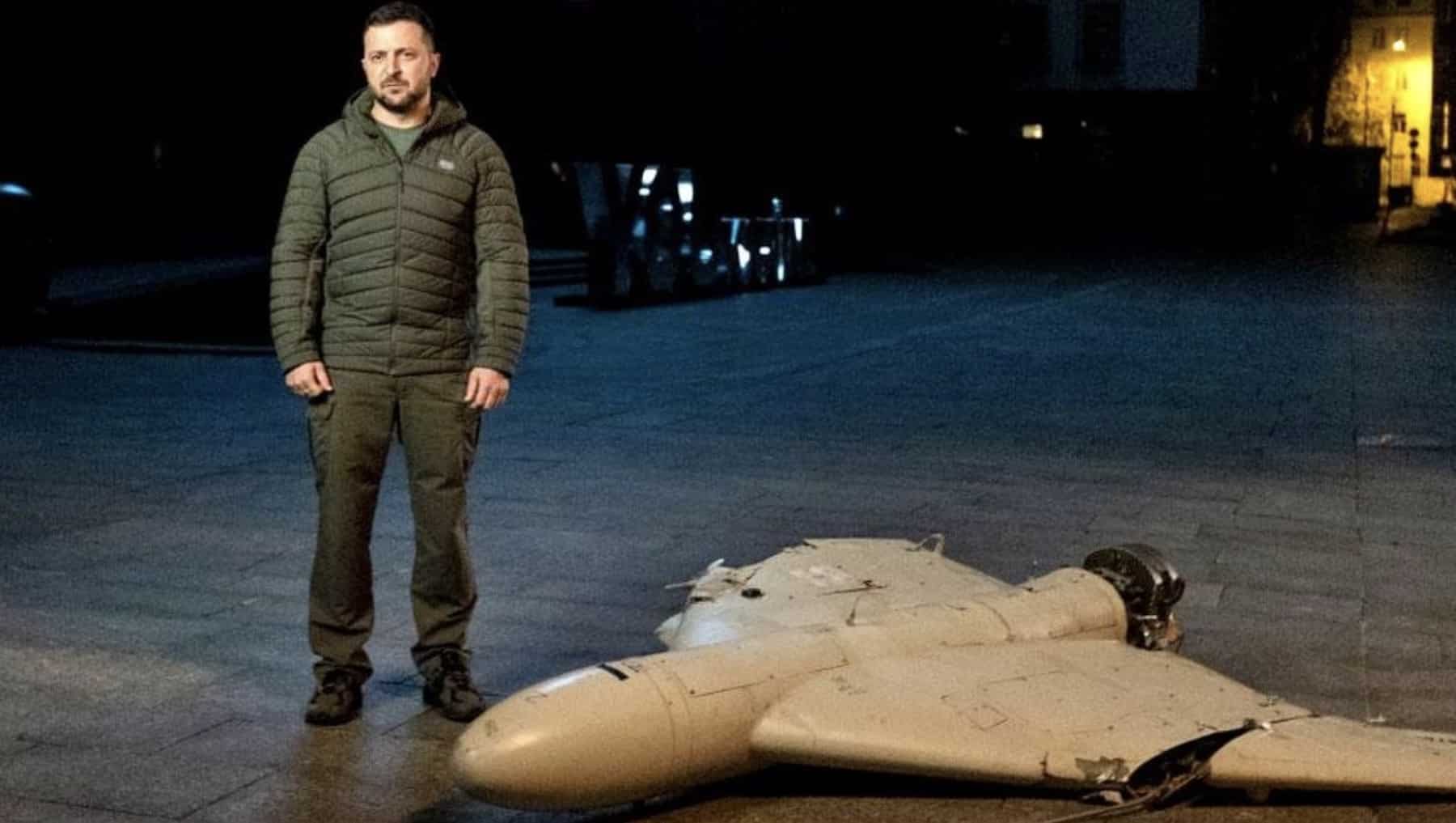
The six countries that have already signed are Saudi Arabia, the United Arab Emirates, Qatar, Azerbaijan, Latvia, and Lithuania. Despite being called "drone agreements," the deals do not yet include physical delivery of drones. What Kyiv is actually selling is the integrated system built around drones: radar coverage, sensor networks, ground stations, and four years of operational experience shooting down Iranian-designed Shahed attack drones at scale.
DroneXL had reported on this export pivot months before it reached NATO. In March, we noted that the "Wild Hornets Sting" counter-drone weapon was the most sought-after system in the Gulf region at a time when Ukrainian law still prohibited its sale. We also reported on President Zelensky's April 28 policy framework — the first to permit controlled exports of surplus systems. The NATO push is the next phase of the same policy.
What's Being Sold Is the System, Not the Drone
Ukraine's drone agreements sell expertise and access to components, not finished drones. Partner countries receive expert assessments of what it takes to establish an effective counter-drone shield — including radar coverage and trained operators — while actual delivery of Ukrainian-made drones remains off the table for now.
Aloian told The Guardian that the program covers far more than the drone itself: the knowledge and component access that underpin Ukraine's defense system matter more than the airframe. "Intercepting a drone is just one drone," Aloian said. Shooting down a Shahed requires subsystem components, sensors, a ground station, and above all radar — plus operators who know how to integrate all of it.
The Guardian described one illustrative case: a Gulf state purchased interceptors from a Western company that co-develops products with Ukrainian manufacturers, then repeatedly turned to Kyiv for guidance on how to actually operate the system. The hardware had arrived; the capability had not.
Carnegie Endowment analyst Mike Kofman said Ukraine's greatest value lies in its overall integration capability, whether a partner wants to build air defense or strike capacity — a point consistent with the track record of Ukrainian domestic manufacturers. Companies such as MaXon Systems have fielded interceptors that automate much of the Shahed kill chain and work in conjunction with radar-linked command-and-control stations.
The Gulf Strike Was Ukraine's Best Marketing Campaign
Drone diplomacy began this spring. During the U.S.-Israeli joint strikes on Iran, Iranian Shahed launches caught Gulf air defenses off guard, with multimillion-dollar Patriot missiles used to shoot down drones costing only tens of thousands of dollars — a cost ratio that Ukraine had already been forced to solve out of battlefield necessity.
The Shaheds Iran launched were simpler variants than the upgraded models Russia uses against Ukrainian cities, yet Gulf air defenses still struggled. Saudi Arabia, the UAE, and Qatar subsequently signed agreements with Kyiv. Ukraine's process begins with an expert assessment of a partner's operational and tactical gaps, delivered as a report; the partner then decides whether to procure Ukrainian products later (subject to production capacity) or to source elsewhere.
None of this surprised DroneXL readers. In May we reported on Gulf monarchies and U.S. commanders competing for Ukraine's Shahed killers; in March we analyzed the interceptor economics the Gulf had overlooked — roughly $2,500 interceptors versus multimillion-dollar Patriot missiles. Ukraine's industry produces at least five distinct interceptor models, and domestic demand still takes priority, which is why these agreements front-load knowledge transfer and defer hardware delivery.
Stray Ukrainian Drones Pushed the Baltic States to Sign
Latvia and Lithuania became the first NATO members in the program, and both had firsthand experience of what a wayward long-range drone can do to domestic politics. Latvia's government collapsed in May after a drone struck a fuel depot; Lithuania sounded air defense alerts after a similar incident.
The Guardian reported that two Ukrainian long-range drones were diverted by Russian electronic warfare jamming and struck a petroleum storage facility in Rēzekne, Latvia. The political fallout brought down the government in May. Latvia promptly signed a drone agreement and announced last week that a joint drone production facility would be established in the country's east. Lithuania signed after its own Ukrainian drone overflight incident.
Consider the sequence: both countries signed agreements with the very state whose drones caused the incidents. That sounds paradoxical — unless you accept the underlying premise that no one else can teach them how to prevent it from happening again. NATO members had already been informally studying Ukrainian interceptor doctrine since 2025, including interception demonstrations in Denmark and co-production programs in the United Kingdom. The Baltic agreements convert that informal learning into formally signed policy.
Ankara Summit Is the Next Signing Window
Aloian said more NATO nations have expressed interest, and some agreements could be signed at the NATO Ankara Summit on July 7–8. The summit's Defense Industry Forum has already scheduled a dedicated drone-focused session on the morning of July 7.
Beyond the drone agreements sits a larger and more uncertain ambition: a European equivalent of the Patriot system capable of intercepting Russian ballistic missiles — the weakest link in Ukraine's current air defense architecture. Zelensky has made this his top priority, and Aloian said discussions are under way at the political level and among Europe's major arms manufacturers.
Ukraine's Ambassador to NATO, Alyona Getmanchuk, told The Guardian that allies who a year ago were hesitant to frame Ukraine as a security provider are now opening conversations using exactly that framework.
DroneXL Analysis
The client list says more than any communiqué. Four years ago, Kyiv was requesting Patriot systems from allies; this week it attends the NATO Summit as a seller, with Gulf monarchies already signed and seven NATO members on the waiting list. The buyer became the supplier because the product — operational experience forged under live fire — cannot be replicated anywhere else.
I saw the concrete expression of this reversal firsthand at the Düsseldorf exhibition in March: Ukrainian manufacturers were marketing Shahed interceptors to European buyers at their booths, combat footage on loop. The airframes were the least interesting thing on display. Every stand was selling the system behind the airframe — the radar data feed and operator training architecture. Aloian is simply confirming that this sales pitch has now been elevated to national policy.
In October 2025 we published "Ukraine's $2,500 Interceptor Drones Are Rewriting Air Defense Theory — and NATO Is Racing to Catch Up" — at that point, the learning was still informal. Nine months later it has become a formal program with a numerical target and a summit signing window.
For Washington and Brussels, the unsettling part is what happened in between: Western capitals spent those years debating procurement rules and country-of-origin restrictions, while the only battle-tested anti-Shahed playbook was being written in Kyiv under artillery fire. Buying that knowledge now is the right decision — but it is also, undeniably, late. Everyone signing in Ankara knows it.
Watch the Ankara Summit closely on July 7–8. Aloian said signings could occur during the summit, with the drone session at the Defense Industry Forum scheduled for the morning of July 7. If the seven-country target is real, the written record starts this week. December 31 will be the final scorecard.
Source: The Guardian
原文來源: 查看原文
FAQ
Newsletter
Subscribe to our Low-Altitude Industry Newsletter
Daily curated news on low-altitude economy and drone industry, delivered to your inbox.
Reviewed and published by the LAETimes editorial desk ·