China Built Low-Cost AI — Now It's Erecting a 'Digital Great Wall' to Protect It
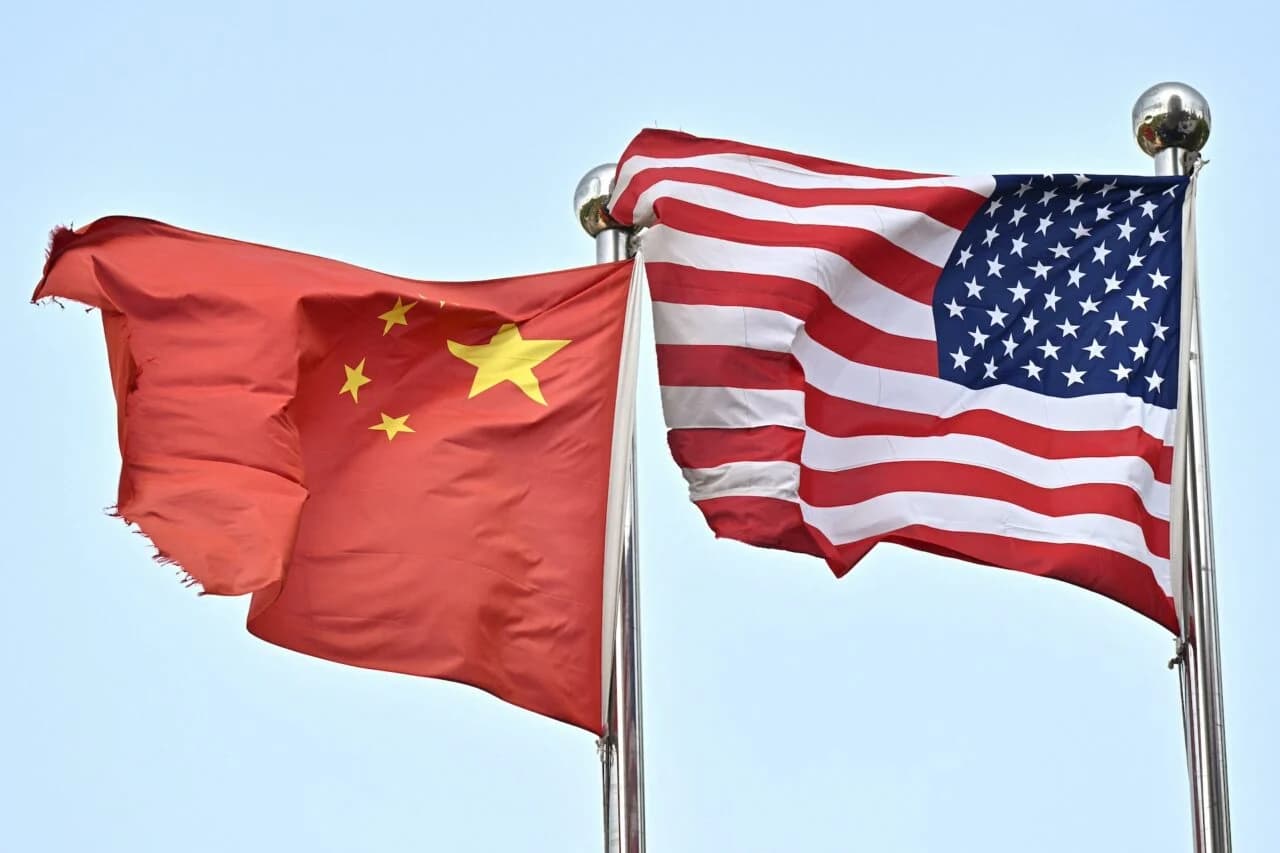
Both Beijing and Washington have elevated artificial intelligence to the status of a closely guarded national strategic asset. As China rapidly advances AI capabilities at relatively low cost, it is constructing a layered system of controls — a 'Digital Great Wall' — to shield its technological gains from outside competitors and keep AI resources firmly under state control. The rivalry is accelerating a new form of 'techno-nationalism' that is redrawing the global AI landscape.

Highlights
- Both the US and China now classify AI as a national strategic asset of comparable importance to nuclear weapons, driving rival regulatory and export-control regimes.
- China has advanced AI capabilities rapidly at relatively low cost and is now constructing state-level controls — dubbed a 'Digital Great Wall' — to protect those gains from foreign competitors.
- Washington has imposed semiconductor export bans and chip restrictions to limit China's AI development, while Beijing responds with accelerated indigenous R&D and tightened domestic data controls.
- A new wave of techno-nationalism is fragmenting the global AI industry, forcing companies and research institutions to align with one of two incompatible technological and regulatory ecosystems.
- Taiwan's semiconductor supply chain and AI ecosystem are central battlegrounds in the US-China rivalry, posing major strategic challenges for Taiwanese industry and government policymakers.
China Built Low-Cost AI — Now It's Erecting a 'Digital Great Wall' to Protect It
Whether in Beijing or Washington, artificial intelligence has become a critical and jealously guarded national strategic asset.
In recent years, China has advanced its AI capabilities rapidly and at comparatively low cost, achieving notable breakthroughs across multiple sectors. But as the technology's strategic value continues to rise, Beijing is steadily constructing a 'Digital Great Wall' — both tangible and intangible — designed not only to keep out foreign competitors, but to ensure that the fruits of China's AI development remain firmly in state hands.
AI: The New 'Nuclear Weapon'
In an era of intensifying geopolitical rivalry, major powers have elevated AI to a strategic level comparable to nuclear weapons. The United States has deployed export controls and semiconductor bans in an attempt to constrain China's AI capabilities. China, meanwhile, is accelerating indigenous research and development while simultaneously erecting multiple layers of barriers around its own AI technologies and data resources.
Bilateral 'Techno-Nationalism' Takes Shape
This AI race is giving rise to a new form of techno-nationalism. Policymakers in both Washington and Beijing have independently reached the same conclusion: AI cannot be treated merely as a commercial product — it must be managed as a strategic asset under strict state oversight.
Against this backdrop, the global AI industry faces profound restructuring. Companies and research institutions alike are being forced to choose sides between two fundamentally different technological ecosystems and regulatory regimes.
Implications for Taiwan and the Asia-Pacific Region
For Taiwan — positioned at the heart of the US-China technology competition — the stakes in this 'battle of walls' are considerable. Taiwan's semiconductor supply chain and AI ecosystem are increasingly becoming strategic bargaining chips that both superpowers seek to draw closer while simultaneously seeking to keep out of the other's reach. How Taiwan's industry and policymakers navigate this great-power contest will be one of the defining challenges of the years ahead.
原文來源: 查看原文
FAQ
Newsletter
Subscribe to our Low-Altitude Industry Newsletter
Daily curated news on low-altitude economy and drone industry, delivered to your inbox.
Reviewed and published by the LAETimes editorial desk ·