UK BVLOS Drone Operations: More Flights Than Expected, But Profitable Operators Remain Scarce
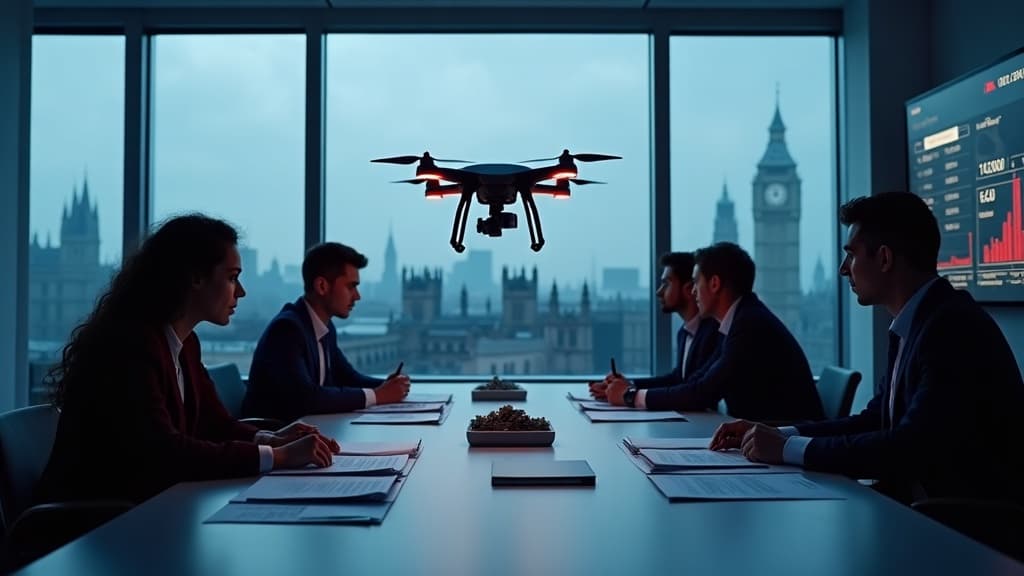
Industry insiders reveal that a single UK company has legally completed over 1,600 BVLOS drone flights — far more than widely assumed. Yet, no operator in the UK is currently flying BVLOS missions daily while turning a consistent profit, highlighting the gap between regulatory progress and commercial viability.

Highlights
- A single UK company has legally completed more than 1,600 BVLOS drone flights, far exceeding general industry assumptions about the scale of UK BVLOS activity.
- No operator in the UK is currently executing BVLOS missions on a daily basis while maintaining stable profitability, according to an industry insider.
- High authorisation costs, personnel requirements, equipment maintenance, and insurance expenses make it difficult for BVLOS operators to reach break-even under current conditions.
- The 'can fly, can't profit' dilemma in BVLOS operations is a global phenomenon, not unique to the UK market.
- The UK CAA is progressing UTM policy development, with the industry expecting a clearer regulatory framework to underpin future BVLOS commercialisation.
UK BVLOS Drone Operations: Strong Flight Numbers, But Profitability Remains Elusive
A recent discussion sparked by drone industry observer account @DronewatchEU on social media has shed new light on the state of beyond visual line of sight (BVLOS) drone operations in the United Kingdom.
An industry insider who joined the conversation noted that a single company in the UK has already legally completed more than 1,600 BVLOS flights. This figure far exceeds what most observers assume, indicating that the UK has accumulated a meaningful operational track record in BVLOS flying — and that the regulatory framework is more permissive in practice than commonly perceived.
However, the same insider was candid about a critical limitation: no operator in the UK is currently conducting BVLOS missions on a daily basis while maintaining stable profitability. This observation cuts to the heart of the challenge facing commercial BVLOS operations — even as technical and regulatory barriers gradually come down, a sustainable business model remains elusive.
The Challenges of BVLOS Commercialisation
BVLOS flights require special authorisation from the relevant authority, a process that is both complex and costly. Even once authorisation is secured, the ongoing expenses associated with daily operations — including personnel, equipment maintenance, and insurance — often make it difficult for operators to break even at this stage of market development.
This is far from a uniquely British problem. Across most global markets, commercial BVLOS operations are caught in a similar bind: operators can fly, but they cannot yet do so profitably at scale. The industry broadly anticipates that as regulatory frameworks mature and automation levels increase, the underlying cost structure will improve.
The UK Civil Aviation Authority (CAA) continues to advance policies related to unmanned traffic management (UTM), and the industry is looking to a clearer regulatory roadmap to provide a more solid foundation for the commercialisation of BVLOS operations.
原文來源: 查看原文
FAQ
Newsletter
Subscribe to our Low-Altitude Industry Newsletter
Daily curated news on low-altitude economy and drone industry, delivered to your inbox.