Tulare County Sheriff's Office Adopts DFR Program: Drones to Respond to 911 Calls Before Deputies Arrive
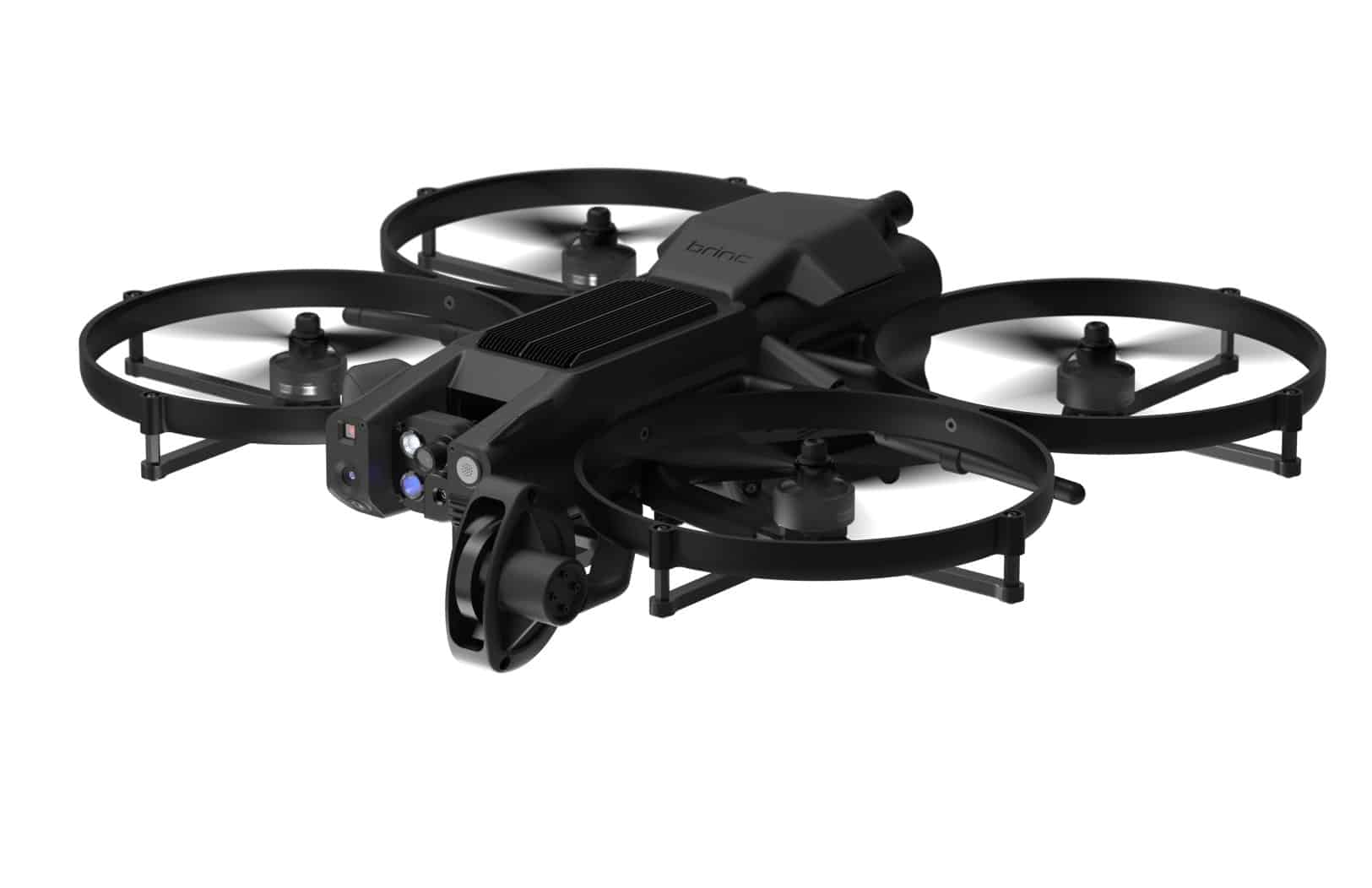
The Tulare County Sheriff's Office (TCSO) in California is finalizing a contract with Motorola Solutions to launch a Drone as First Responder (DFR) program built on BRINC hardware. The fleet includes 8 BRINC Responder and 2 Lemur drones, with the first year free and a five-year cost cap of $2.8 million (approximately $560,000 per year). Funding comes from California's AB 109 Public Safety Realignment funds. The Board of Supervisors is set to vote on June 23.

Highlights
- The Tulare County Sheriff's Office is finalizing a contract with Motorola Solutions to deploy 8 BRINC Responder and 2 BRINC Lemur drones as first responders to 911 calls, with a Board of Supervisors vote scheduled for June 23.
- The DFR program's first year carries zero cost to the county; a subsequent five-year extension is capped at $2.8 million (~$560,000/year), funded by California AB 109 Public Safety Realignment grants.
- Each BRINC Responder can reach a reported incident within 70 seconds, streams full HD video with 40x optical zoom, and can deliver payloads such as EpiPens or AEDs before deputies arrive.
- BRINC Lemur drones are equipped with a glass-breaking attachment and GPS-free indoor navigation, enabling SWAT-style reconnaissance before officers make entry.
- TCSO justified sole-source procurement by citing existing Motorola Solutions integration; Motorola and BRINC hold an exclusive North American distribution partnership for the BRINC DFR product line.
Tulare County Sheriff's Office to Deploy Drones as First Responders to 911 Calls
The Tulare County Sheriff's Office (TCSO) in California is preparing to field a 911 emergency response drone fleet. The county is finalizing a contract with Motorola Solutions to establish a Drone as First Responder (DFR) program built on BRINC hardware — the same system already approved for the Porterville Police Department by its city council.
The Tulare County Board of Supervisors is scheduled to vote on the agreement on Tuesday, June 23, as part of the consent calendar. The pilot program carries no cost to the county in its first year.
Tulare County Follows Porterville's Lead
TCSO is joining the same Motorola Solutions program Porterville Police Department signed onto earlier this year: a one-year trial using BRINC drone hardware, with no upfront cost to the agency.
The system integrates directly with TCSO's existing dispatch and records management platforms, enabling drones to be automatically deployed in response to specific 911 call types — arriving on scene before any deputy does.
County documents cite the expected benefits plainly: improved officer safety, faster emergency response times, and real-time situational awareness for dispatchers and deputies before any personnel reach the scene.
According to county filings, the drones are expected to support perimeter searches, suspect apprehension, search and rescue, disaster response, crime scene documentation, jail and facility security, and tactical operations. That is a broad mandate for a program that has yet to fly a single mission.
Fleet Comprises 8 Responders and 2 Lemurs
According to Reporter Online, TCSO plans to deploy 8 BRINC Responder drones — BRINC's purpose-built 911 response platform. Each unit can reach a reported incident within 70 seconds, features full HD video streaming with 40x optical zoom, and carries a thermal sensor suited to low-light environments.
The Responder returns to an automated charging dock between missions and can carry small life-saving payloads such as EpiPens, AEDs, or flotation devices, while allowing dispatchers to conduct two-way voice communications with individuals on scene before deputies arrive.
The other two aircraft are BRINC Lemur drones — a different form factor designed for indoor, close-quarters environments rather than open terrain.
The Lemur carries a glass-breaking attachment to enter structures through windows, can navigate room-to-room without GPS, and streams video and floor plan data back to a command post — giving tactical teams the ability to see what is behind a door before anyone opens it.
Two-way speakers allow operators to communicate with barricaded suspects or coordinate searches before personnel make entry.
The County Is Betting on a Five-Year Number, Not Just Year One
While the first year is free, it is a bridge to a much larger commitment. After the trial period, TCSO may extend the program for five years at a total cost not to exceed $2.8 million — approximately $560,000 per year once the free period ends.
The county states that funding will come from Assembly Bill 109 (AB 109) Public Safety Realignment allocations — a California state grant established in 2011 when the state shifted responsibility for lower-level offenders from state prisons to county supervision. General fund dollars are not involved.
The funding detail matters. Realignment grants were originally created to compensate counties for the additional supervision and custody costs that followed the law's passage. Tulare County is now framing drone fleet procurement as part of that same expanded public safety mandate, rather than as a standalone budget line item. Whether the Board of Supervisors holds that view once the free trial ends and annual $560,000 invoices begin drawing on a fund established a decade ago for a different public safety burden is the central unresolved question embedded in this contract.
Sole-Source Procurement Has Its Rationale
TCSO already uses Motorola Solutions equipment, and the county cited that existing relationship as justification for bypassing a competitive bidding process. After reviewing existing platforms and participating in vendor demonstrations, county officials stated they determined that "no other vendor could provide the same level of system interoperability."
The argument is that switching to a different drone vendor would require rebuilding dispatch and records management integrations that already function within TCSO's environment — a costly and disruptive proposition for an agency that was not actively seeking a new vendor.
This is a familiar argument in public safety procurement, and it is not without merit. Motorola Solutions and BRINC hold an exclusive distribution partnership for the BRINC DFR product line in North America, meaning any agency already running Motorola dispatch and records software is structurally steered toward BRINC hardware if it wants a single-vendor integrated system.
This is a structural advantage built into the partnership architecture, not a decision unique to TCSO, and it is worth understanding that context going in.
DroneXL Perspective
To be direct: year one free is the easiest part of this contract. Porterville has already taken its police department down this exact road, and TCSO is running the same playbook — same vendor, same drone models — which suggests this is less an experiment than a full rollout that started small and is now expanding to the county level.
BRINC says it currently works with more than 900 public safety agencies across the United States. Tulare County is the next entry on that list.
The real test is not whether 8 Responders and 2 Lemurs can reach a 911 scene faster than a patrol car — on straightforward calls they almost certainly will, as they already have for hundreds of departments.
The real test comes when the free trial ends, the $560,000 annual invoices begin drawing on a fund created a decade ago for a different public safety burden, and the Board of Supervisors has to decide whether to keep writing checks.
That decision — expected to arrive sometime after the trial concludes — will say more about whether DFR programs are becoming permanent infrastructure in California law enforcement than any single flight ever could.
原文來源: 查看原文
FAQ
Newsletter
Subscribe to our Low-Altitude Industry Newsletter
Daily curated news on low-altitude economy and drone industry, delivered to your inbox.