DJI Osmo Pocket 4P vs Pocket 4 vs Pocket 3: Full Comparison — Plus the Insta360 Luna Ultra for U.S. Buyers
DJI now sells three Osmo Pocket gimbal cameras simultaneously, with the new flagship Pocket 4P featuring dual lenses and 17 stops of dynamic range. However, all three DJI models are unavailable in the U.S. due to FCC Covered List restrictions on 2026 hardware. The Insta360 Luna Ultra — co-designed with Leica, priced at $769.99, and supporting 8K/30fps Dolby Vision — emerges as the only dual-lens gimbal camera U.S. creators can legally purchase today.

Highlights
- DJI's FCC Covered List status blocks all three Osmo Pocket models (4P, 4, and 3) from legal sale in the United States as of 2026.
- The Osmo Pocket 4P is priced at RMB 3,799 and features dual lenses, 17 stops of dynamic range, D-Log2 support, and optical telephoto tracking — the highest specs in DJI's Pocket lineup.
- The Insta360 Luna Ultra launched on June 10, 2026, at $769.99, offering 8K/30fps Dolby Vision recording and a detachable 2-inch OLED touchscreen — features DJI's entire Pocket lineup lacks.
- DJI filed a patent lawsuit against the Insta360 Luna series in Texas on June 11, 2026; Insta360 counter-sued the following day.
- Outside the U.S., the Pocket 4P leads on dynamic range and color science; inside the U.S., the Luna Ultra is the only purchasable dual-lens gimbal camera on the market.
DJI Osmo Pocket 4P vs Pocket 4 vs Pocket 3: Full Comparison — Plus the Insta360 Luna Ultra for U.S. Buyers
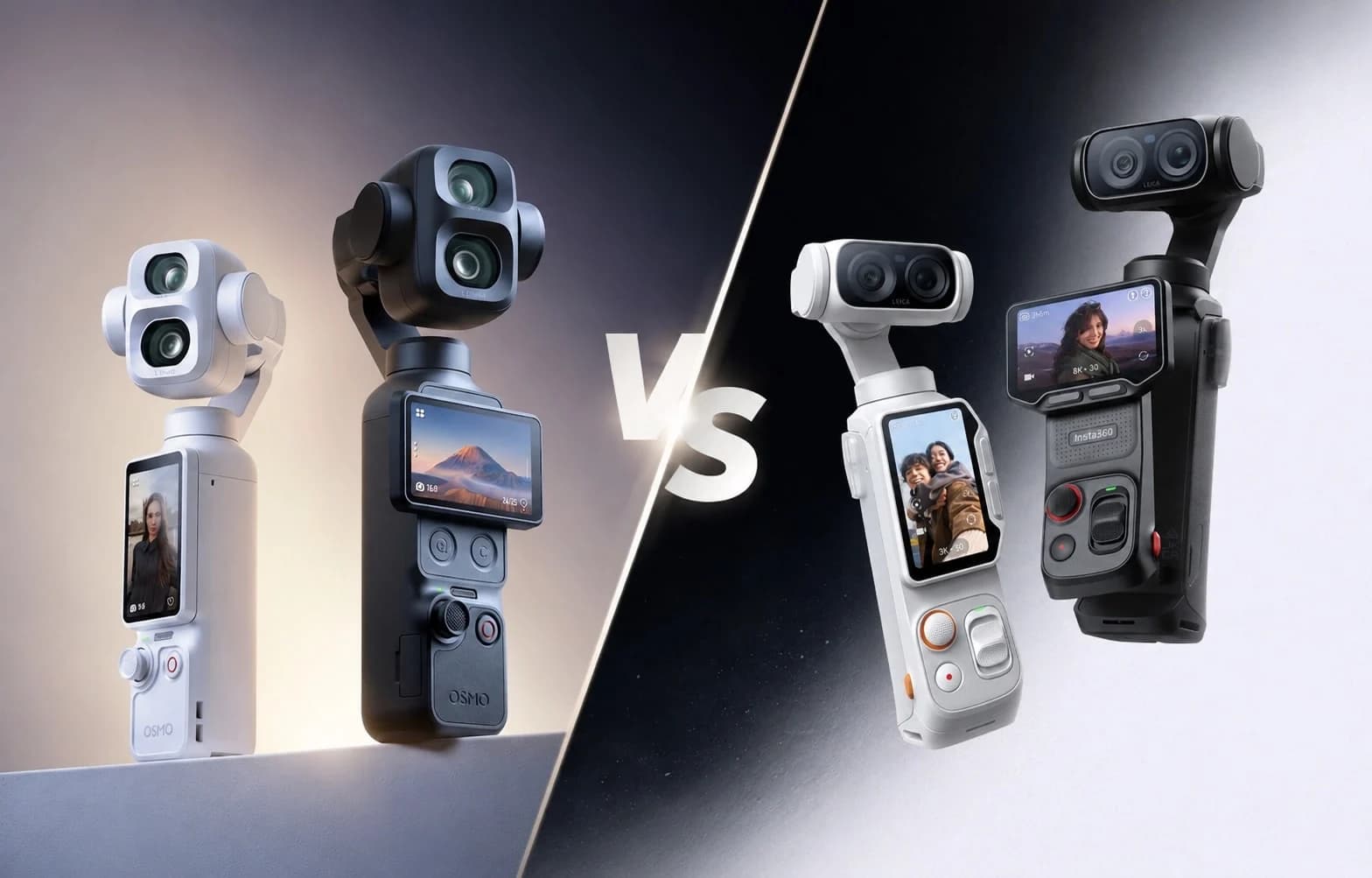
DJI currently sells three Osmo Pocket gimbal cameras simultaneously — marking the first time the product line has been segmented by ambition rather than generation. The new Osmo Pocket 4P is the dual-lens flagship, the single-lens Osmo Pocket 4 sits in the mid-range, and the older Osmo Pocket 3 anchors the entry-level price point. The buying decision is no longer simply about grabbing the latest model; it's about whether you need a second lens, higher dynamic range, or the most affordable price.
There is, however, one critical fact that fundamentally reframes this comparison for U.S. readers: none of these three DJI cameras are available through U.S. retail channels. DJI's placement on the FCC Covered List means its 2026 hardware cannot obtain the authorizations required for legal sale in the United States. For that reason, this comparison includes a fourth product: the Insta360 Luna Ultra, a dual-lens gimbal camera that launched on June 10, 2026, and faces no purchase restrictions in the U.S. market.
Pocket 4P Justifies Its Premium With Dual Lenses and Higher Specs
The Pocket 4P is the only DJI gimbal in this comparison equipped with dual lenses. Its 1-inch primary sensor uses LOFIC technology to deliver 17 stops of dynamic range — the highest in the lineup — paired with a 60mm-equivalent telephoto lens on a 1/1.28-inch sensor. The Pocket 4 retains a single 1-inch sensor with 14 stops of dynamic range, while the Pocket 3 carries the oldest 1-inch sensor of the three.
All three models support 10-bit log recording, but only the 4P upgrades to the newer D-Log2 color profile, and only the 4P offers a dedicated optical telephoto lens rather than sensor-crop digital zoom. The standard Pocket 4 launched in April but, like the 4P, is unavailable in the U.S. due to FCC Covered List restrictions.
The Pocket 4P is priced at RMB 3,799 — RMB 800 more than the Pocket 4 and RMB 1,500 more than the Pocket 3. That premium buys a second lens, higher dynamic range, D-Log2 support, and telephoto tracking. For users who don't need a telephoto lens, the Pocket 4 offers better value. The Pocket 3 remains a capable single-lens gimbal at the lowest price, though its specifications are weaker: Wi-Fi 5, USB 2.0, and no built-in storage.
Insta360 Luna Ultra: U.S. Creators Can Order Today
The Luna Ultra is Insta360's first true gimbal camera, co-designed with Leica and priced at $769.99, positioned directly against the Osmo Pocket lineup. It features an f/1.8-aperture 1-inch primary sensor and an f/2.0-aperture 1/1.3-inch sensor with a 60mm-equivalent telephoto lens — the same dual-lens logic as the Pocket 4P.
In terms of headline specs, the Luna Ultra leads on video resolution and display design: it supports 8K/30fps Dolby Vision recording in 10-bit I-Log, while DJI's entire lineup tops out at 4K. It also includes a detachable 2-inch OLED touchscreen that doubles as a remote monitor — a feature absent from every Osmo Pocket model. In DroneXL's real-world footage comparisons, the Luna Ultra's second telephoto lens noticeably outperformed the single-lens Pocket 4 at the long end.
DJI's strengths remain dynamic range and color science. The Pocket 4P claims 17 stops of dynamic range over the Luna Ultra's 14, and D-Log2 is a mature profile in professional color-grading workflows. For U.S. buyers, however, specifications are no longer the deciding factor: the Luna Ultra is available right now through Insta360's website, Amazon, and Best Buy, while the Pocket 4P cannot be obtained at all — and there is no sign of regulatory relief on the near-term horizon.
The two companies have also taken their rivalry to court. DJI filed a patent lawsuit against the Insta360 Luna lineup in Texas on June 11, and Insta360 filed a counter-suit the following day.
Notes on the Full Specification Comparison
Weight figures for the Pocket 4 and Pocket 3, along with Pocket 3 battery data, are drawn from DJI's previous announcement materials rather than the current comparison page, which only lists sensor, video specs, zoom, tracking, beauty features, and storage. Luna Ultra data comes from Insta360's official specification sheet. The 35mm-equivalent focal length for DJI's telephoto sensor reflects DJI's own published figures; Insta360 states its telephoto lens is equivalent to 60mm on a 1/1.3-inch sensor. U.S. dollar prices listed for the three DJI models are approximate conversions from RMB at mid-June 2026 exchange rates and are not official DJI U.S. prices — which do not exist while DJI remains on the FCC Covered List.
DroneXL's Take
For most of the past five years, the only question in this category was "which Osmo Pocket should I buy?" For U.S. readers, that question is no longer valid — and that is not a trivial observation. DroneXL has tracked DJI's regulatory battles since the passage of the NDAA, and the situation has not changed: a measure enacted in the name of drone security is blocking a pocket vlogging camera from U.S. shelves.
The Pocket 4P is the more refined product on paper — higher dynamic range, more mature color science — but it is also the product you cannot legally order.
Honest purchase recommendations must therefore vary by geography. Outside the U.S., if you need a second lens, the Pocket 4P is hard to beat; if you don't need telephoto, the Pocket 4 is the smarter spend. Inside the U.S., the Luna Ultra is the only dual-lens gimbal camera you can actually buy. It surpasses DJI's lineup in resolution and display design, with zero purchase restrictions — the clearest signal yet that the FCC Covered List has handed Insta360 a market it didn't need to earn on merit alone.
DJI's patent lawsuit filed on June 11 signals that the company is fully aware of how much ground it is conceding. Whether the Ninth Circuit Court of Appeals will reopen the U.S. market for DJI — and what that means for this category in 2027 — remains an open question.
Sources: DJI, Insta360.
DroneXL uses automated tools to assist with research and data collection. All reporting and editorial commentary is written by Haye Kesteloo.
原文來源: 查看原文
FAQ
Newsletter
Subscribe to our Low-Altitude Industry Newsletter
Daily curated news on low-altitude economy and drone industry, delivered to your inbox.