Drone Nerds Adds RigiTech Eiger Long-Range Delivery Drone With 100 km Mission Range
XTI Aerospace's Drone Nerds division has added the Swiss-made RigiTech Eiger to its enterprise portfolio. The VTOL fixed-wing drone offers a maximum mission range of 100 km (62 miles), carries up to 3 kg of payload, and flies for approximately 59 minutes. Targeting medical and industrial logistics, the Eiger's commercial operations in the U.S. remain contingent on FAA BVLOS authorization.

Highlights
- XTI Aerospace 旗下 Drone Nerds 正式將瑞士製 RigiTech Eiger 納入企業產品組合,主攻美國長程物流市場。
- Eiger 為 VTOL 固定翼無人機,單次任務最大航程 100 公里,載重 3 公斤,飛行時間約 59 分鐘,可在風速達 54 km/h 條件下運作。
- Eiger 標配 Failsafe+ 降落傘、多頻段偵測與規避(DAA)系統及精準降落套件,並透過 RigiCloud 支援全自主飛行。
- XTI 於 2025 年 2 月擱置六人座 TriFan 600 空中計程車計畫,並在獲得 Unusual Machines 2,500 萬美元投資後全力轉型無人機業務。
- Eiger 在美國的商業 BVLOS 飛行仍需等待 FAA 飛行授權,RigiTech 已在歐洲依現行法規執行配送航線並積極推進美國認證程序。
Drone Nerds Adds RigiTech Eiger Long-Range Delivery Drone With 100 km Mission Range
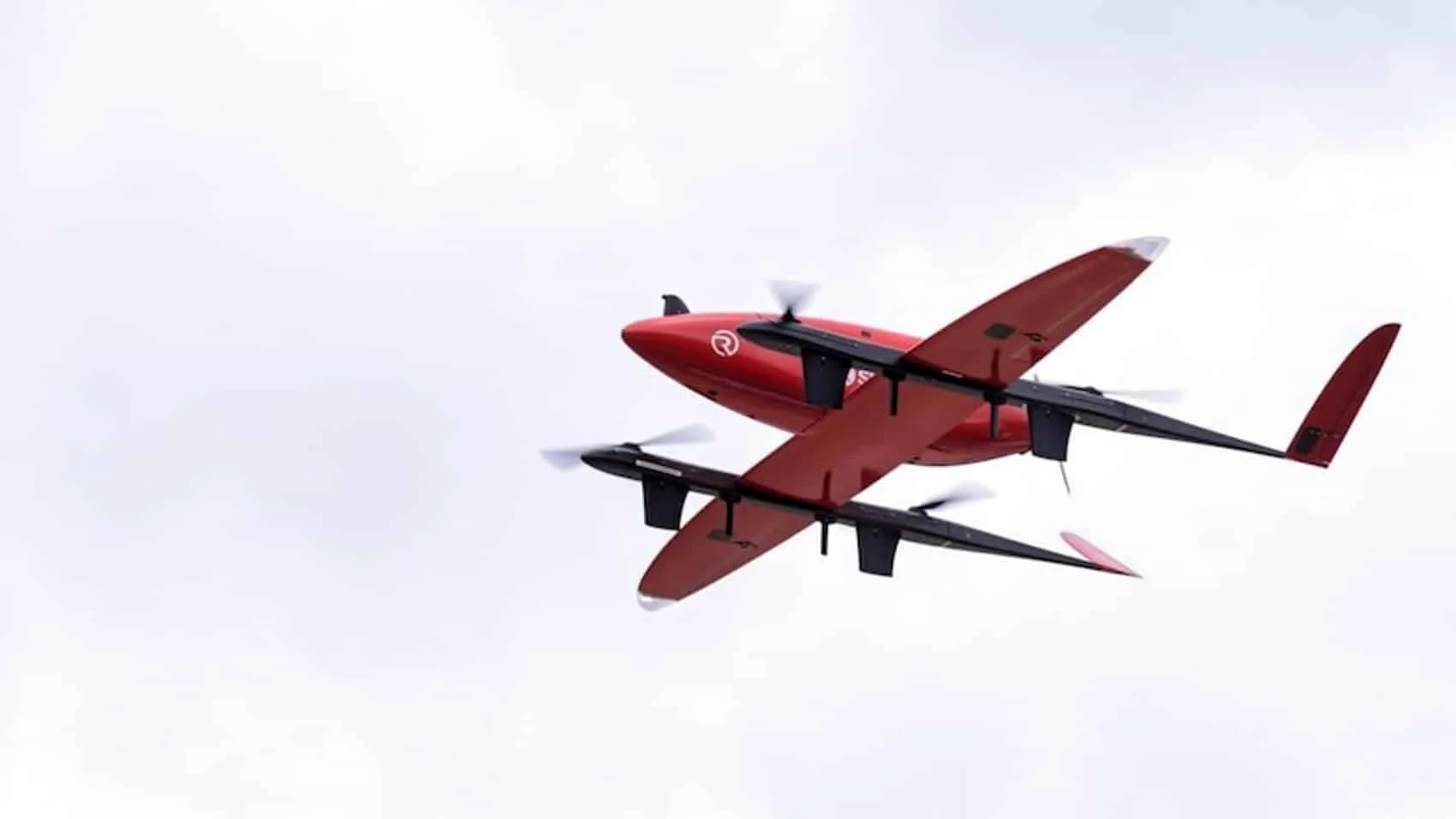
XTI Aerospace's Drone Nerds division has added the Swiss-made RigiTech Eiger long-range delivery drone to its enterprise product portfolio. The aircraft offers a maximum mission range of 62 miles (100 km) per sortie, features a vertical takeoff and landing (VTOL) design that eliminates the need for a runway, and transitions to fixed-wing flight during cruise for improved efficiency and flexibility.
For a company that shelved its six-seat air taxi program as recently as February and pivoted fully into the drone business, the addition of the Eiger is a clear signal of XTI's read on the long-range logistics opportunity—one aimed not at last-mile urban delivery, but at genuine long-haul cargo transport.
XTI Swaps a Six-Seat Air Taxi for a Delivery Drone
XTI Aerospace spent years developing the TriFan 600, a six-seat VTOL aircraft designed for business travel and defense applications. According to Aviation International News, the company largely shelved that program in February after acquiring Florida-based Drone Nerds in November of last year and reorienting its business around unmanned systems.
In the same month as the acquisition, XTI closed a $25 million investment from Orlando-based Unusual Machines and relocated its headquarters from Englewood, Colorado, to Addison, Texas—a Dallas-area suburb adjacent to Addison Airport.
Chairman and CEO Scott Pomeroy told shareholders in January that Drone Nerds was "probably one of the best-positioned drone companies in the U.S. right now to navigate a rapidly evolving market." The Eiger partnership is the first enterprise logistics hardware to substantiate that claim in concrete terms.
Drone Nerds is headquartered in Ventura, Florida, and primarily serves enterprise, public safety, and government customers. Adding a Swiss long-range platform gives its sales team a product that simply does not exist on the consumer drone shelf.
The Eiger Trades Payload for Range
The RigiTech Eiger carries a maximum payload of 6.6 lbs (3 kg) over a maximum range of 62 miles (100 km), with a maximum flight time of approximately 59 minutes. The payload figure is modest, but the range is genuinely impressive—and that trade-off is the entire design rationale.
The Eiger combines VTOL capability with fixed-wing cruise: it lifts off like a multirotor and then transitions to winged flight for long-distance efficiency. That transition is what makes 100 km on 3 kg of payload physically possible. The full takeoff and landing cycle requires no runway, catapult launcher, or net recovery system.
RigiTech rates the Eiger for operations in winds up to 33 mph (54 km/h, or 15 m/s) and supports both day and night flights. The cargo bay has a maximum volume of 15 liters, meaning cargo density matters as much as weight at the limit.
Safety hardware is a key selling point for enterprise customers: the Eiger comes standard with a Failsafe+ parachute system, a Detect and Avoid (DAA) system with multi-band traffic awareness, and a visual-aided precision landing kit.
Operationally, pilots can fly the Eiger via remote control or full autonomy through RigiTech's RigiCloud software. The aircraft carries forward- and downward-facing cameras for live situational awareness and can be fitted with an optional precision drop mechanism for payload release.
Long-Range Logistics and Neighborhood Delivery Are Different Games
Most drone delivery operations in the northern Texas area today remain short-range—food or small retail items dispatched from regional hubs across distances measured in miles, not dozens of miles. The Eiger targets an entirely different mission profile: medical supply runs, inter-facility industrial transport, and deliveries to remote or difficult-to-access locations where ground vehicles are inefficient.
At a 62-mile operational radius, every flight extends far beyond the visual line of sight of any ground operator. That makes the Eiger dependent on cloud-based mission management and automated route planning rather than manual piloting. The operational model assumes the aircraft can complete an entire route without human intervention.
RigiTech co-founder and Chief Commercial Officer David Rovira said the Eiger was "designed from the ground up to support time-critical drone logistics operations, with safety, connectivity, and operational reliability at its core," and described the Drone Nerds partnership as a key step into the U.S. market.
Drone Nerds CEO Jeremy Schneiderman characterized drone delivery as a "critical growth opportunity" and identified medical and industrial logistics as the primary demand drivers—buyers who need to move blood samples, laboratory kits, and mechanical components under strict time constraints.
Regulations Remain the Deciding Factor
Every long-range delivery claim runs into the same bottleneck: BVLOS. The Eiger is now available through Drone Nerds for evaluation, procurement, and deployment planning, but actual flight operations remain subject to FAA approval and flight authorizations—a dependency that both XTI and RigiTech explicitly acknowledged in their announcement.
RigiTech has been actively pursuing FAA certification in the United States and is already conducting delivery routes in Europe under existing regulatory frameworks. But executing a 100 km single-leg mission in U.S. airspace is not merely a sales challenge—it is a regulatory engineering problem.
BVLOS authorization remains the threshold that every operator pursuing long-distance missions must clear, from medical courier startups to large-scale logistics players. The hardware is ready; the regulatory framework has not kept pace. That is the recurring story of drone delivery in the United States.
DroneXL Perspective
Stripped of press release language, this move represents XTI planting a flag in the less glamorous but high-value half of the drone delivery market. Neighborhood delivery has dominated the media narrative: packages on lawns, drones hovering quietly over residential streets.
The Eiger is chasing the dull, high-value other half—getting a blood sample 50 miles to a lab, or moving a turbine component from one industrial site to another, where speed is measured against a truck stuck in traffic rather than a delivery rider.
The pivot itself is the most telling data point. A company does not abandon a six-seat air taxi—the kind of moonshot that attracts investors and magazine covers—unless it has concluded that near-term commercial opportunity lies in something considerably less photogenic.
Drone Nerds plus a Swiss long-range platform is XTI betting on logistics revenue that can be recognized this decade, rather than an air taxi future that keeps receding into the next one.
Large players such as Zipline and Amazon continue to send the same signal to the industry: the drone future is in moving cargo, not people. And if you eventually want to move people, the capital to do it has to come from moving cargo first.
The one number that returns everything to earth is the pace of FAA BVLOS approvals. RigiTech can build the aircraft; Drone Nerds can sell it. Neither controls the flight authorizations that turn a spec sheet into an actual route. Whether the Eiger logs real flight records in U.S. airspace by 2026 or remains in the evaluation phase comes down to regulators, not engineers.
原文來源: 查看原文
FAQ
Newsletter
Subscribe to our Low-Altitude Industry Newsletter
Daily curated news on low-altitude economy and drone industry, delivered to your inbox.