Electra Unveils Turbo-Electric Concept Airliner Under NASA AACES 2050 Next-Generation Aviation Program
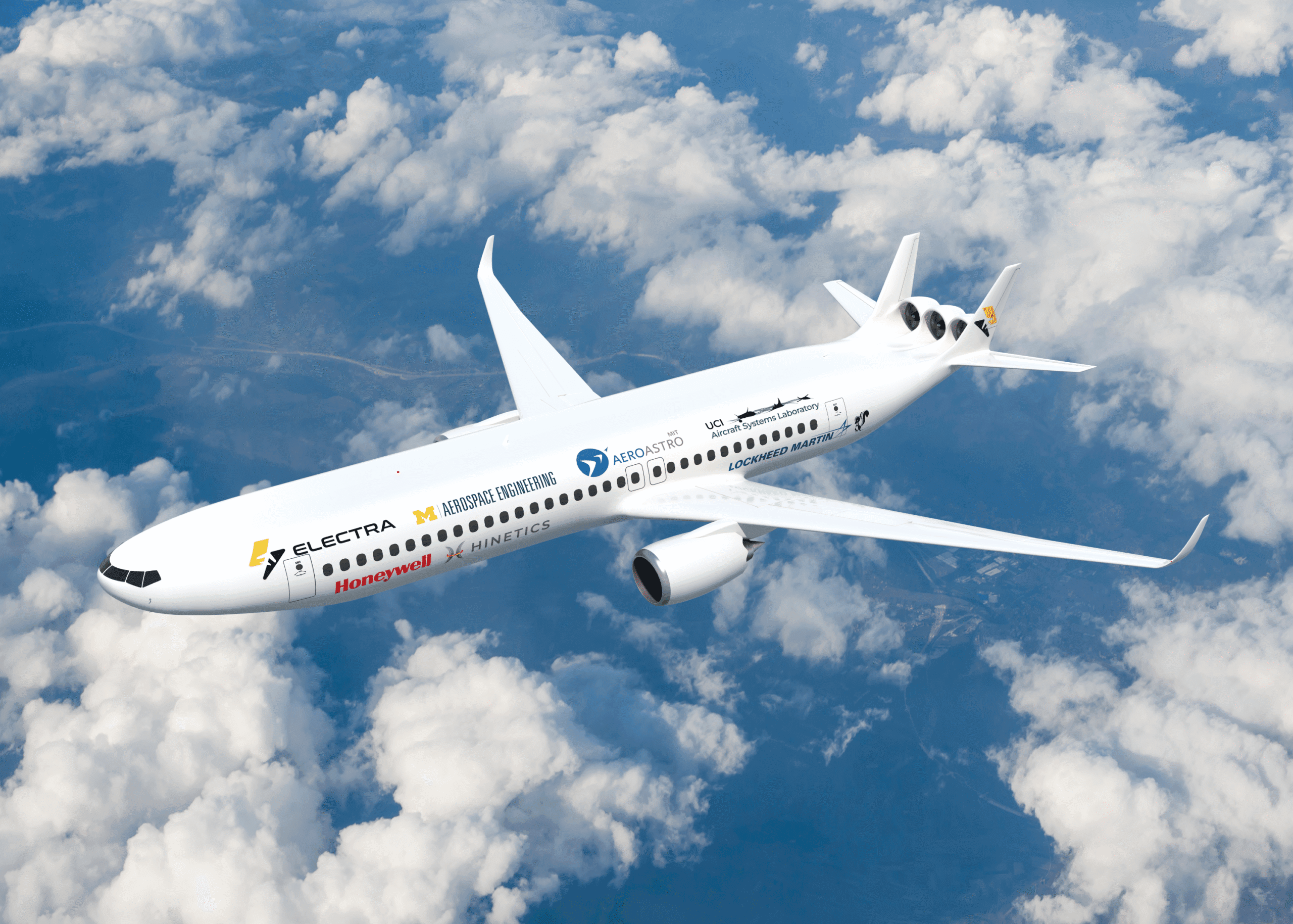
Electra has revealed a next-generation turbo-electric concept airliner developed under NASA's Advanced Aircraft Concepts for Environmental Sustainability (AACES) 2050 program. Designed for 100-plus passengers, the aircraft features a 'double-bubble' wide fuselage, Boundary Layer Ingestion (BLI), and a distributed electric propulsion system, targeting up to 17% additional fuel efficiency gains on top of projected 2050 baseline improvements — all while remaining compatible with existing airport infrastructure and airline operations.

Highlights
- Electra unveiled a turbo-electric concept airliner under NASA's AACES 2050 program, targeting 100-plus-seat commercial aircraft with entry into service projected around mid-century.
- The aircraft's double-bubble fuselage and Boundary Layer Ingestion (BLI) tail fans are projected to deliver up to 17% additional fuel efficiency on top of anticipated 2050 baseline gains.
- The design requires no airport charging infrastructure and is compatible with existing gates, conventional jet fuel, and SAF, ensuring real-world airline operability.
- Electra published 11 technical papers and released an open-source electrified aircraft design toolkit built on NASA's Aviary platform for use by the broader research community.
- Partners include American Airlines, Honeywell Aerospace, Lockheed Martin Skunk Works, MIT, University of Michigan, and UC Irvine.
Electra Unveils Turbo-Electric Concept Airliner Under NASA AACES 2050 Next-Generation Aviation Program
Electra has unveiled a new concept aircraft design developed as part of NASA's Advanced Aircraft Concepts for Environmental Sustainability (AACES) 2050 program, a research initiative aimed at shaping the future of commercial aviation.
Research Focus: Electrification as the Third Era of Flight
The study examines how targeted electrification, advanced aerodynamics, and integrated airframe–propulsion design could fundamentally transform the efficiency and competitiveness of 100-plus-seat airliners by mid-century. Electra describes this moment as the dawn of a "third era of flight" — one in which new electric propulsion technologies unlock transformative yet achievable aircraft architectures.
On Electra's existing nine-seat EL9 aircraft, this vision has already enabled ultra-short takeoff and landing (USTOL) capabilities and a new "Direct Aviation" operating model. The AACES 2050 concept applies the same philosophy to designing a future airliner fully compatible with real-world airline and airport operations.
Double-Bubble Fuselage and Boundary Layer Ingestion
The concept aircraft features a wide "double-bubble" fuselage that generates additional lift from the airframe itself. Two turbofan engines mounted beneath the wings provide thrust while simultaneously generating electricity to power rear-mounted electric fans. These tail fans ingest and re-accelerate the low-energy airflow passing along the fuselage surface — a technique known as Boundary Layer Ingestion (BLI).
Electra's analysis indicates this configuration could deliver up to 17% additional efficiency on top of gains already anticipated from advanced structures, engine technologies, and aerodynamic improvements projected for 2050.
Balancing Efficiency with Real-World Operations
Dr. Parker Vascik, Electra's Director of Product Strategy, said: "The value of electrification in this concept is that it lets us place propulsion where it's most beneficial — locations that weren't previously practical. We can dramatically improve the synergy between the airframe and propulsion system while keeping the aircraft viable for real airline and airport operations. The goal isn't just efficiency on paper — it's a concept we can actually build, certify, and put into service."
The concept is designed to be compatible with existing airport gates and airline operating procedures, capable of running on conventional jet fuel or Sustainable Aviation Fuel (SAF), and requires no airport charging infrastructure or unproven fuel types. Its configuration also enables a twin-aisle cabin layout within a narrowbody-class aircraft, improving passenger comfort and accelerating boarding and deplaning.
Building on MIT Research With Deeper Electrification Integration
The research is led by Dr. Alejandra Uranga, Electra's Chief Engineer for Research and Future Concepts. Dr. Uranga previously co-led NASA-funded research at MIT that produced the original double-bubble fuselage concept and the D8 aircraft design. Electra's AACES 2050 work builds on that foundation by incorporating the new capabilities enabled by electrification and distributed propulsion.
"This concept builds on years of research into how airframe shape and propulsion placement can work together to improve aircraft efficiency," said Dr. Uranga. "What's different now is that we can use electrification and distributed propulsion to integrate these systems more deeply. Designing the aircraft as a complete system is key to realizing the full potential of future commercial aircraft."
11 Technical Papers and Open-Source Tools
Alongside the concept aircraft, Electra has published 11 technical papers documenting the models, methodologies, and findings behind the research. The company has also adopted NASA's open-source Aviary multidisciplinary design and optimization tool, and developed an electrified aircraft design suite available for public use. These contributions are intended to advance the broader aviation research community, not just a single aircraft concept.
Cross-Industry and Academic Collaboration
Electra's AACES 2050 team brings together leaders from both industry and academia, including American Airlines, Honeywell Aerospace, Lockheed Martin Skunk Works, and Hinetics, as well as the MIT Department of Aeronautics and Astronautics, the University of Michigan Department of Aerospace Engineering, and the UC Irvine Aircraft Systems Laboratory.
Marc Allen, Electra's CEO, commented: "Through the AACES program, NASA is pushing the industry to think boldly — to use our new propulsion technologies to break through the design constraints of next-generation commercial aviation. The third era of aviation will transform how people and places connect, whether through aircraft entering service this decade, future regional platforms, or mid-century commercial transport. As a leader in hybrid-electric propulsion, Electra is committed to keeping American aviation and NASA at the forefront globally."
About AACES 2050
The AACES 2050 program examines aircraft concepts and technologies that could shape commercial aviation in the 2040s and 2050s and beyond. Electra's concept adds a near-term electrification pathway to the program's broader research portfolio, complementing other studies focused on advanced propulsion, novel fuels, and next-generation aircraft architectures.
Source: eVTOL Insights
原文來源: 查看原文