Toronto Police Track CBC Test Pilot in Minutes Ahead of FIFA World Cup 2026
Toronto Police Service partnered with CBC News for a drone interdiction drill ahead of the 2026 FIFA World Cup, successfully locating a test drone operator near Hotel X within minutes. NAV CANADA has established a 1.3-nautical-mile restricted airspace around Toronto Stadium, with fines up to CAD $3,000 for unauthorized flights and potential criminal prosecution for serious violations.

Highlights
- Toronto Police located a CBC test drone operator near Hotel X within minutes during a World Cup preparedness drill at Exhibition Place, demonstrating operational drone-interdiction capability.
- NAV CANADA's Aeronautical Information Circular 008/2026 restricts drone flight within 1.3 nautical miles of Toronto Stadium up to 2,500 feet ASL from June 12 to July 7, 2026.
- Violations carry fines up to CAD $3,000 for individuals; two drone operators were already charged under Canadian aviation regulations during the Fort York FIFA fan festival this week.
- Canada amended its Aeronautics Act in March 2026 and allocated up to CAD $145 million for World Cup security, giving the RCMP authority to down drones — powers that U.S. local police lacked for most of 2025 until the Safer Skies Act passed.
- Counter-drone experts warn that high-speed FPV drones (record: 657 km/h), fiber-optic-tethered drones, and machine-vision terminal guidance each defeat the defensive layers demonstrated in the CBC drill, and no mature city-scale solution exists as of June 2026.
Toronto Police Locate CBC Test Pilot Within Minutes During Drill
Ahead of the 2026 FIFA World Cup, the Toronto Police Service partnered with CBC News for a simulated drone-intrusion exercise — a cat-and-mouse drill that saw police successfully track a drone flown over Toronto Stadium's restricted airspace and pinpoint the operator, located several blocks away near Hotel X, before dispatching ground officers to intercept. CBC News was granted exclusive access to document how police plan to protect the airspace over the Toronto venue, which will host six matches between June 12 and July 2, 2026.
CBC News set up the drill scenario at an undisclosed location on the opposite side of the stadium, launching a drone while police attempted to simultaneously locate both the aircraft and its operator. The entire exercise took place over Exhibition Place — home to BMO Field, temporarily renamed "Toronto Stadium" for the tournament in compliance with FIFA's corporate-naming ban.
A police helicopter was already airborne during the drill, prompting the CBC flight team to exercise extra caution. Police declined to allow CBC to film their detection and counter-drone equipment, citing national security, but confirmed that the tools can track both the drone and its operator and can force an aircraft to land.
In footage recorded throughout the exercise, Toronto Police officers used a police drone to identify the CBC operator — dressed in an orange vest in the second parking lot west of Hotel X — and guided ground officers directly to the location. Those officers then identified themselves and informed the CBC operator that the drone had to land immediately, as the area was restricted airspace.
Hotel X Toronto, the only hotel within Exhibition Place and located east of the venue near Princes' Gates, served as a fixed landmark for officers directing ground personnel to the pilot's position. Police told CBC that multiple teams will be deployed during the World Cup: officers operating police drones, intercept officers tracking pilots, and counter-drone officers handling airspace threats.
Police cited two primary concerns: an amateur pilot accidentally crashing a drone into a crowd causing serious casualties, and the greater worry of a deliberate attack — a drone armed with an explosive device. The force's message to CBC was unambiguous: "Leave your drones at home … come enjoy the event. Public safety is our greatest concern."
NAV CANADA Issues 1.3-Nautical-Mile Airspace Restriction Around Toronto Stadium
NAV CANADA has issued Aeronautical Information Circular 008/2026, prohibiting drone flight within a 1.3-nautical-mile (2.4 km) radius of Exhibition Place up to 2,500 feet (762 m) ASL. The restriction covers BMO Field and the Fort York fan festival site for the duration of the FIFA Men's World Cup (June 12–July 7, 2026), with Toronto Police Service listed as the controlling authority.
Issued under Section 5.1 of the Aeronautics Act and citing Canadian Aviation Regulations 901.41 and 903.01, the notice permits only approved military and police operations, and drones directly supporting World Cup operations. Similar 1-nautical-mile no-fly zones also cover Downsview Park and Centennial Park in Etobicoke. The airspace around the stadium is already a 24-hour restricted zone.
The expanded venue accommodates 45,736 fans, and the City of Toronto expects approximately 300,000 visitors. Canada's national team opens play on June 12, with the venue's final match — a Round of 32 fixture — scheduled for July 2.
Violations Carry Fines Up to CAD $3,000; Serious Cases May Face Criminal Charges
Transport Canada sets a maximum fine of CAD $3,000 (approximately USD $2,200) for individuals flying drones in prohibited areas — the penalty police cited to CBC for unauthorized flight. Additional penalties include up to CAD $1,000 for flying without a pilot certificate, up to CAD $5,000 for an unregistered or unmarked drone, and up to CAD $15,000 for corporations. Reckless or negligent operation that endangers aircraft or people can result in criminal prosecution under the Aeronautics Act, consistent with police warnings to CBC that extreme cases could face criminal charges.
Enforcement has already begun. On the evening of the FIFA countdown concert at the Fort York fan festival this week, Toronto Police intercepted two unauthorized drones — one found near Niagara and Tecumseth streets, just metres from the festival site — and charged both operators under Canadian aviation regulations. Police alleged at least one drone flew directly over the fan festival. In October 2025, Toronto Police used identical tactics during the Blue Jays playoff series, employing drone-detection technology to intercept three drones flying unauthorized over Rogers Centre and charging two operators flying sub-250-gram micro drones.
Canadian Police Counter-Drone Authority Exceeds That of U.S. Local Law Enforcement
Canada grants federal and police authorities the power to down drones that pose a security risk — authority that far exceeds what American local police have historically held, a difference that fundamentally shapes how each country is protecting World Cup airspace.
The Canadian federal government amended the Aeronautics Act in March of this year to strengthen drone-threat interdiction powers and allocated up to CAD $145 million in security funding for the Toronto and Vancouver venues.
"Drones are prohibited from flying near stadiums and event venues, and this will be enforced," the RCMP told CBC News. Federal police are responsible for detecting and, if necessary, downing drones over Canadian venues. NORAD officials indicated the most likely tool is electronically forcing a drone back to its launch point, with jamming or spoofing available for aircraft requiring immediate grounding. NORAD fighters are also conducting patrols over Toronto and Vancouver. Canadian commanders acknowledged execution challenges: jamming drones in a dense downtown core without disrupting commercial communications, and distinguishing hostile aircraft from curious bystanders — issues DroneXL has tracked in its coverage of Canada's military counter-drone build-up.
The U.S. picture is markedly different. The FAA has established 3-nautical-mile, 3,000-foot no-fly zones around 11 American host stadiums, with civil penalties up to USD $75,000 and criminal fines up to USD $100,000 for game-day violations, per the agency's World Cup "drone no-fly zone" program. For most of 2025, only federal agencies could legally interdict drones on U.S. soil; the Safer Skies Act closed that gap, authorizing trained local officers to act — leading the NYPD to build a USD $6.5 million counter-drone unit intended for long-term use.
Host-nation police forces are also deploying drones to counter drones, including Vancouver Police Department's DJI Matrice fleet at BC Place. Regulations governing recreational pilots are evolving rapidly: Transport Canada has overhauled the framework through its 2025 BVLOS and medium-drone rules and is advancing Remote ID and new airspace-restriction measures.
High-Speed FPV Drones Represent the Biggest Blind Spot for Existing Detection Systems
The CBC drill tested the easy scenario. The gap between that scenario and the actual threat landscape is the core of the public safety debate.
A cooperative pilot standing still in a known parking lot in an orange vest, flying a hovering camera drone, is precisely what detection systems are designed to handle. Not one of those characteristics describes the drones that have reshaped the battlefield in Ukraine.
Three battlefield-proven capabilities each defeat a different layer of the defence police demonstrated.
First: machine-vision terminal guidance. A drone equipped with such a module locks onto a target visually and completes the final approach autonomously — meaning jamming the control link in the final seconds does nothing. Ukrainian firm The Fourth Law entered mass production of its NATO-coded TFL-1 guidance module in September 2025 at approximately USD $448 per unit; CSIS analyst Kateryna Bondar has documented how such autonomous capability raised attack success rates "from roughly 10–20% to roughly 70–80%." Jamming requires a radio link to jam; terminal guidance removes that prerequisite.
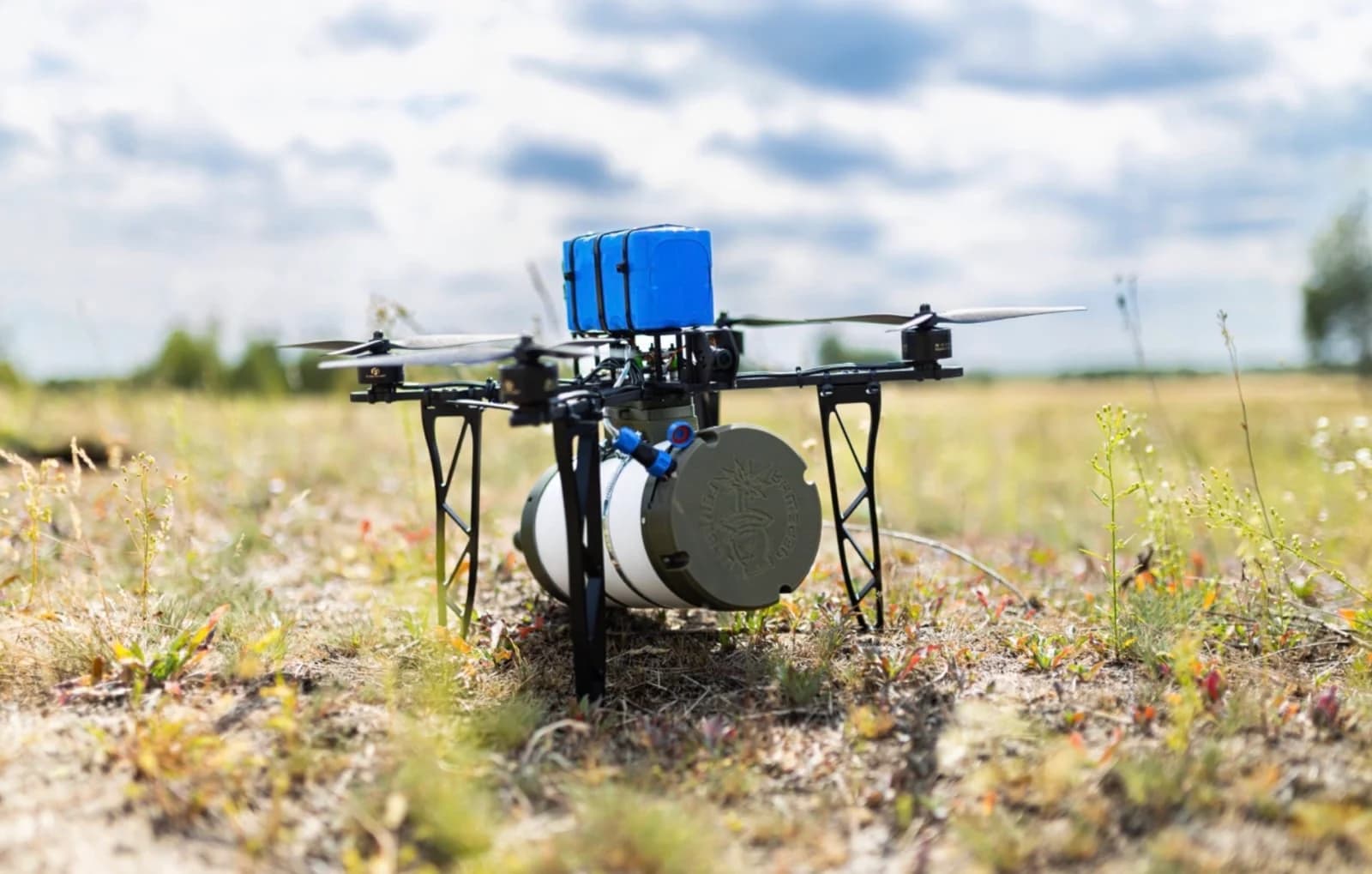
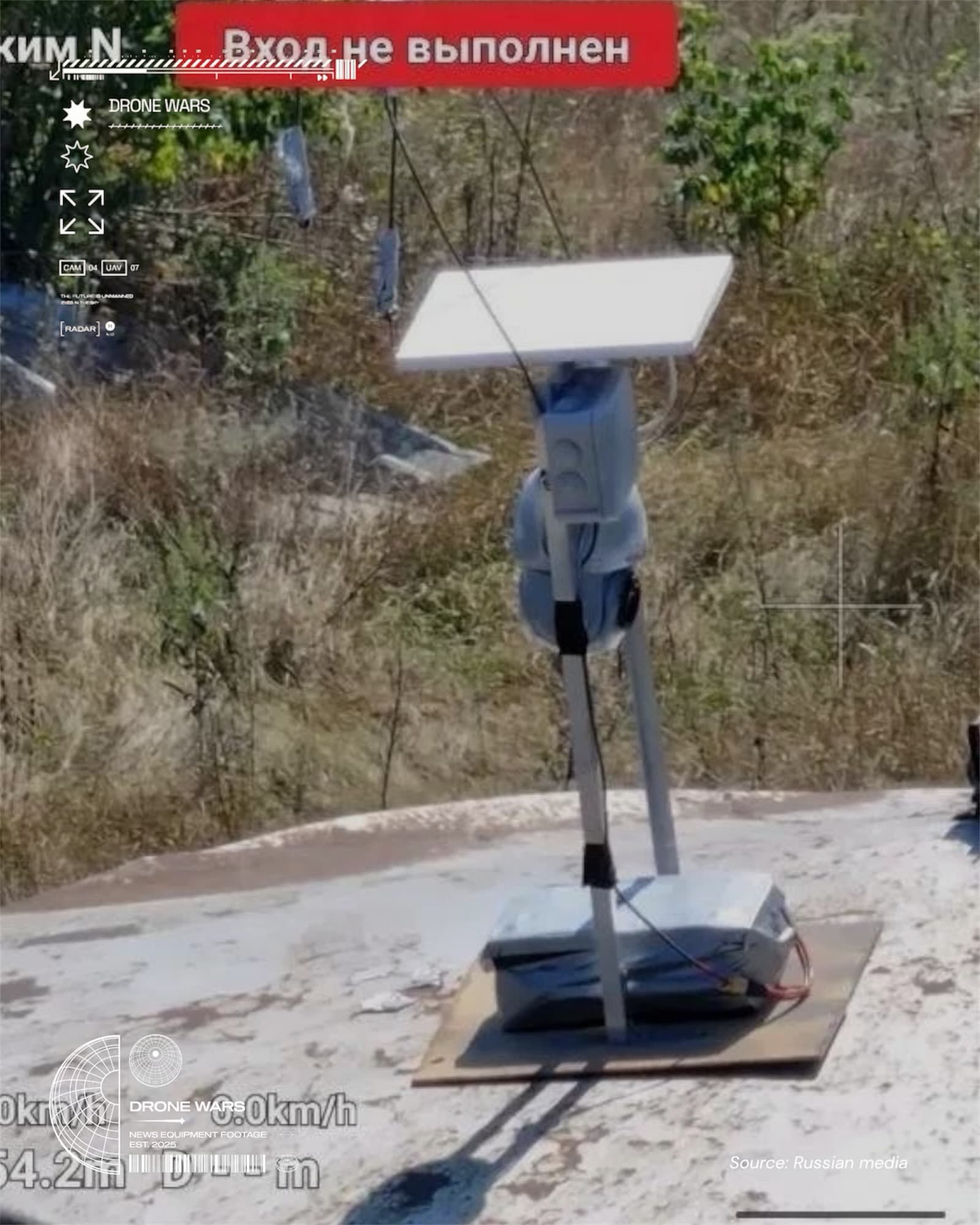
Second: fiber-optic tethers. These drones trail a hair-thin optical fiber to transmit control signals and video, emitting zero radio frequency and providing no link to jam. Russia first deployed them in spring 2024; Ukraine followed. Current operational versions carry approximately 40 km (25 miles) of fiber spool, with longer-range versions in procurement. The capability has left the battlefield: Hezbollah used fiber-optic drones during the 2026 Lebanon conflict, inflicting casualties on Israeli forces even in the presence of jammers and active protection systems. There is no signal to intercept, spoof, or sever; the only reliable countermeasures are destroying the drone or cutting the fiber.
Third: raw speed. A small FPV drone closing from short range leaves almost no time for any detection-to-action chain — and that speed is not hypothetical. The Guinness World Record for a battery-powered quadrotor broke 480 km/h (298 mph) in 2024 and currently stands at 657 km/h (408 mph). Counter-drone engineers acknowledge that against an FPV drone traveling above 100 km/h, the entire detect-classify-decide-act sequence compresses to seconds — far below the processing time of traditional air-defence procedures. Launched from under a mile out toward a stadium, there is almost no reaction window; launched in multiples simultaneously, even sophisticated defences struggle to intercept all of them.
These threats require neither a nation-state actor nor a battlefield supply chain. FPV frames can be assembled from commercial components, airframes printed from open-source files, and schematics found in public repositories. The knowledge Ukraine demonstrated does not stay in Ukraine. This is why drones that penetrated Belgium's Kleine Brogel nuclear weapons base last November defeated military jammers and police helicopters, and why American security officials have repeatedly pointed to the same gap. Experts have also raised the possibility of non-explosive payloads — which is why agencies treat every unauthorized drone near a crowd as a potential threat, not a mere nuisance.
The honest hard-kill solution against a high-speed drone swarm is directed energy, and that technology is not yet mature. High-energy lasers operate at the speed of light but engage one target at a time, with performance degraded by adverse weather and obstructions. The UK's DragonFire laser downed a 404 mph drone in 2025 tests but will not be deployed on Royal Navy vessels until 2027. High-power microwave systems can engage multiple targets in a given airspace volume simultaneously and can defeat both fiber-optic and autonomous drones by attacking electronics rather than radio links — Epirus's Leonidas system has documented disabling dozens of drones in a single pulse. But Epirus has acknowledged Leonidas is "not a silver bullet," with range and target-discrimination limitations constraining its performance. Canada tested Boeing and AIM Defence over-the-horizon lasers at the Suffield range in 2024 along the same hard-kill path. As of June 2026, no mature, deployed, and affordable defence against a high-speed FPV swarm over a dense urban environment exists; kinetic solutions also create a new problem — downed drones still fall inside a crowded stadium.
DroneXL's Perspective
What CBC documented in Toronto is the Canadian version of the same pattern I have tracked across the U.S. all year: the World Cup is the trigger, but the counter-drone capabilities being built will outlast it. Toronto Police already rehearsed this response at the Blue Jays playoff series in October, charging two operators flying sub-250-gram drones over Rogers Centre. The difference between the two countries lies in sequencing and legal authority: U.S. local police spent most of 2025 without the legal power to interdict drones, which is what drove the Safer Skies Act and the USD $500 million FEMA counter-drone grant program. Canada enters this event with already-strengthened federal interdiction authority and RCMP responsibility for venue airspace, so the Toronto drill demonstrates a usable capability rather than a scramble to acquire one.
Neither country can honestly claim to have solved the threat scenarios that actually matter. Handling a cooperative pilot in an orange vest is the easy case, and the counter-drone industry knows it. Canada's Department of National Defence said the quiet part out loud last November — they ran urban counter-drone tests in downtown Ottawa against 200 km/h drones weaving between buildings, swarm attacks, and fiber-optic-tethered aircraft (the precise profile of Ukrainian FPVs) and designed the exercise only to detect them. They did not pretend they could intercept those drones; they were testing whether they could even see them.
Across the six match days between June 12 and July 2, watch whether the enforcement that charged two operators at Fort York this week scales to event-sized crowds. The deeper question CBC's drill was not designed to answer is: what happens when a drone does not stop, does not broadcast, and closes faster than any human reaction loop? Until a mature system exists to defeat a high-speed FPV swarm over a dense crowd without dropping debris into it, any assurance that "police have the airspace controlled" describes the drones of the past decade — not the ones already flying in this one.
Source: CBC News
原文來源: 查看原文
FAQ
Newsletter
Subscribe to our Low-Altitude Industry Newsletter
Daily curated news on low-altitude economy and drone industry, delivered to your inbox.