Kratos Scales Spartan Engine Production to 3,000 Units for Expendable Attack Drones
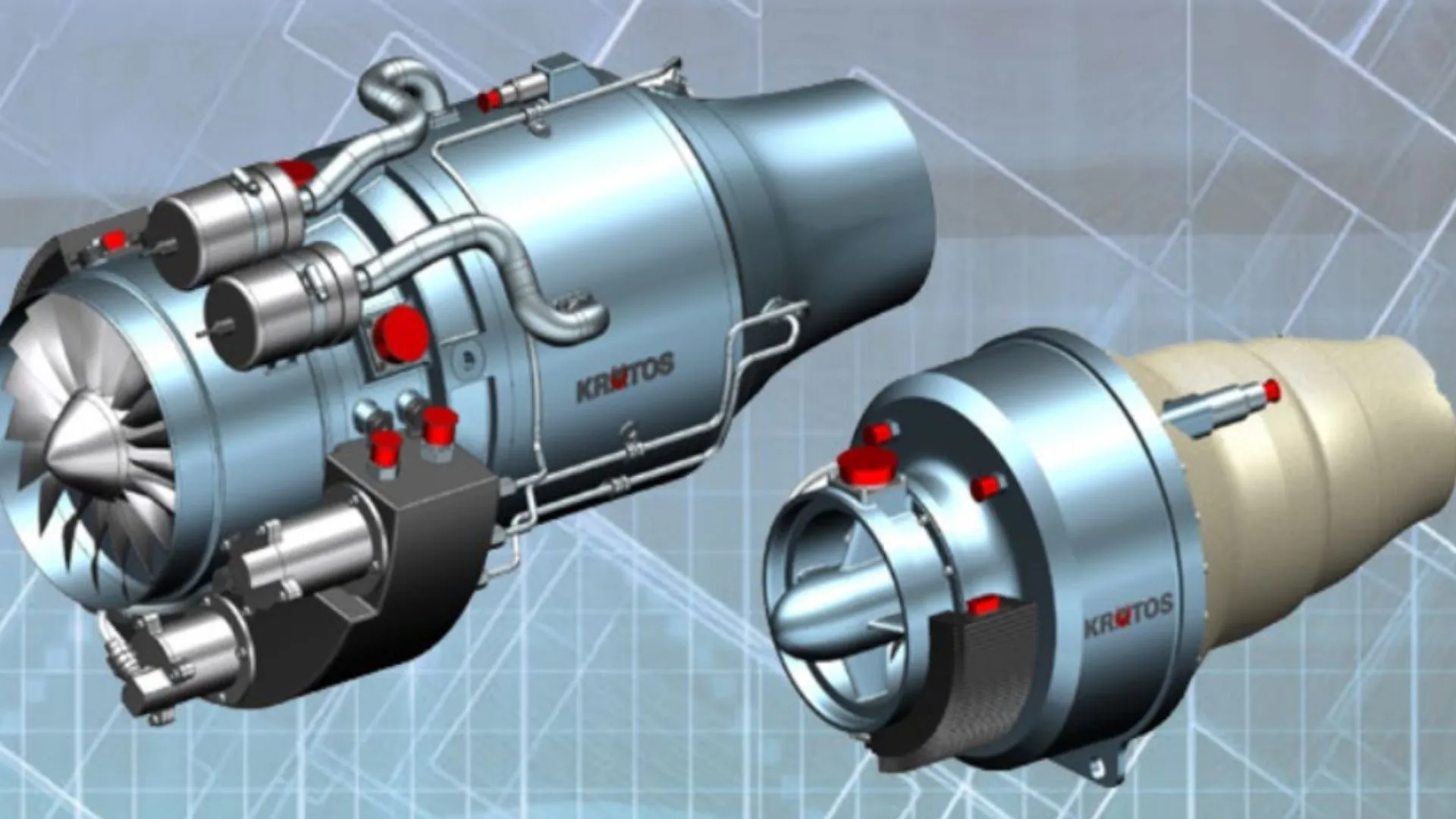
U.S. defense manufacturer Kratos Defense & Security Solutions is significantly expanding production of its Spartan small gas turbine engine line, targeting 3,000 units in 2027 and an annual capacity of up to 10,000 units. The expansion is aimed at meeting surging demand from loitering munition and cruise missile programs as Western militaries race to replenish precision-strike inventories.

Highlights
- Kratos Defense & Security Solutions is targeting production of 3,000 Spartan turbojet engines in 2027, with an annual capacity ceiling of 10,000 units.
- The Spartan engine family covers a thrust range of 30–200 lbs at sea level, enabling a single production line to serve multiple classes of expendable platforms including loitering munitions and cruise missiles.
- All Spartan engines are designed and manufactured at Kratos's facility in Oxford, Michigan, with fully U.S.-sourced components, supporting DoD domestic supply-chain priorities.
- Kratos President Steve Fendley cited urgent DoD demand to reconstitute missile stockpiles and scale affordable precision-strike capacity as the primary driver for the investment.
- Loitering munitions have transitioned from niche tools to standard procurement items across NATO militaries, creating supply pressure that far exceeds peacetime propulsion production capacity.
Kratos Ramps Up Spartan Engine Output to Target Expendable Attack Drone Market
U.S. defense and security solutions firm Kratos Defense & Security Solutions is aggressively expanding manufacturing capacity for its Spartan series of small gas turbine engines, responding to rapidly growing procurement demand from missile programs and loitering munition platforms. The company confirmed the capacity expansion through an official press release.
What Is the Spartan Engine — and Why Does It Matter Now?
The Spartan series comprises a family of compact turbojet engines designed specifically for "expendable" and "attritable" platforms — systems built from the outset to be used once or with minimal expectation of recovery. The engines' performance envelope covers subsonic cruise missiles, decoy drones, and one-way attack munitions, applications where unit cost and production efficiency are as important as raw performance.
"As the Department of Defense focuses on reconstituting critical missile inventories and increasing affordable precision strike capacity, the need for scalable, high-performance, low-cost propulsion systems has never been more urgent," said Steve Fendley, President of Kratos Unmanned Systems.
"Kratos is investing now to ensure our customers have access to affordable, reliable, American-made propulsion systems delivered at the speed and scale required by the modern threat environment," Fendley added.
Loitering munitions — sometimes called "suicide drones" — have evolved from niche battlefield tools into standard procurement items for numerous NATO and allied militaries, following their extensively documented combat use in Ukraine and the Middle East. This shift has placed enormous supply-chain pressure on propulsion systems, which have consistently represented the primary production bottleneck for expendable platforms at scale.
Expansion Details
Kratos has stated a target of producing 3,000 engines in 2027. The Spartan product line spans multiple thrust classes — from 30 to 200 pounds of thrust at sea level — allowing a single manufacturing infrastructure to serve platforms across different weight classes without requiring entirely separate production lines.
Kratos maintains a high degree of vertical integration for its propulsion systems, handling everything from design to manufacturing in-house. This gives the company tighter control over delivery schedules — a meaningful competitive advantage at a time when prime defense contractors are wrestling with extended component lead times.
The investment is strategically intended to support Department of Defense priorities: replenishing missile stockpiles, expanding precision-strike weapons capacity, and enabling affordable mass in operations across the U.S. military services.
Engineering Trade-Offs in Expendable Propulsion
Designing gas turbine engines for expendable platforms involves deliberate engineering compromises. Engineers typically target service lives measured in hours rather than thousands of flight cycles, which allows certain hot-section components to use lower-grade materials — cooled by onboard fuel in the case of the Spartan engines — and simplifies the maintenance architecture considerably.
Supply Chain and Geopolitical Context
Following assessments of ammunition consumption rates on the Ukrainian battlefield, Western defense planners have grown increasingly focused on "magazine depth" — the ability to sustain munitions expenditure over a protracted conflict. Loitering munitions and cruise missiles consume propulsion units far faster than peacetime production lines can support. The annual capacity of 10,000 Spartan engines cited by Kratos likely points to a buffered surge production capability designed to address exactly this gap.
According to the company, the engines are designed and manufactured in Oxford, Michigan, with all parts and components sourced from U.S.-based suppliers.
原文來源: 查看原文
FAQ
Newsletter
Subscribe to our Low-Altitude Industry Newsletter
Daily curated news on low-altitude economy and drone industry, delivered to your inbox.