NASA Flies Donated Kidneys 7.5 Miles on U.S.-Made Drone With Zero Organ Damage
On June 5, NASA Langley Research Center flew two donated human kidneys aboard a Freefly Alta X heavy-lift drone for 7.5 miles at 250 feet altitude under BVLOS conditions, with each flight lasting roughly 15 minutes. Pre- and post-flight biopsies confirmed zero organ damage. The Alta X is U.S.-manufactured and listed under the Pentagon's Blue UAS framework, making it unaffected by import bans. Regulatory hurdles — not technology — remain the primary barrier to large-scale commercial deployment.

Highlights
- NASA於2025年6月5日在蘭利研究中心CERTAIN測試場,以Freefly Alta X無人機在BVLOS條件下飛行7.5英里、高度250英尺,運送兩顆人類捐贈腎臟,每趟約15分鐘。
- 飛行前後活體切片結果確認器官毫無損傷,振動、壓力、溫度與高度全程監測數據均未顯示任何異常。
- Freefly Alta X為美國華盛頓州製造,列入五角大廈Blue UAS認可清單,不受2025年12月22日生效的美國無人機進口禁令影響。
- CERTAIN測試場允許無需沿途部署人工目視觀測員即可執行BVLOS飛行,解決了早期器官空運試驗的可擴展性瓶頸。
- FAA已錯過2026年2月1日的Part 108 BVLOS法規截止期限,目前每次任務仍需個案申請豁免,是技術落地的主要監管障礙。
NASA Flies Donated Kidneys 7.5 Miles on U.S.-Made Drone With Zero Organ Damage
Researchers at NASA's facility in Hampton, Virginia placed two human kidneys aboard a heavy-lift drone and conducted a 7.5-mile loop flight beyond the operator's line of sight, then biopsied the organs to check for damage. The result: none whatsoever.
The flight test, conducted on June 5 at NASA Langley Research Center, reached a maximum altitude of 250 feet. Two separate flights were completed, each lasting approximately 15 minutes, with preliminary results showing no harm to the organs during transport.
The research was a three-way collaboration between NASA, the Richmond-based United Network for Organ Sharing (UNOS), and Virginia Beach-based tissue bank LifeNet Health. The kidneys used were donated for research purposes after being deemed unsuitable for transplantation.
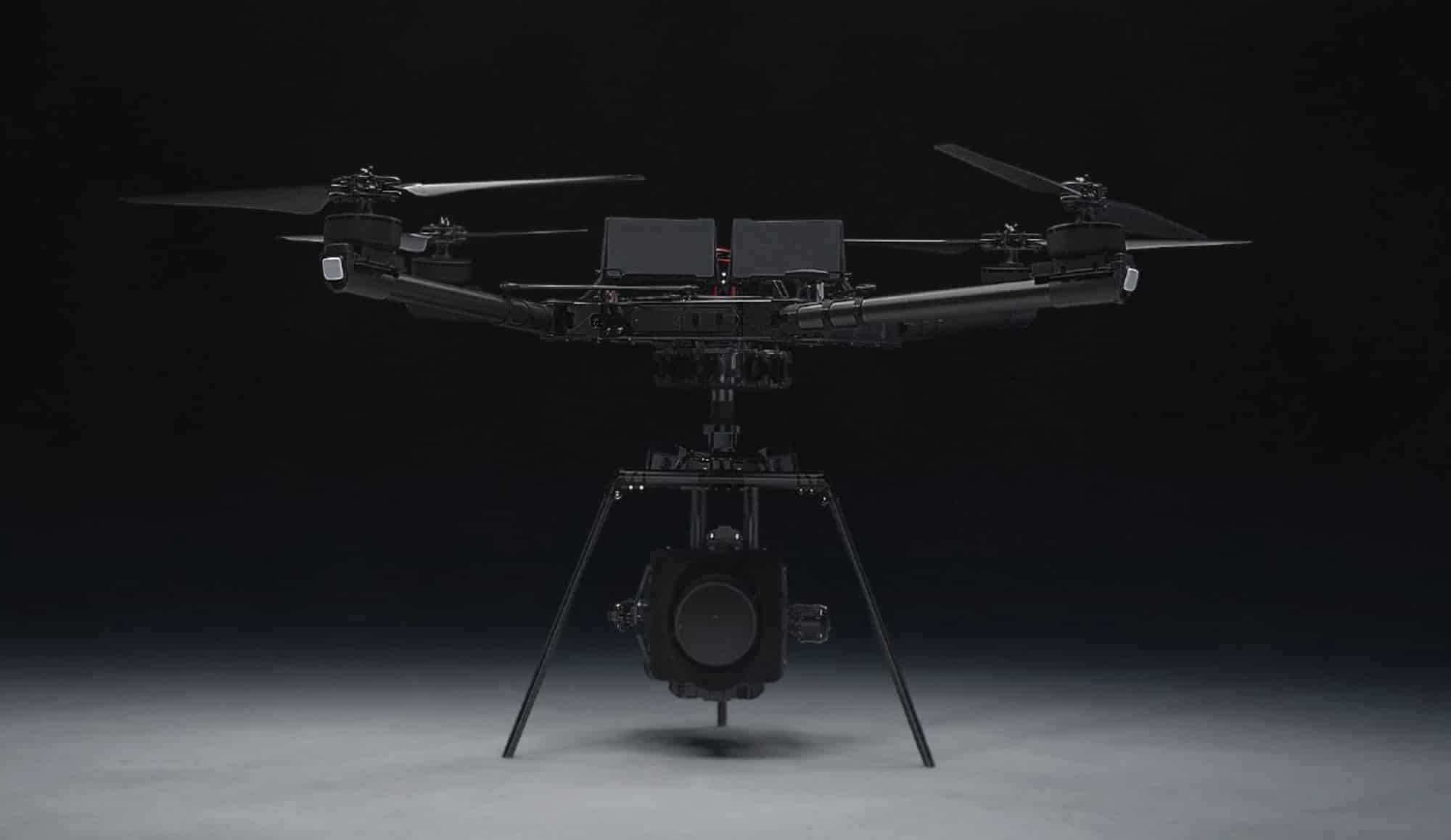
One detail stood out above all others: the specific aircraft NASA selected — the Freefly Alta X, a quadcopter manufactured in Woodinville, Washington. As U.S. government policy debates intensify over which drones are permissible to purchase, NASA's choice of airframe to carry human organs is American-made, listed on the Pentagon's approved vendor framework, and unaffected by import restrictions. That is not a coincidence.
CERTAIN Test Range Eliminates the Visual Observer Requirement That Constrained Earlier Trials
The flights were conducted at NASA Langley's CERTAIN range — the City Environment Range Testing for Autonomous Integrated Navigation — a facility that permits BVLOS operations without stationing human observers along the flight path.
This distinction matters. Earlier organ-transport drone tests were successful, but they required personnel stationed on rooftops to visually monitor the aircraft throughout its journey.
Jim Burgess, the unmanned aircraft systems engineer who led NASA's flight test team, was direct about that constraint: "Having observers on rooftops for an extended period of time is not necessarily a scalable solution." A delivery model that requires a chain of personnel watching the sky between two hospitals is a demonstration, not a logistics network. Eliminating the observer requirement is what converts a proof of concept into something an organ procurement program could actually operate.
John Koelling, director of aeronautics research at NASA Langley, explained why the Hampton Roads region was selected: it concentrates every challenging variable in one place — military installations, a nuclear power plant, high-density urban areas, and a major seaport. "Every problem you would encounter in making this technology a reality, you can find here," he said, characterizing the work as a "proof of concept" while adding that the technology required is "largely in place."
Kidneys Placed on Perfusion Pumps, Sensors Monitored Conditions Throughout
Researchers handled the organs in a manner that simulates real-world transport. The kidneys were biopsied before and after each flight, placed in containers meeting standard organ transport specifications, and kept viable on perfusion pumps. Vibration and pressure were monitored continuously. UNOS noted in its statement that temperature, pressure, and altitude data were tracked throughout each roughly 15-minute flight. All reports reached the same conclusion: no indication that flight caused any organ damage.
Kaitlin Swanner, a senior policy analyst at UNOS, said drones are most likely to handle what she called the "first mile, last mile" of organ transport — moving organs from donor hospitals to airports, and from receiving airports to the patient's hospital. These short surface-transport legs are where traffic congestion and timing failures cause harm.
"Most organs require long-distance transport, which makes the logistics of getting an organ from donor to patient more complex," Swanner said.
Time is the central challenge in organ transplant logistics. LifeNet Health Executive Vice President Doug Wilson framed the objective as supplementing existing transport modes — not replacing them — when speed, reliability, or access becomes the critical variable. Approximately 100,000 people are currently on organ transplant waiting lists in the United States, and data from the Health Resources and Services Administration indicate that 13 people die each day waiting for an organ.
Alta X: A Domestic Platform Unaffected by Import Restrictions
The Alta X is the highest-payload drone in NASA Langley's inventory, which is precisely why Burgess's team selected it. According to Freefly's own published data, the Alta X carries a maximum payload of approximately 33 lbs (15 kg); the official spec sheet lists up to 35 lbs (15.9 kg) at the edge of thrust limits. By either figure, it has sufficient lift for an organ on a perfusion pump, and Freefly's vibration-dampening rotor design provides the airframe stability needed to ensure cargo is not damaged in transit.
The notable detail: the Alta X is U.S.-manufactured and listed under the Pentagon's Blue UAS clearance framework — the domestic manufacturer pathway that remains viable after the U.S. import ban enacted on December 22, 2025 effectively closed the American market to foreign-manufactured drones. When the federal government needed to fly human organs for a NASA research program, the only heavy-lift platform with sufficient capability happened to be one of the few airframes not subject to the ban. On this mission, the domestic supply chain held.
That also marks a practical ceiling. The Alta X is a professional industrial platform, not a mass-market product. The scale organ delivery would ultimately require — hospital-to-hospital operations across thousands of routine transfers — represents an entirely different production challenge from a single NASA-funded research flight.
Regulation, Not Technology, Is the Next Barrier
Koelling stated plainly that broad deployment depends on overcoming significant FAA regulatory hurdles, specifically the need to certify that drones can safely carry organ-weight payloads in BVLOS operations. The engineering problem is largely solved; the legal framework is not.
The FAA has already missed its self-imposed February 1, 2026 deadline for finalizing Part 108 rules — the rulemaking that would allow routine BVLOS flights without case-by-case exemption requests — and has reopened the comment period twice amid unresolved disputes. Until that rule is finalized, every mission of this type depends on specific waivers and coordinated airspace authorizations.
The CERTAIN range gave NASA a place to validate the concept. It cannot grant an organ transplant center in another state the legal authority to conduct the same flights tomorrow.
DroneXL Editorial Perspective
This is a story about a drone doing what the industry has long argued drones should do: not surveillance, not stadium spectacles, not "mysterious sighting" panic. An aircraft flew over Hampton Roads carrying a donated kidney — the kind of mission where biology renders a clean verdict: the organ either survives or it doesn't. This time, it survived.
The contradiction, however, remains in plain view. The airframe NASA trusted is American-made and exempt from import restrictions — a positive outcome. But it is also an exception that illustrates the current rules. The situation is concerning: the United States claims to be leading drone delivery while simultaneously restricting access to the affordable, high-performance hardware that most operators, public safety teams, and potential medical programs actually rely on.
NASA's research budget can absorb an Alta X purchase. A rural hospital network attempting to scale organ transport across hundreds of routine routes faces a fundamentally different cost equation, and the domestic market does not yet offer scalable, cost-competitive alternatives at that volume.
Watch the Part 108 rulemaking closely. What stands between this demonstration and a functioning delivery network is not the drone itself — it is the regulatory infrastructure. The biology is resolved. The technology is ready, and this time it was American-made. What is missing is the regulatory framework to make it legal and sustained, and the supply capacity to support a volume far beyond a single funded flight. The kidney flew 7.5 miles. Getting the next 7.5 miles to happen legally and at scale is the problem Washington has not yet solved.
Sources: The Virginian-Pilot, News Tribune, UNOS, NASA Langley, Freefly Systems. DroneXL uses automated tools to assist with research and data collection; all reporting and editorial perspective written by Haye Kesteloo.
原文來源: 查看原文
FAQ
Newsletter
Subscribe to our Low-Altitude Industry Newsletter
Daily curated news on low-altitude economy and drone industry, delivered to your inbox.