Saronic Corsair USV Rescues Apache Helicopter Crew Near Strait of Hormuz: Years of Preparation Behind a Critical Two-Hour Mission
On June 8, 2026, a Saronic Corsair unmanned surface vessel operated by U.S. Navy Task Force 59 rescued two AH-64 Apache crew members downed near the Strait of Hormuz within two hours. The mission — hailed as a first-ever combat search-and-rescue by a USV — was the product of years of training, including medevac exercises in the Gulf of Aqaba and over 4,500 nautical miles of recent operational deployment.

Highlights
- 2026年6月8日,Task Force 59的Saronic Corsair USV在荷姆茲海峽附近兩小時內救起兩名被擊落的AH-64 Apache直升機組員,創下無人水面艦艇首次實戰搜救紀錄。
- 此次救援並非臨場應變,而是基於多年準備:Task Force 59曾在亞喀巴灣進行專項醫療後送演習,並於事發前數週累積逾4,500海里的區域演訓里程。
- Saronic Corsair為24英尺柴油動力自主水面艦艇,航速超過35節、航程逾1,000海里、酬載1,000磅,可在無人員在艦的情況下全自主運行。
- Saronic於2026年4月完成15.75億美元D輪融資,估值達92.5億美元,並持有美國海軍3.92億美元生產合約,目標年產20艘Corsair。
- 自2026年2月以來,至少七架美軍有人駕駛飛機遭伊朗或伊朗相關勢力擊落,使Corsair成為在敵對空域執行救援任務的關鍵無風險替代方案。
Apache Helicopter Downed Near the Strait of Hormuz
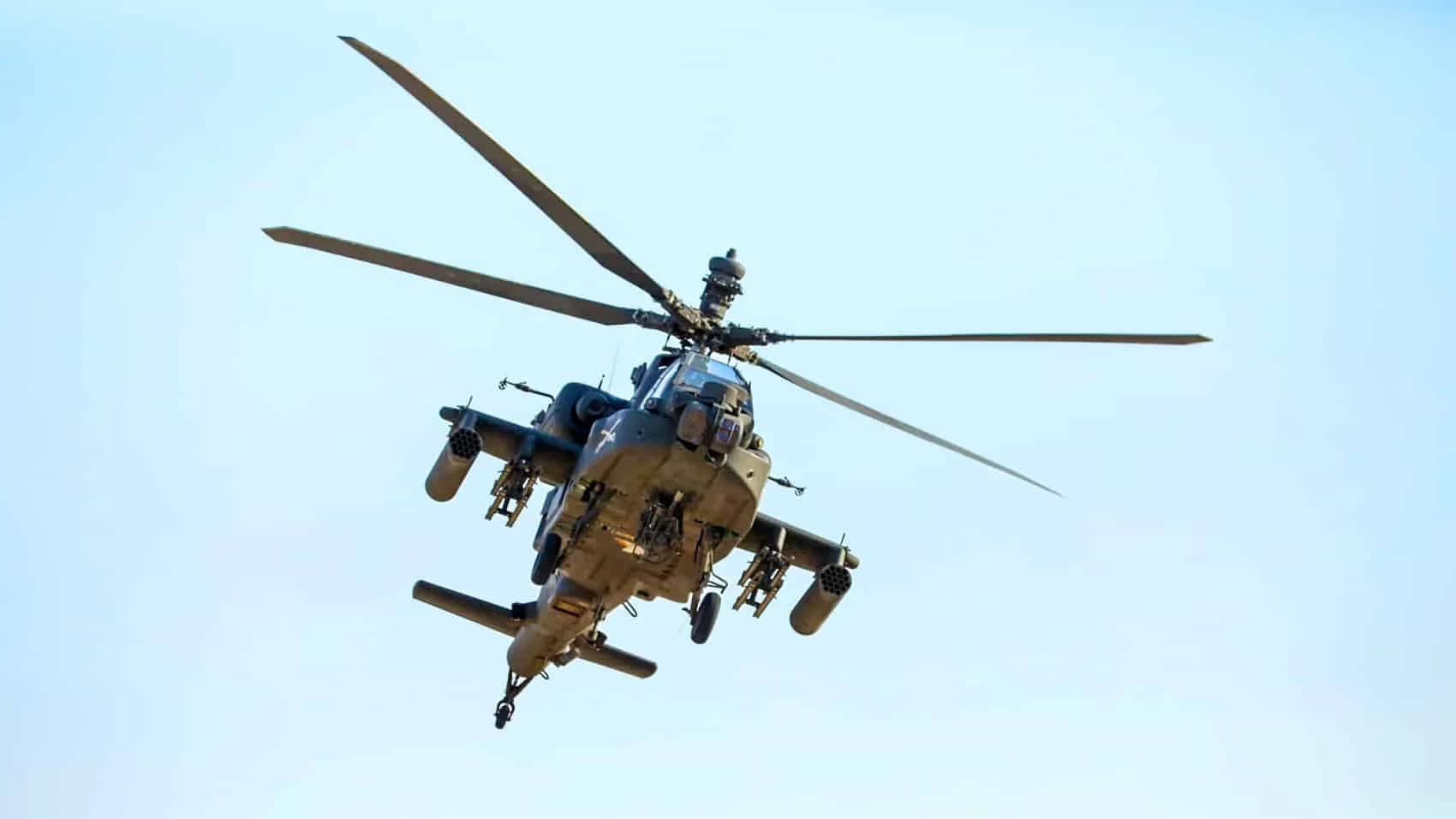
On June 8, 2026, an AH-64 Apache attack helicopter was shot down during a patrol mission near the Strait of Hormuz, leaving two crew members in the water off the coast of Oman. President Donald Trump confirmed the following day, June 9, that the Army helicopter had been downed by Iran.
U.S. forces tracked the crew's position and established radio contact while urgently evaluating available rescue options. Those options included tactical aircraft and the Saronic Corsair unmanned surface vessel (USV) operated by Task Force 59, the U.S. Navy's drone integration unit for the Middle East. The Corsair ultimately played what officials described as an "indispensable" role in the rescue operation.
Both crew members climbed aboard the 24-foot (7.3-meter) unmanned vessel under their own power. The vessel then relocated the survivors to another position in the water due to "operational requirements" before a helicopter arrived to transport them ashore. Both soldiers were unharmed. The entire rescue took approximately two hours.
Notably, the Apache was at least the seventh manned U.S. aircraft shot down by Iran or Iran-affiliated forces since February 2026. Dispatching another helicopter into the same contested airspace for a rescue was simply not a viable option; the Corsair offered a pathway to recovery without putting additional personnel at risk.
Medevac Exercises Had Been Underway for Years
According to Business Insider, when Task Force 59 was established in 2021, one of its core mandates was to test emerging technologies — particularly unmanned surface vessels — and explore how they could be "optimized" for routine naval operations. Early missions focused on surveillance, but the concept of medical evacuation was incorporated into planning from the outset.
Years before the June 8 incident, U.S. forces conducted a dedicated exercise in the Gulf of Aqaba, south of Israel, to test the concept of naval USV-based medevac — simulating the transfer of a "casualty" from a vessel to shore for follow-on treatment as a proof of concept. On June 8, that concept became operational reality.
"The concept of using unmanned systems for personnel transport, and specifically medevac, was considered early on as these systems were integrated into regional operations," a U.S. military official stated.
In the weeks preceding the June 8 rescue, eight Corsair vessels conducted intensive exercises simultaneously in the region, operating at distances exceeding 70 nautical miles (130 km) offshore, accumulating more than 4,500 nautical miles of underway time across scenarios including autonomous port entry and exit, long-range patrol, communications-degraded operations, and multi-day endurance missions. Years of medevac doctrine development and 4,500 nautical miles of recent operational training never made headlines. What captured the world's attention was the rescue itself.
The Corsair: A Small Unmanned Platform with a 1,000-Nautical-Mile Reach
The Saronic Corsair is a 24-foot (7.3-meter) diesel-powered autonomous surface vessel with a top speed exceeding 35 knots (approximately 65 km/h), a range of over 1,000 nautical miles (approximately 1,150 miles), and an effective payload capacity of 1,000 pounds (453 kg). Task Force 59 has operated the Corsair across the Persian Gulf, Gulf of Oman, Red Sea, and Gulf of Aden since late March 2026.
The platform can operate in remotely supervised or fully autonomous mode, switching flexibly based on mission requirements and communications environment. Its sensor suite includes radar and cameras integrated with satellite communications, driving autonomous navigation software for real-time situational awareness and hazard avoidance — with no personnel physically aboard. This characteristic proved critical in a contested airspace: the Corsair can advance into environments too dangerous for crewed vessels.
Saronic officially unveiled the Corsair in October 2024. Within fewer than 12 months, the U.S. Navy awarded the Austin, Texas-based company a production contract worth $392 million. The company is led by CEO Dino Mavrookas, a former Navy SEAL, and CTO Vibhav Altekar. Its production facility in Franklin, Louisiana, targets an annual output of 20 Corsair vessels. Saronic closed a $1.575 billion Series D funding round in April 2026, pushing its valuation to $9.25 billion.
Editorial Perspective
The rescue made headlines. But the real story happened before June 8.
The Gulf of Aqaba medevac exercise and more than 4,500 nautical miles of recent regional training were completed well ahead of that date. Task Force 59's foundational mandate — to "optimize" unmanned surface vessels for routine operations beyond surveillance — was written into the unit's charter from its inception. None of this was accidental.
The U.S. military made a decision years ago: these unmanned vessels had to be ready. They drilled repeatedly. When the real mission came, they were prepared.
This scenario will play out elsewhere. Autonomous systems operating simultaneously in the same battle space — conducting rescue and combat missions in parallel. The boundary between surveillance drone and rescue platform has already begun to blur.
Ukraine's operational experience deploying USVs against the Russian Navy in the Black Sea accelerated development across the entire category. Last December, NATO hosted an event in London specifically soliciting industry solutions for casualty care and evacuation in drone-dense environments — and the Apache rescue off the coast of Oman has since become a canonical case study in that discussion.
A U.S. military official described the operation as "a clear demonstration of the value" of integrating unmanned systems into routine naval operations, and "an important milestone in significantly expanding the mission scope of surface drones." What this mission truly validated was the meaning of training. On June 8, the Corsair was not improvising — it was executing a mission it had already rehearsed.
Image credit: U.S. Central Command
原文來源: 查看原文
FAQ
Newsletter
Subscribe to our Low-Altitude Industry Newsletter
Daily curated news on low-altitude economy and drone industry, delivered to your inbox.