SpaceX Launches IPO Targeting $1.77 Trillion Valuation, Reshaping the Global Aerospace Landscape
SpaceX has formally launched its initial public offering at $135 per share, aiming to raise $75 billion and achieve a $1.77 trillion market capitalization. If successful, the valuation would exceed the combined market caps of Boeing, Airbus, GE Aerospace, RTX, and Lockheed Martin, and could make CEO Elon Musk the world's first trillionaire.

Highlights
- SpaceX launched its IPO at $135 per share, targeting $75 billion in proceeds and a $1.77 trillion market capitalization.
- The target valuation exceeds the combined market caps of Boeing, Airbus, GE Aerospace, RTX, and Lockheed Martin.
- SpaceX held 162 of the FAA's 205 launch and landing licenses issued in fiscal year 2025, underscoring its dominance in the launch market.
- The company recorded nearly $5 billion in losses last year, largely due to its acquisition of xAI and heavy investment in computing infrastructure.
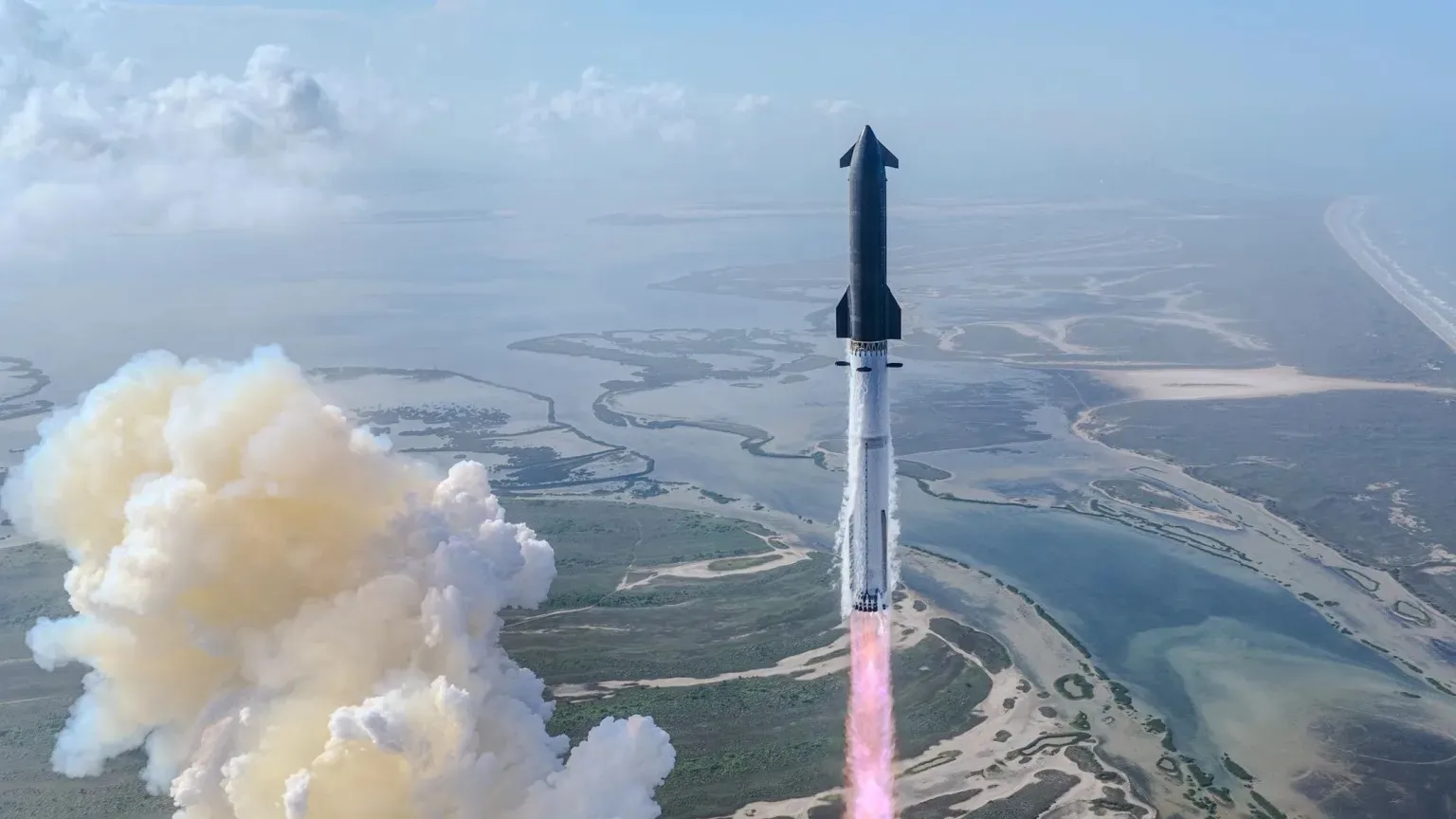
- Starship's first orbital flight and payload deployment are targeted for the second half of 2026, with V3 capable of delivering 100 metric tons to LEO and V4 potentially doubling that capacity.
SpaceX IPO Targets $1.77 Trillion Valuation, Challenging the Global Aerospace Order
Space launch provider SpaceX has officially launched its initial public offering (IPO), priced at $135 per share, with a target of raising $75 billion and achieving a market capitalization of $1.77 trillion. If successful, that valuation would surpass the combined market caps of five aerospace giants: Boeing, Airbus, GE Aerospace, RTX, and Lockheed Martin.
According to The New York Times, a successful offering could make SpaceX CEO Elon Musk the world's first trillionaire, while approximately 4,400 employees who sell shares could become millionaires.
Analysts Divided on Valuation
Analysts are split on whether the $1.77 trillion valuation is justified. While SpaceX has continued to grow revenue through 2025, the company recorded nearly $5 billion in losses last year. Its acquisition of Musk's xAI artificial intelligence venture and significant investment in computing infrastructure have widened the company's financial gap.
Dominant Force in the Launch Market
SpaceX is the undisputed leader in the space launch market. Of the 205 launch and landing licenses issued by the U.S. Federal Aviation Administration (FAA) in fiscal year 2025, SpaceX held 162. On the morning of its IPO listing, SpaceX launched a Falcon 9 rocket before markets opened.
Through the mass deployment of Starlink satellites aboard its reusable Falcon 9 and Falcon Heavy rockets, SpaceX returned to profitability in 2024. However, the acquisition of xAI and heavy investment in computing capacity dealt the company a multi-billion-dollar financial blow last year.
Next Phase: Starship and Orbital Ambitions
SpaceX's growth strategy centers on scaling up — launching more rockets, carrying heavier payloads, and meeting the demands of large-batch Starlink satellite deployments. The FAA issued a Safety Alert for Operators (SAFO) in January of this year warning pilots of debris hazards during launch operations.
SpaceX is constructing multiple new launch pads for Starship in Texas and Florida and has received authorization for up to 25 launches per year. According to the company's S-1 registration statement, the Version 3 Starship is designed to deliver 100 metric tons of payload to low Earth orbit (LEO), with the Version 4 potentially doubling that capacity.
Starship completed its 12th test flight last month, debuting the upgraded V3 configuration. However, the FAA subsequently grounded the vehicle following an anomaly involving the Super Heavy booster. The stand-down is expected to last at least several weeks and potentially several months.
Per the S-1, Starship's first orbital flight and payload deployment are targeted for the second half of 2026. SpaceX also plans to build a "petawatt-scale" orbital data center, expand Starlink Wi-Fi partnerships with commercial airlines, and gradually establish a routine lunar cargo service through uncrewed missions, with crewed missions as the ultimate goal.
Full Reusability Is the Key Milestone
SpaceX has already demonstrated the ability to catch the Super Heavy booster mid-air at the launch tower using a pair of giant mechanical arms, but recovery of the Starship upper stage has yet to be achieved, and no firm timeline has been announced. The Falcon 9 booster has been reflown up to 35 times on a single unit, dramatically reducing launch costs.
SpaceX's S-1 also outlines plans to use Starship to transport passengers to the Moon and Mars, offer commercial space tourism flights, and eventually enable ultra-high-speed point-to-point travel on Earth.
The Competitive Landscape
SpaceX is not the only launch provider to go public in recent years. Rival Rocket Lab listed in 2021, and Firefly Aerospace debuted on public markets in August of this year — the latter having become the first private company to successfully land a spacecraft on the Moon last year. Blue Origin and Stoke Space have not yet disclosed IPO plans, but SpaceX's fundraising move may push competitors to accelerate their own development timelines.
原文來源: 查看原文
FAQ
Newsletter
Subscribe to our Low-Altitude Industry Newsletter
Daily curated news on low-altitude economy and drone industry, delivered to your inbox.