Philippines Deploys U.S.-Made Triton Underwater Drones in West Philippine Sea to Counter Illegal Incursions
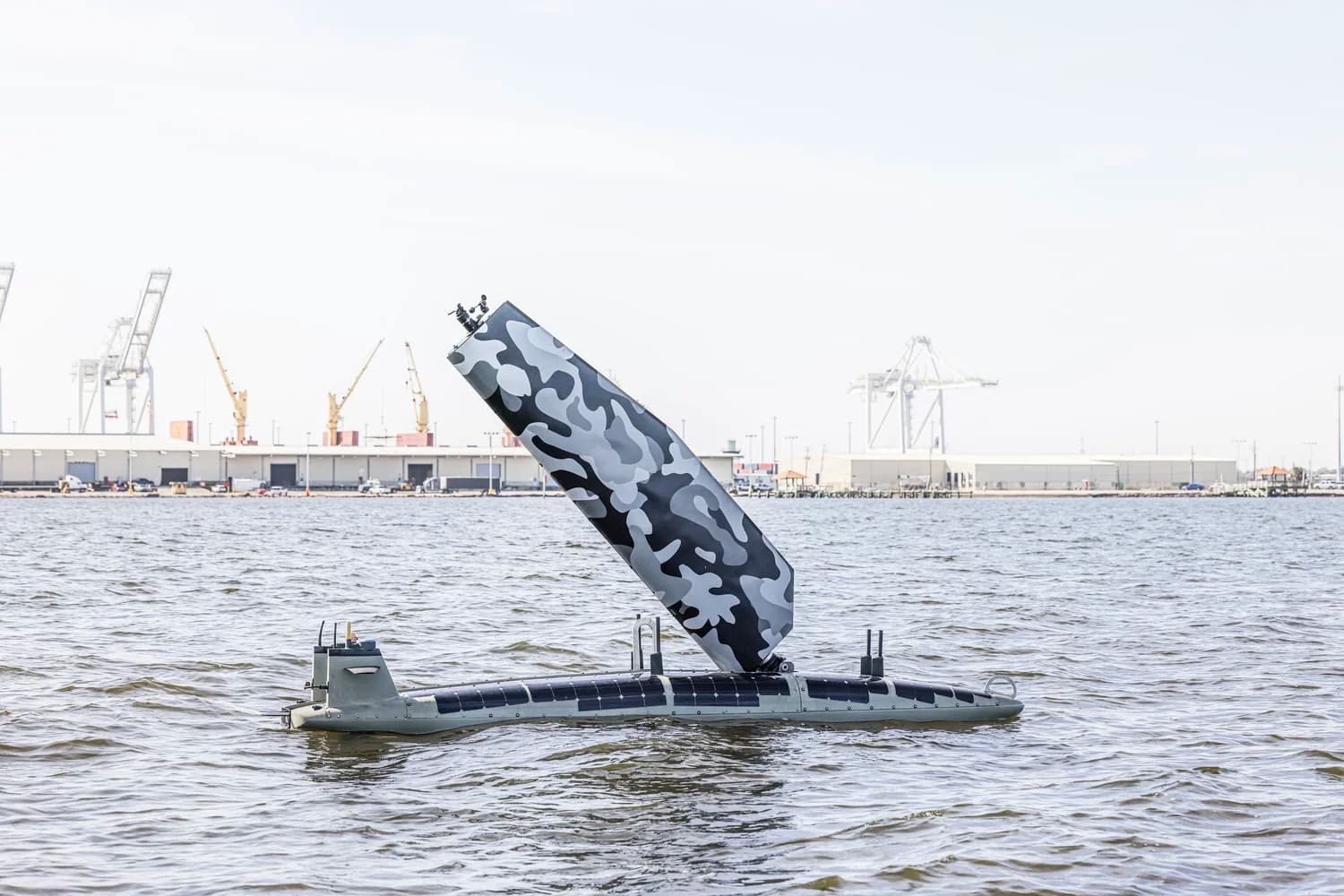
The Philippine Navy is set to deploy four Ocean Aero Triton autonomous underwater and surface vehicles (AUSVs), valued at PHP 754 million (~USD 13 million), transferred by the United States. The drones will monitor Chinese vessels and maritime militia activity in disputed waters and protect undersea cables, following China's covert deployment of a floating platform near Scarborough Shoal.

Highlights
- The U.S. transferred four Ocean Aero Triton AUSVs to the Philippine Navy, valued at PHP 754 million (~USD 13 million), to monitor disputed waters in the West Philippine Sea.
- The Triton can dive to 100 metres, sustain underwater operations for 10 days, and conduct surface patrols for up to 30 days using solar power.
- The transfer followed China's covert deployment of a 6×6-metre antenna-equipped floating platform near Scarborough Shoal in late May 2025, which Beijing subsequently dismantled after a Philippine diplomatic protest.
- The drones are part of the Philippines–U.S. Security Sector Assistance Roadmap, backed by a USD 2.5 billion U.S. military modernization package disbursed from 2026 to 2030.
- Ocean Aero, headquartered in Gulfport, Mississippi, is also proposing Triton AUSVs for mine-clearing operations in the Strait of Hormuz for the U.S. Navy.
Philippines Deploys U.S.-Made Triton Underwater Drones in West Philippine Sea to Counter Illegal Incursions
Manila, Philippines — The Philippine Navy is preparing to deploy four Triton Autonomous Underwater and Surface Vehicles (AUSVs) as part of its ongoing efforts to protect undersea cables and monitor Chinese vessels and maritime militia activity around disputed features in the West Philippine Sea.
U.S. Transfer and Background
The U.S. Embassy in the Philippines announced this week the transfer of the drones — manufactured by U.S.-based Ocean Aero and valued at PHP 754 million (approximately USD 13 million) — to the Philippine Navy to strengthen its capacity to "detect and respond to maritime challenges and illegal maritime activities."
The handover comes shortly after the Armed Forces of the Philippines revealed that China had covertly deployed a 6×6-metre floating platform equipped with antennas near Scarborough Shoal in late May. Scarborough Shoal lies within the Philippines' Exclusive Economic Zone and is a historically significant fishing ground.
Philippine officials accused China of using the platform to illegally collect Philippine maritime data, and warned it could be a precursor to reclamation activities. Manila filed a diplomatic protest, and China dismantled the structure last week.
Triton AUSV Technical Specifications
The Triton is solar-powered and capable of navigating autonomously both on the surface and underwater. It supports a wide range of mission types, including intelligence, surveillance, and reconnaissance (ISR), anti-submarine warfare, maritime strike, and mine countermeasures.
Key specifications include:
- Sensors: Configurable with cameras, thermal imagers, and sonar
- Deployment: Launchable from shore, vessel, or aircraft
- Diving depth: Up to 100 metres
- Underwater endurance: Sustained subsurface operations for up to 10 days
- Surface patrol endurance: Up to 30 days on the surface
Ocean Aero, headquartered in Gulfport, Mississippi, is also deploying AUSVs to protect undersea cables from sabotage and has proposed their use to the U.S. Navy for mine-clearing operations in the Strait of Hormuz.
Demonstration and Future Plans
Officials told Defense News that the AUSVs were demonstrated to the Philippine Navy during the recent Exercise Balikatan and are part of a broader series of systems and platforms the United States plans to transfer to the Philippines to enhance its military capabilities.
The Triton drones will also bolster existing monitoring of undersea cables and natural gas pipelines, officials said.
U.S. Chargé d'Affaires Bridgette Walker stated: "The ability to monitor and respond to maritime challenges — including illegal fishing, gray-zone activities, and threats to freedom of navigation — requires persistent, long-duration surveillance that no single ship or aircraft can provide alone. Triton fills that gap, extending the Philippine Navy's reach into critical waters."
Philippines–U.S. Security Cooperation Framework
The drones fall under the Philippines–U.S. Security Sector Assistance Roadmap, a multi-year agreement designed to streamline the procurement, transfer, and sharing of equipment such as radar systems and drone platforms to strengthen maritime domain awareness.
In December last year, the U.S. Senate allocated USD 2.5 billion for Philippine military modernization, with funds to be disbursed between 2026 and 2030.
原文來源: 查看原文
FAQ
Newsletter
Subscribe to our Low-Altitude Industry Newsletter
Daily curated news on low-altitude economy and drone industry, delivered to your inbox.