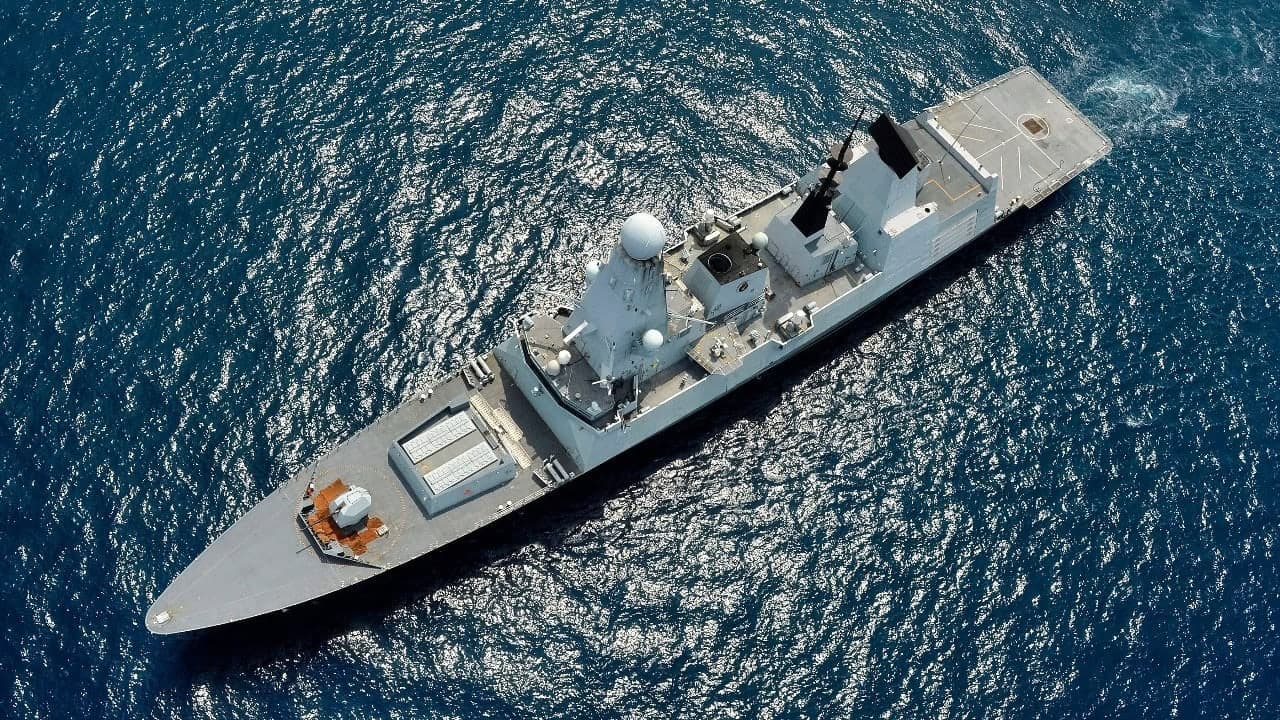
UK Cancels Type 83 Destroyer Programme — Royal Navy Could Face Zero Destroyers by 2040
The UK has scrapped the Type 83 destroyer programme intended to replace its Type 45 fleet, pivoting instead to a 'hybrid navy' concept built around at least six Common Combat Vessels (CCVs) that would command drone systems for above-surface, surface, and sub-surface operations. Critics warn that if the new architecture is not validated before the Type 45s retire, the Royal Navy could be left without any destroyers as early as 2040.

Highlights
- The UK has formally cancelled the Type 83 destroyer programme that was intended to replace its six Type 45 destroyers.
- The Royal Navy will instead pursue at least six Common Combat Vessels (CCVs) commanding networked maritime drone systems for air, surface, and sub-surface operations.
- If Type 45 destroyers retire before 2040 and CCVs are not classified as destroyers, the Royal Navy could be left with zero destroyer capability — a scenario critics call a real risk.
- Naval analysis outlet Navy Lookout describes the pivot as the Royal Navy's biggest surface fleet strategic shift in decades, moving from large area-defence destroyers to manned/unmanned integrated systems.
- The UK government has explicitly positioned the CCV concept as a vehicle for revitalising British shipyards and the domestic defence industrial base.
A High-Stakes Strategic Gamble for the Royal Navy
Britain is making a high-risk strategic bet. London has decided to abandon the Type 83 destroyer programme — the intended successor to the Type 45 fleet — and instead build a 'hybrid navy' centred on at least six Common Combat Vessels (CCVs). These ships would command networks of maritime drones operating above, on, and below the surface. The UK government has indicated the CCVs will replace the Type 45 destroyers as a key component of a broader, distributed air-defence system.
Why the UK Is Pivoting: The Type 83's Dilemma
The core logic behind London's transformation is that the nature of modern naval warfare has fundamentally changed.
Rather than building a small number of expensive, sophisticated destroyers, the UK prefers to construct cheaper manned command vessels networked with missile launch platforms, sensor drones, undersea systems, and autonomous platforms. Naval analysis outlet Navy Lookout has described this as the most significant strategic shift in the Royal Navy's surface fleet in decades — a transition from the traditional large-area-defence destroyer to an integrated manned/unmanned combat system.
The Royal Navy has long struggled to maintain its operational strength: the numbers of warships and submarines have steadily declined, naval shipyard capacity has fallen, and recruitment shortfalls persist. Unable to sustain naval power through conventional means, shifting towards autonomous or semi-autonomous naval capability may be a necessary response to the Royal Navy's continuing decline.
Lessons from Modern Warfare
The war in Ukraine, and intermittent conflicts across the Middle East, have demonstrated to the world how central unmanned systems have become to modern warfare. A key lesson from recent conflicts is that, in an era where drone swarms and advanced anti-ship ballistic missiles (ASBMs) dominate the battlefield, traditional manned platforms such as destroyers are no longer always the optimal choice.
The Royal Navy may be attempting to transform a genuine capability gap into a potential strategic advantage. If this approach succeeds, the UK will have replaced a large proportion of its traditional manned systems with unmanned ones. It is a gamble — but given the evolving character of modern warfare, it could place Britain ahead of its peers.
The Significance of the Type 45 Destroyer
The UK's Type 45 destroyers are ageing, and the Type 83 was originally intended to succeed them. The Type 45 provides high-end air-defence protection for carrier strike groups, task forces, and national taskings. A 'system of systems' architecture linked by drones may ultimately prove effective, but such a system depends heavily on networking, autonomous technology, sensors, data links, survivability, and command integration — all of which must function reliably under wartime conditions.
The Times noted that critics are particularly concerned about the loss of traditional area-defence destroyer capability and an over-reliance on an architecture that has never been proven in combat — a concern that is far from unfounded. Maritime drones replacing the Type 83 are, ultimately, not a mature destroyer; these systems may never perform as intended, and even if they do, they may not be directly comparable to a conventional destroyer.
The Harsh Reality of Britain's Shipbuilding Industry
Alongside the abandonment of the Type 83, given the long-standing weakness of the UK's naval shipbuilding capacity, a particularly difficult scenario becomes plausible: if the Type 45s retire before 2040 and a conventional Type 83 never enters service, the Royal Navy could find itself with no destroyers whatsoever — a situation that is technically possible if the proposed CCVs are not classified as destroyers.
The reality is that the UK's naval shipyards are in no position to build Type 83-class vessels at the required scale during the current period of geopolitical turbulence. The Type 83 would have consumed limited funds, and at most only a handful could have been built over several decades. By contrast, British defence industry can produce unmanned systems at far greater scale and at a fraction of the cost of a conventional destroyer.
Britain's High-Stakes Naval Wager
Unmanned vessels and common vessels could sustain Britain's shipbuilding industry through exportable designs and by avoiding the runaway cost spirals associated with bespoke large warships. The UK government has explicitly framed the CCV concept as an opportunity to revitalise British shipyards and the defence industrial base.
By proposing the CCV concept, London has effectively acknowledged that it can no longer sustain the old model of naval power. The 'hybrid navy' concept may represent far-sighted strategic vision — or it may be a techno-utopian solution forced upon the UK by the weight of industrial and fiscal reality. Either way, the Royal Navy is betting on one thing: that drones and distributed systems can replace traditional, expensive, and sophisticated combat platforms before the current surface fleet reaches the end of its service life.
原文來源: 查看原文
FAQ
Newsletter
Subscribe to our Low-Altitude Industry Newsletter
Daily curated news on low-altitude economy and drone industry, delivered to your inbox.
Reviewed and published by the LAETimes editorial desk ·